
A leading US-based FAST TV network streaming across Samsung, Vizio, Plex, and Apple TV was experiencing declining viewership engagement and ad revenue due to manual, intuition-driven TV program scheduling workflows and fragmented viewership data. To address these challenges, they partnered with Rishabh Software to develop a custom AI-powered broadcast scheduling platform. The goal was to unify cross-platform viewership analytics into a centralized intelligence layer, normalize episode performance data, and enable smarter & data-backed content scheduling decisions. This engagement was part of Rishabh Software’s broader AdTech software development practice.
Project Overview
Managing content schedules across multiple streaming platforms with siloed data and inefficient manual workflows prevented the network’s programming team from optimizing episode slots. Rishabh Software bridged this gap by developing a custom Machine Learning platform that centralizes and normalizes analytics from all streaming services into a single interface. The solution enabled programming teams to identify peak engagement windows, optimize episode-to-timeslot mapping, and deploy data-driven schedules through a centralized interface.
Challenges
- No one knew which dayparts or time slots actually moved the ratings needle. Every scheduling decision was an intuition call with no data to back it up.
- Episodes were scheduled into slots without a performance metric. Time-slot bias and duration variance made it challenging to separate a strong episode from a well-scheduled one.
- High-performing episodes were repeatedly aired until viewership declined. With no defined rerun thresholds, audience fatigue was inevitable and untracked.
- Scheduling workflows were entirely manual and managed separately for each channel.
- The absence of broadcast workflow automation limited scalability and made consistent cross-platform deployment operationally inefficient.
- Viewership data remained fragmented across distribution platforms. There was no unified analytics layer to measure performance, spot patterns, or inform programming strategies.
Solution
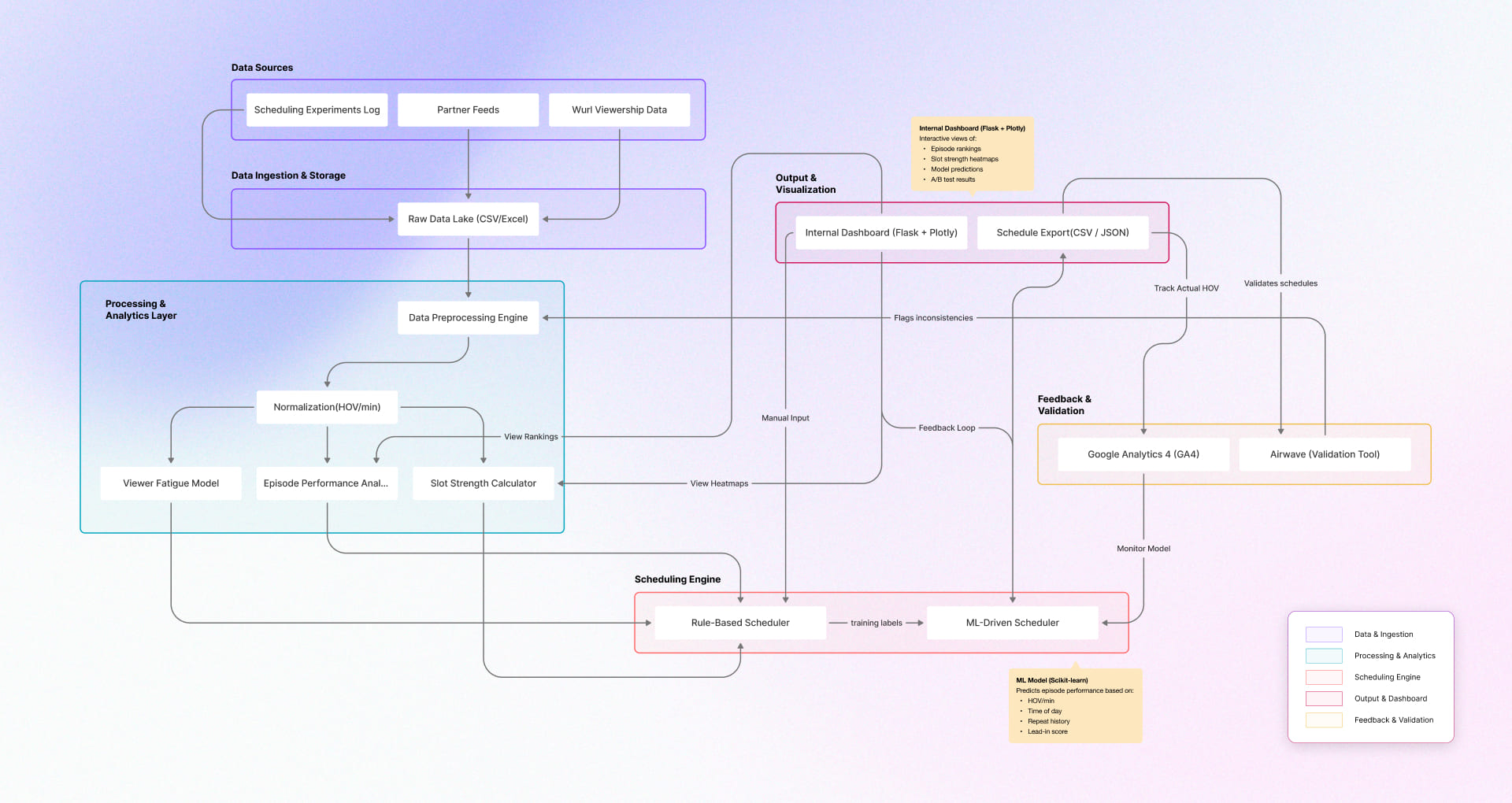
We developed a Python-powered, ML-driven TV scheduling platform that combines statistical modeling with a rule-based and predictive scheduling engine to serve as a scalable broadcast scheduling solution. It consolidates viewership data from multiple streaming platforms, normalizes performance metrics for accurate episode comparison, and automates scheduling recommendations based on engagement patterns. The solution also reflects our broader expertise in AI-powered predictive analytics for enabling intelligent scheduling decisions based on real-time audience behavior and performance forecasting.
Key Capabilities
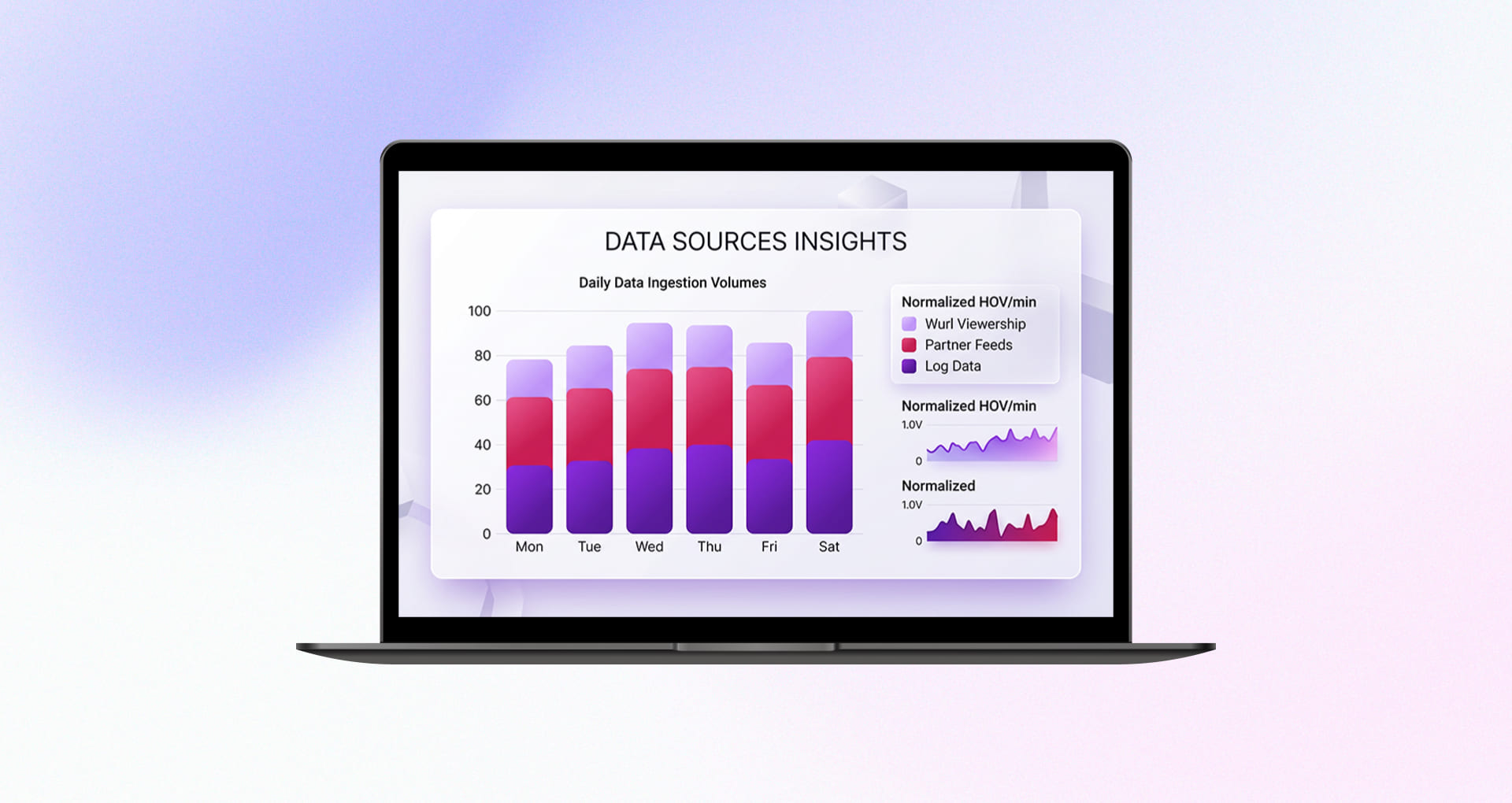
Normalized Viewership Modeling:
Using Python, Pandas, and NumPy, the television broadcasting scheduling software normalizes episode-level Hours of Viewership data by accounting for time-slot bias and differences in episode duration. This gives programming teams a more accurate view of content performance across channels and helps uncover strong-performing episodes affected by poor scheduling placement.
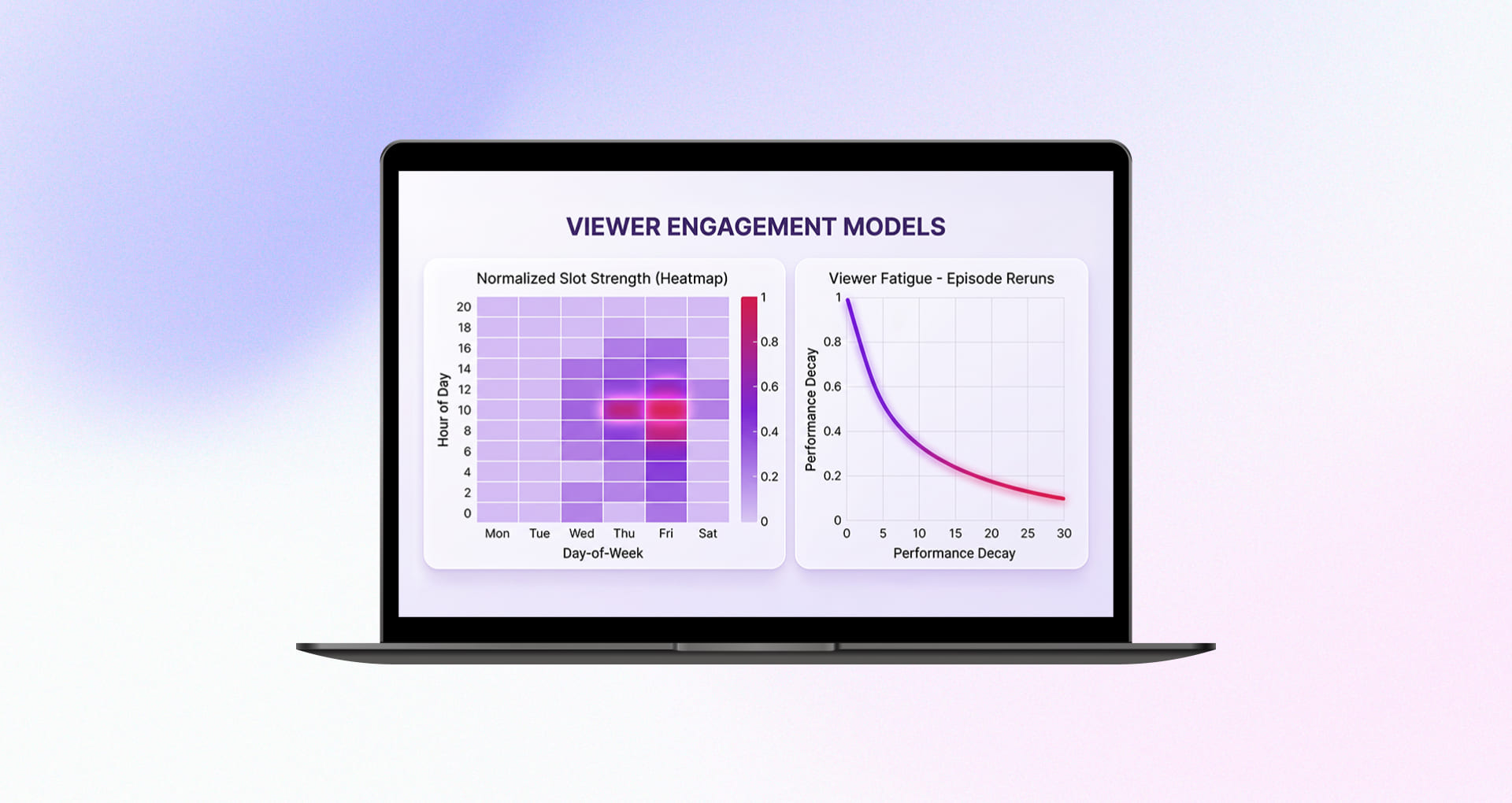
Time Slot Performance Analysis:
The platform analyzes hourly viewing patterns across channels and streaming platforms to identify peak audience engagement throughout the week. As a core feature of any effective broadcast scheduling platform, this analysis helps programming teams make data-backed decisions and maximize viewership using existing content libraries.
Adjusted Viewership Scoring:
The broadcast scheduling platform uses a bias-corrected scoring model to remove scheduling influence from episode performance analysis and identify content with strong intrinsic audience appeal. This ensures top-performing episodes are consistently placed in optimal slots and eliminates performance distortion caused by poor initial placement.
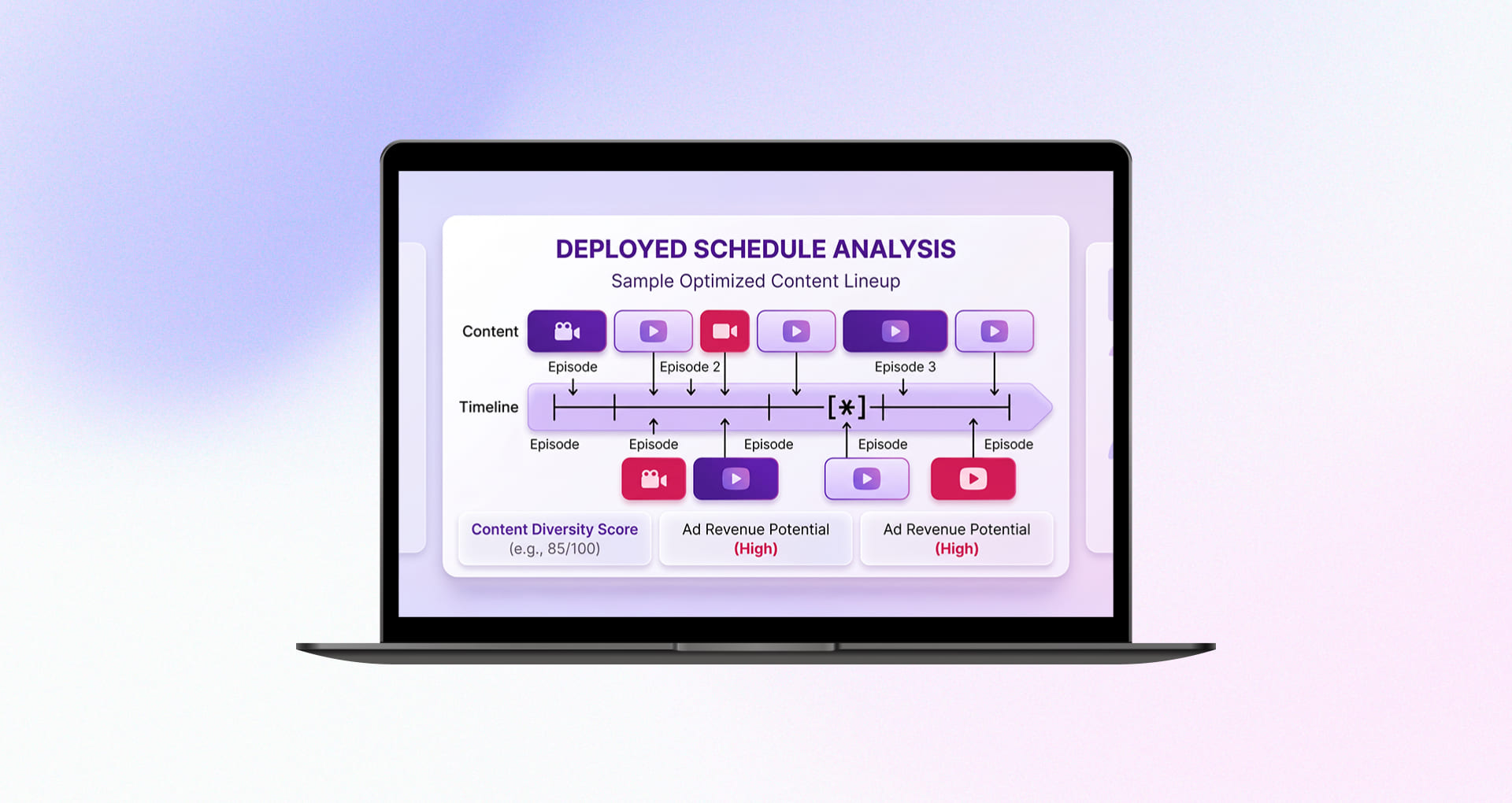
Rule-Based Scheduling Engine:
The broadcast workflow automation engine schedules content while enforcing business constraints, including provider content caps (max 30% from any single source) and scientifically defined rerun limits. This reduced manual scheduling effort, ensured balanced exposure across content partners, and helped maintain programming diversity across channels without constant human oversight.
Predictive Scheduling Model:
Built using Scikit-learn, the ML model predicts optimal episode-to-timeslot combinations to maximize audience engagement before schedules are deployed. As the intelligence backbone of the TV program scheduling software, it helps programming teams forecast potential viewership uplift, shift from reactive to proactive strategies, and refine recommendations continuously using new viewership data.
Benefits
- Achieved 7x projected uplift in viewership through ML-optimized schedules
- Reduced scheduling efforts by 68% after manual processes were eliminated
- Lowered audience drop-offs by 34% offs after rerun thresholds replaced scheduling by instinct.
- Improved content distribution balance by 27% through automated enforcement of provider-level scheduling rules.
- Consolidated viewership analytics from four streaming platforms into a centralized intelligence layer, giving programming teams a single source of truth for scheduling decisions.
Customer Profile
A U.S.-based media company operating digital linear channels across major CTV platforms, with a content partner network spanning some of the most recognized names in ad-supported streaming.
Technology Stack
Python / Pandas & NumPy / Scikit-learn / Flask & Plotly / SQLite / GitLab
Industry
AdTech