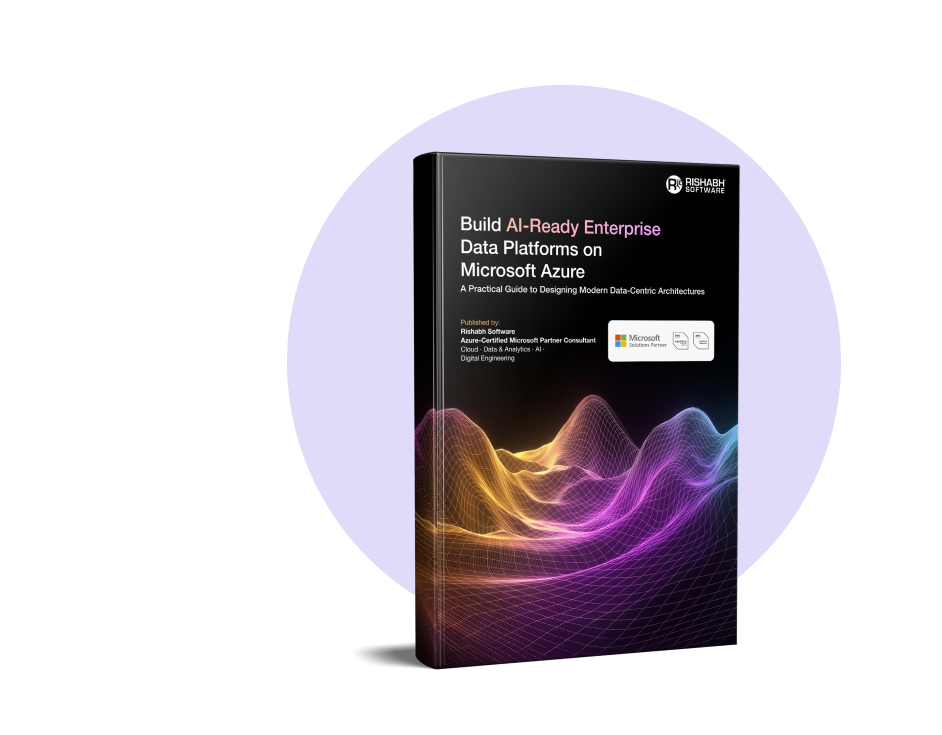
Take the Next Step Toward an AI-Ready Data Platform
Don’t Let Siloed Data Hold Back Your Next AI Initiative
A practical playbook for CTOs, data leaders, and IT operations teams moving from fragmented systems to a scalable and governed data platform. Built around lessons learned from real enterprise engagements across FinTech, Healthcare, Digital Manufacturing, and AdTech.
This eBook explores how to design a modern, data-centric platform on Microsoft Azure, with a focus on architecture, governance, security, cost optimization, and the foundations needed to support AI workloads.
What You’ll Learn
Impact of Data Fragmentation
Understand how fragmented data affects analytics, reporting, decision-making, and AI initiatives, and how a modern data platform can create a more reliable foundation.
Data-Centric Architecture
Understand why a data-centric approach matters for modern analytics and AI, and how it differs from an application-centric model.
Azure Data Platform Architecture
Explore the core layers of a modern Azure data platform, from data sources and ingestion to storage, processing, analytics, and AI workloads.
Cost Optimization
Explore practical approaches to managing Azure data-platform costs through workload-aware compute, scaling, storage management, and automation.
AI Readiness
Understand what your data foundation needs to support AI beyond the pilot stage, including data quality, accessibility, continuous data flows, monitoring, and governed access.
Governance & Security
Learn how data cataloging, lineage, identity, access controls, compliance, and security fit into the data platform.
What You’ll Take Away
- A four-layer Azure data platform blueprint covering data sources, ingestion, storage, and processing and analytics
- Five best practices proven across production deployments, not theory
- Insights from five real Rishabh Software engagements across data, application, cloud, and modernization initiatives
- Key considerations for building AI-ready data foundations
- Proven strategies to align engineering, finance, and product through FinOps best practices
- Industry perspectives covering AdTech, Digital Manufacturing, FinTech, Healthcare, and EdTech
Download the eBook to explore how enterprises can turn fragmented data into a governed foundation for analytics and AI, while keeping architecture, operations, and cloud costs under control.
2026 Enterprise Data Platform Trends & Insights

Wasted Analyst Time: 80% of analyst time goes to data prep instead of analysis in fragmented architectures.
Source: Gartner
Source: IBM
AI Projects That Stall: 67% of enterprise AI projects fail due to poor data quality or accessibility.
Source: MIT Sloan
The Data-Centric Advantage: Data-centric organizations are 23x more likely to acquire customers and 6x more likely to retain them.
Source: McKinsey Global Institute
Build the Data Foundation for Your Next AI Initiative
Explore the practical considerations behind modern Azure data platforms, from architecture and governance to cost optimization and AI readiness.