application security hardening for ai built platform

AI Application Security Hardening for a Production-Ready Spend Intelligence Platform

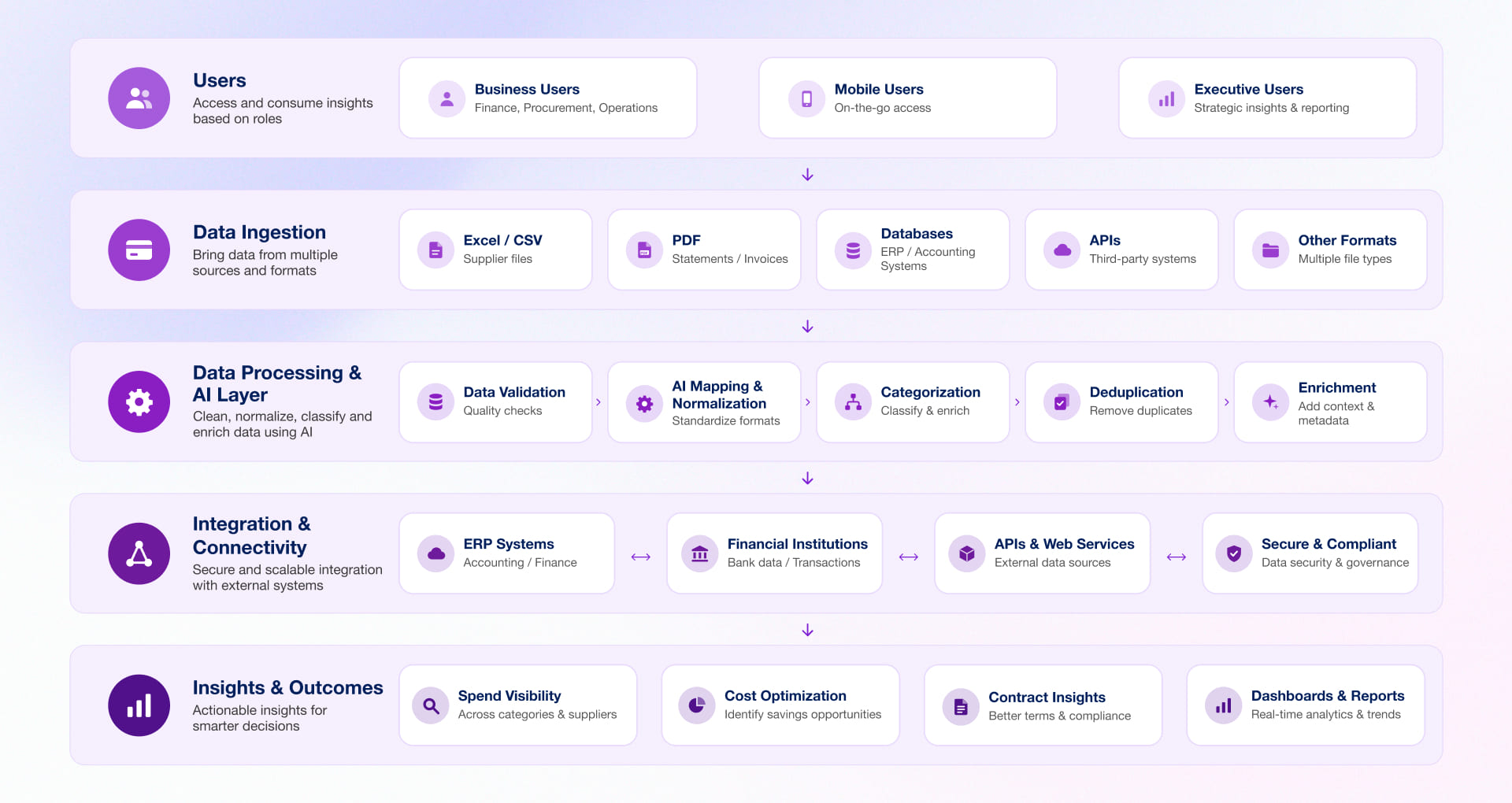
A fast-growing B2B SaaS provider serving the Middle East market had built a working cloud-based spend intelligence platform primarily through AI prompting, with development led by semi-technical teams. The application processed business data asynchronously and delivered analytics with AI-assisted insights. Managed authentication, a modular backend and automated functional tests were already in place. However, vibe coded app security had fallen behind.

The challenge extended beyond unfinished features. Security controls, architecture discipline and operational ownership had not developed at the same pace as the application. Rishabh Software assessed the existing architecture, retained what worked, strengthened AI application security and added the controls required for wider business use without a costly rebuild.

Capability

Application Engineering

Industry

B2B SaaS

Region

Middle East

Key Capabilities Delivered

The application already worked, with managed authentication, a modular backend and automated functional tests in place. Engineers focused on AI-generated code security, data protection, reliability and release validation gaps.

Hardened Database and Administrative Access

As part of application security hardening, the team strengthened database access controls, authentication and credential handling to reduce the risk of unauthorized access to customer data and administrative functions.

Assessed Asynchronous Processing and Recovery

The team assessed how background jobs behave under failure, helping identify recovery considerations beyond normal operating conditions.

Remediated Application Controls

Engineers fixed AI code security weaknesses, including unsafe rendering, exposed assets and other application-level flaws, to reduce unintended exposure of sensitive information.

Strengthened Customer Isolation

The team added validation at customer boundaries to reduce reliance on application-level filters alone and strengthen separation between customer data.

Challenges

Customer isolation relied heavily on application-level filters, creating a risk of cross-customer data exposure if a filter failed or was bypassed.

Database access and administrative controls had gaps that increased the risk of unauthorized access to customer data.

Unsafe rendering, exposed assets and session gaps created potential paths for unintended exposure of sensitive information.

External AI calls lacked consistent data-minimization controls, creating a risk that unnecessary customer information could be shared with external services.

Analytical context supplied by the browser could introduce untrusted inputs into AI-assisted analysis.

Existing functional tests covered expected application behavior but provided limited evidence of security controls, data isolation and behavior under broader production scenarios.

Solutions

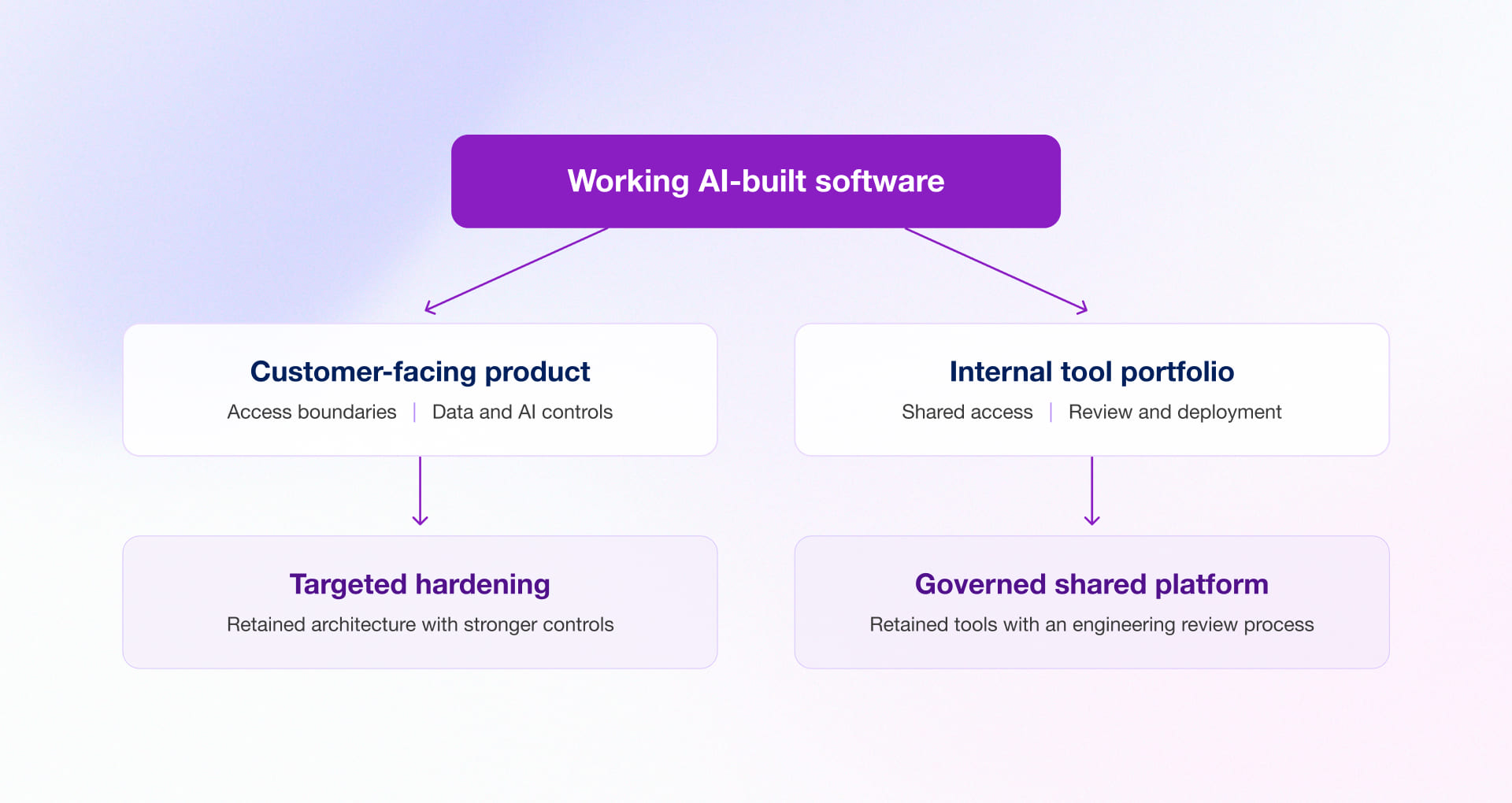
The targeted assessment confirmed that the existing architecture was sound. We retained the modular design, API, and background-worker split, and built the missing AI application security, validation, and release controls.

Trust-Boundary Enforcement

Engineers moved access checks and analytical logic into trusted server-side components, reducing dependence on information supplied by the browser for authorization and analytical decisions.

Preserved Architectural Boundaries

The existing API and background-worker separation was retained, keeping user-facing requests distinct from asynchronous processing and supporting clear separation of responsibilities.

Governed Data and AI Flows

The team introduced data-minimization controls for external AI calls and made provider data-retention practices and processing geography explicit considerations for business decisions.

Improved Release Accountability

The team added security checks and broader workflow validation alongside the existing functional test suite. This gave the client clearer evidence for release decisions and a prioritized list of follow-up engineering work.

Outcomes

0 +

automated tests reviewed as part of production readiness

0

API modules reviewed

0

frontend improvement areas identified

Technologies Used

Vercel
Python
AWS-S3
Railway
Celery

Project Snapshots

Recent Case Studies

Explore our success stories to see how we have helped clients overcome business challenges, drive innovation, and achieve measurable results with tailored solutions.