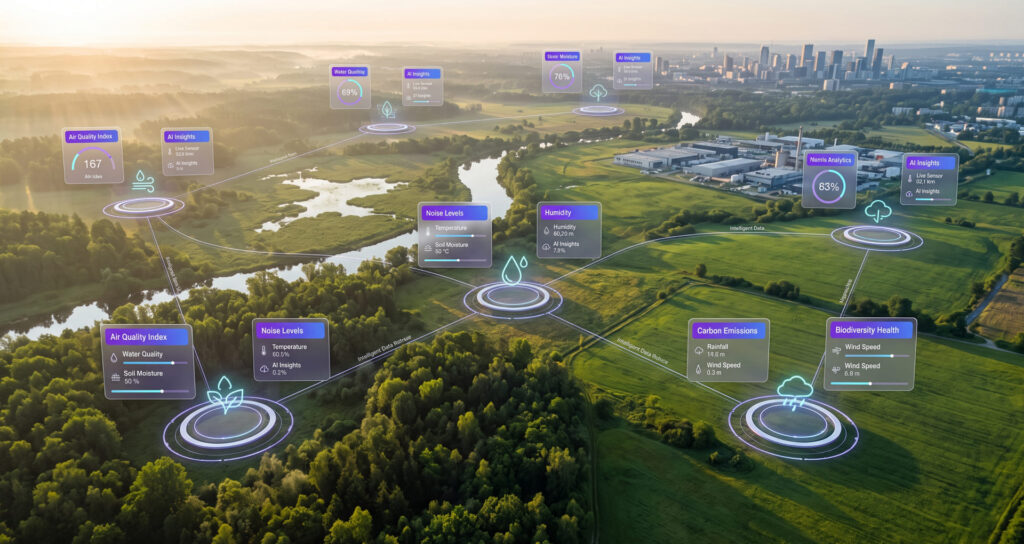
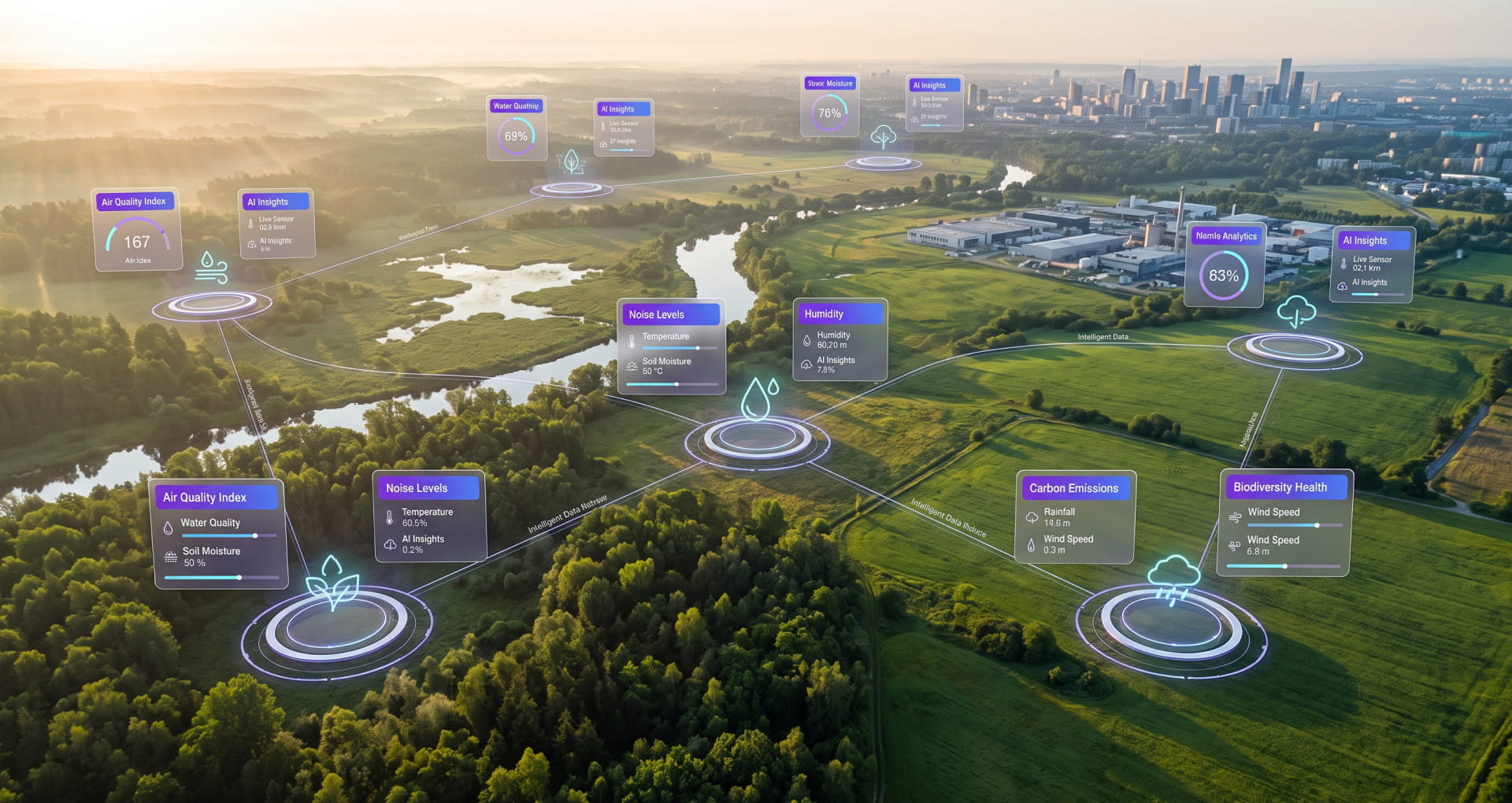
Following the merger of two IoT businesses, Rishabh Software helped unify their cloud platform, improve the reliability of device data, and establish a structured QA process for their companion mobile application.
Two US-based manufacturers of environmental and industrial IoT hardware merged into one company that covers weather monitoring, water quality, agricultural research and regulated cold-chain temperature logging. Each brand had its own device fleet, billing system and back office, and neither could talk to the other.
Feature delivery stalled. Field devices dropped data silently, and customers only found out when reports came back blank. A companion mobile app for regulated pharmaceutical and cold-chain customers was still shipping without structured QA. Rishabh Software stepped in as the long-term embedded partner, with a team tasked to unify both brands on one cloud environmental monitoring platform and build a repeatable QA practice for regulated mobile releases.
Capability
Cloud Application Development and QA Automation
Industry
Environmental and Industrial IoT
Country
United States
The business needed continuous engineering support to keep its cloud-based environmental monitoring solution reliable and release-ready, plus structured QA to move a compliance-sensitive mobile app from manual, error-prone releases to automated delivery.
The engineering team was embedded into the client’s delivery workflow, owning the Vue 3 front-end, the backend-for-frontend layer, and surrounding microservices end to end. Features shipped faster and issues got resolved before they escalated into outages.
A dedicated monitoring service catches ingestion gaps in real time and turns silent data loss into a clear signal the team can act on.
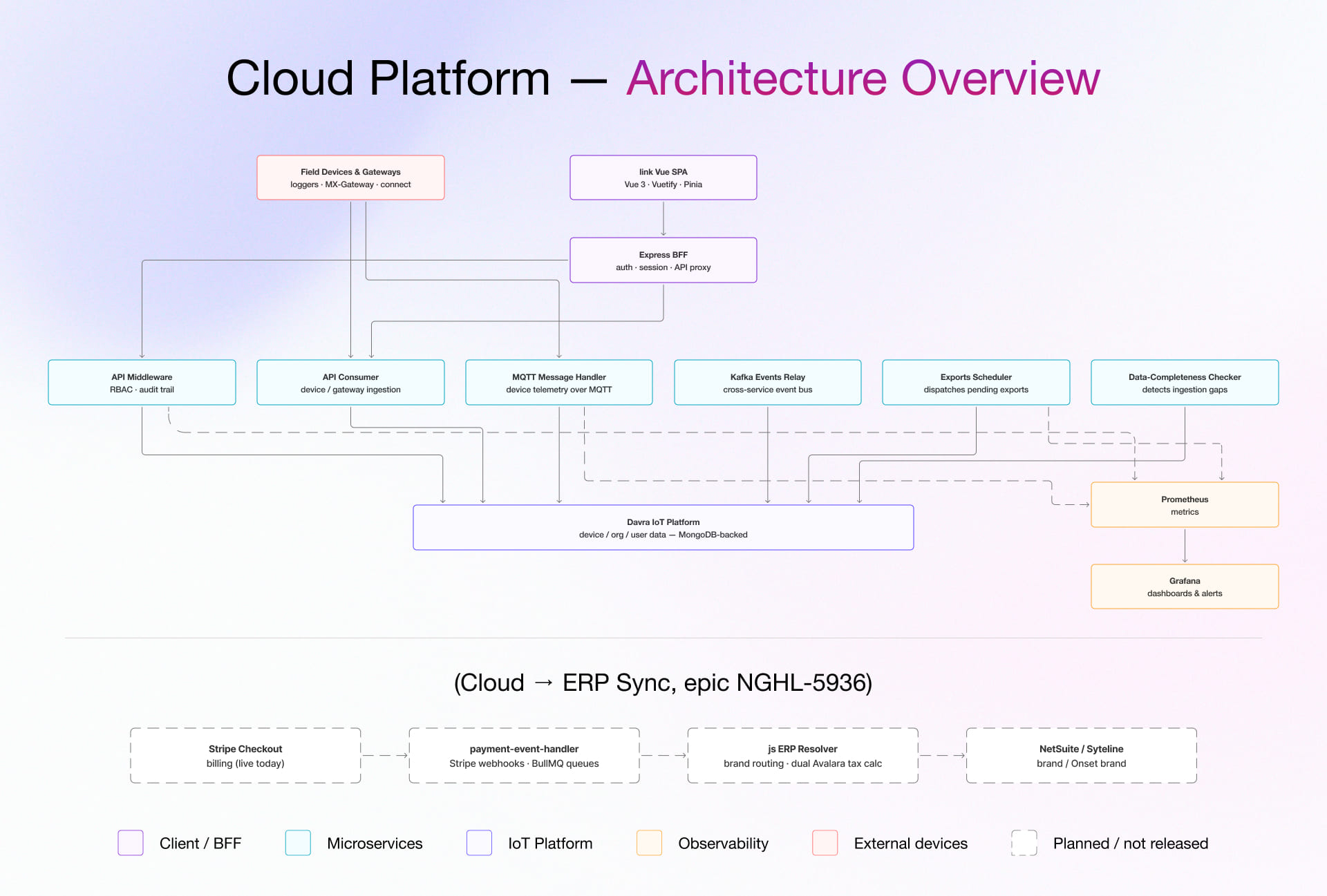
The team built and maintained a distributed ingestion architecture covering API consumption, MQTT message handling, Kafka-based event relaying and scheduled exports. Field devices on unstable networks had significantly reduced risk of silent data loss.
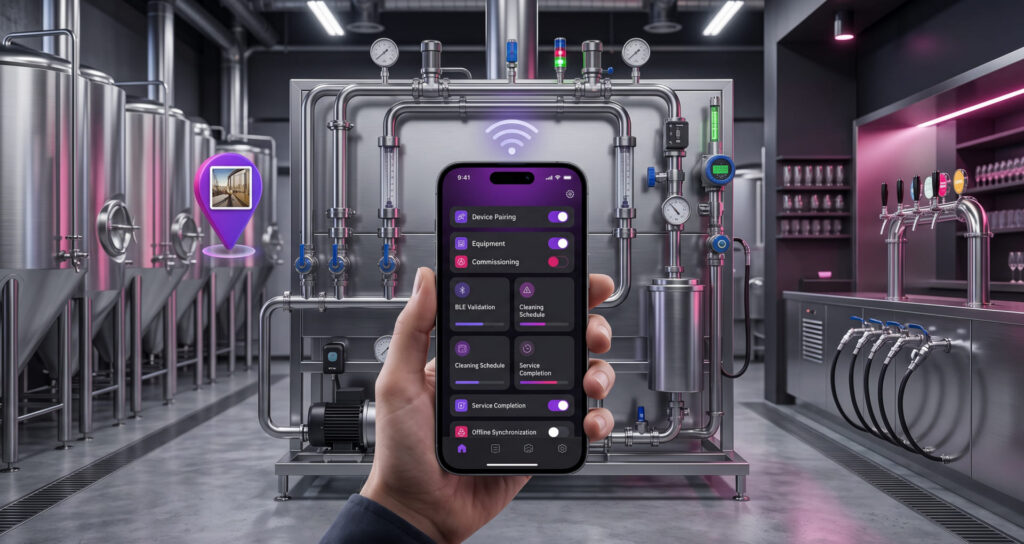
Ongoing QA automation support for the companion mobile app, covering regression testing and functional validation to help ensure data integrity and correctness standards before releases reach regulated end users.
Billing and account data lived in two different ERPs, so customers with products from both brands had no single view of their account.
A growing customer base and device fleet needed fast, consistent engineering support that an in-house team couldn't sustain cost-effectively.
Separate ERP systems, tax configurations and back-office workflows across product lines added constant integration complexity to a microservices layer that needed ongoing maintenance.
Remote field devices on MQTT and HTTP, running over unstable networks, risked delayed or missing telemetry with no way to catch the gaps.
Payments and refunds had to be reconciled manually which caused delays, resulted in errors and required extra accounting effort.
A regulated mobile app for pharmaceutical and cold-chain use cases needed release rigor that manual QA couldn't consistently deliver.
To address these challenges, Rishabh Software provided cloud application development expertise to build a cloud environmental monitoring platform designed to unify two merged brands without a disruptive rewrite. Here’s how we brought both brands onto one system while keeping existing customer data intact:
One Vue-based web application became the entire customer-facing experience, device configuration, live and historical data views, dashboards, maps, and account and billing management, for customers of both merged brands.
Instead of replacing the client’s core device platform, we built independently deployable Node.js and TypeScript microservices around it, each with its own deployment configuration, so business logic, data ingestion and event handling could evolve without touching the legacy core.
A dedicated completeness-checking service surfaced gaps in device data ingestion directly, and a shared observability package standardized Prometheus metrics and Grafana dashboards across every service the team shipped.
We built a payment event handler that consumed billing events and a shared ERP-resolver package to handle dual-instance tax calculation and route payments, renewals and refunds to the correct back-office system based on brand.
Reduction in cross-brand support handling time
Faster detection of data ingestion issues
Faster bug resolution time

Optimize your cloud infrastructure, implement robust solutions, and stay ahead of trends with our resource hub.