Seamless ERP Framework Upgrade to Latest .NET Version Without Operational Disruption
For a leading electrical components manufacturer in India operating multi-plant, business-critical production and finance systems.
A leading electrical components manufacturer with multi-plant operations relied on its legacy ERP system to run core business functions, including supply chain management, shop floor production, and financial processes.
As the system became increasingly critical to daily operations, underlying technology limitations began to introduce risks around security, compatibility, and long-term maintainability. The existing ERP was not aligned with modern infrastructure environments, making it difficult to support evolving business and IT requirements.
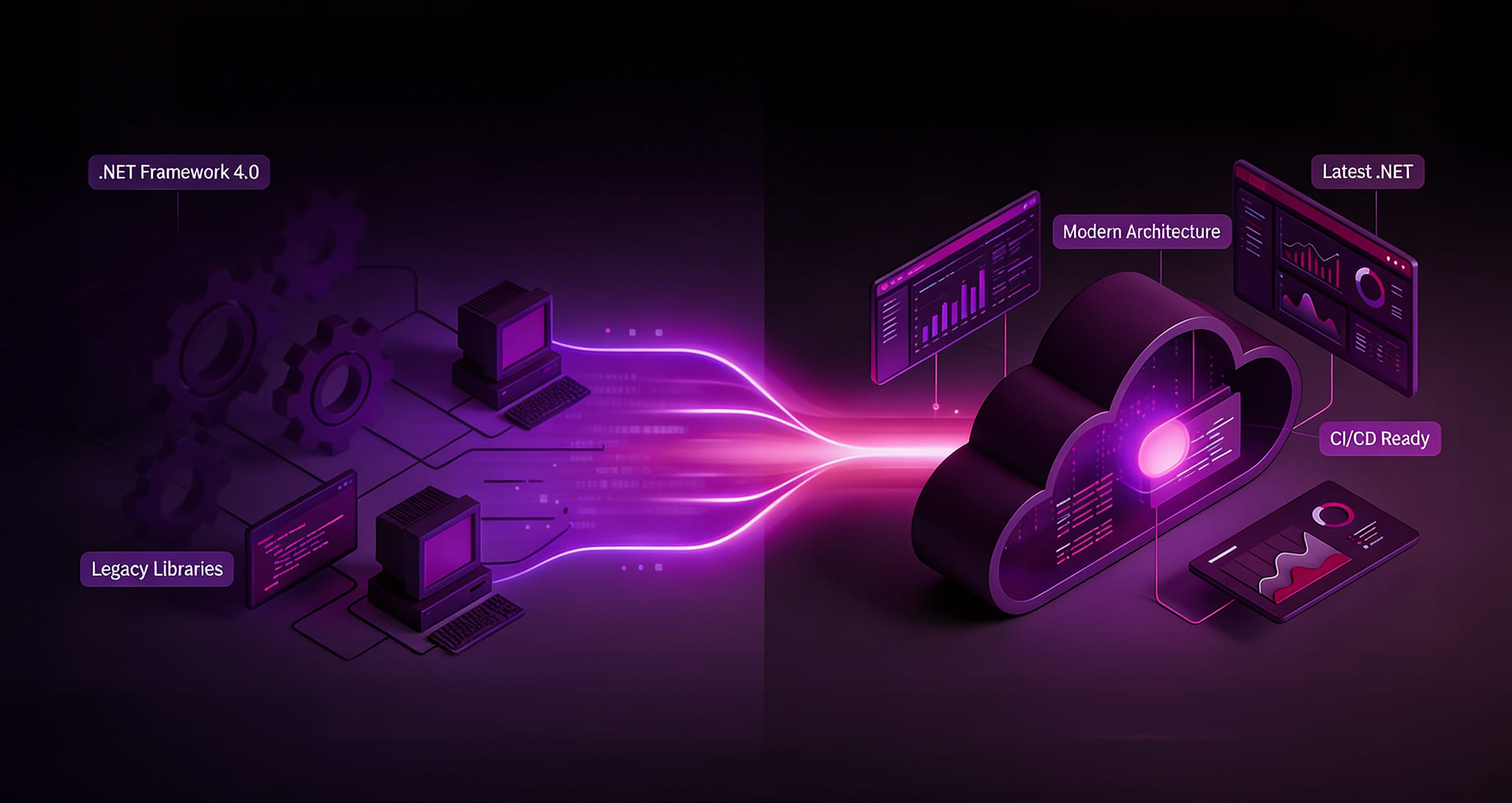
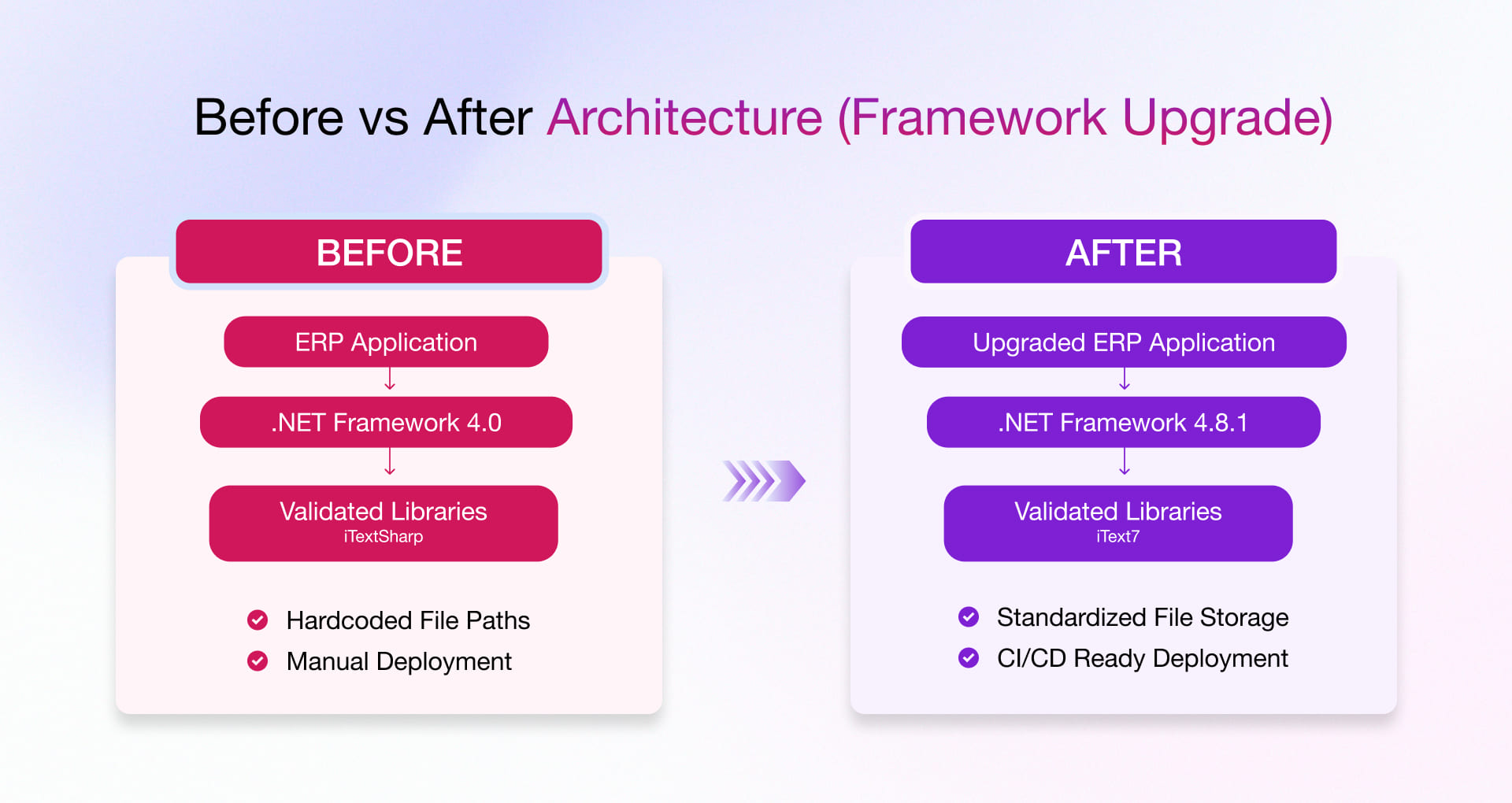
To address this, the client initiated a targeted modernization effort with a .NET Framework Upgrade, moving the ERP system from version 4.0 to 4.8.1. The objective was not to replace the system, but to strengthen its technical foundation, enhance security, ensure compatibility with modern Windows, IIS, and SQL environments, and prepare it for sustained and disruption-free operations.
Capability
Application Development & Maintenance
Industry
Digital Manufacturing
Country
India
Key Features
The framework upgrade strengthened the client’s ERP as a reliable system of record while preparing it for extension into a connected and data-driven manufacturing environment. Rather than replacing the existing system, the initiative focused on modernizing the ERP foundation to support future integration, improved visibility, and scalable operations across plants.
In-place framework modernization
Upgraded the ERP from .NET Framework 4.0 to 4.8.1 through targeted code and configuration enhancements, without changing the existing platform or disrupting business workflows.
Security and configuration hardening
Leveraged built-in security improvements available in .NET Framework 4.8.1, enhancing baseline security posture and compatibility with modern infrastructure.
Legacy dependency stabilization
Reviewed critical third-party components such as DevExpress, Crystal Reports, PDF, and barcode libraries; retained stable components and identified areas for future upgrades where required.
Business continuity through controlled rollout
Executed carefully managed transition with production-aligned UAT, structured regression validation with end-user involvement across critical modules to ensure system stability for high-impact modules, and rollback strategies, ensuring minimal disruption to ongoing plant operations and overall workflow through controlled rollout and validation.
Codebase standardization and maintainability improvements
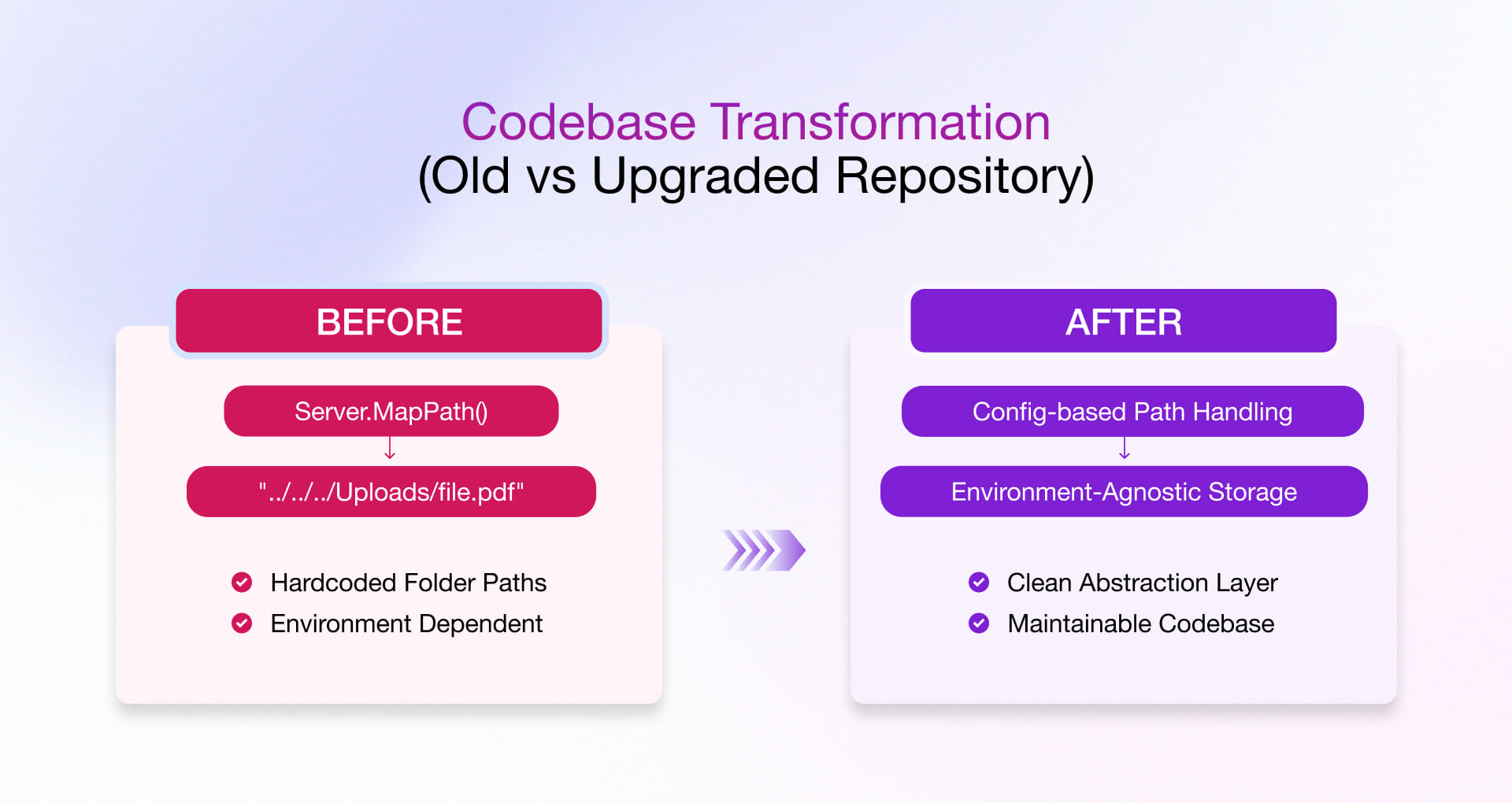
Standardized file upload and retrieval logic by removing hardcoded file paths across modules, improving maintainability and deployment flexibility.
Challenges
Aging ERP framework created compatibility and security risks on modern infrastructure
Legacy third-party components (DevExpress, Crystal Reports, PDF/barcode libraries) with limited support
Deprecated APIs and weak configurations impacted system performance and security
High regression risk due to tightly coupled database logic and extensive reporting
Minimal downtime tolerance, as the ERP powered daily shop floor and financial operations
Code synchronization complexity as ongoing production changes needed to be aligned with the upgraded framework codebase during execution
Solutions
Our approach focused on strengthening the ERP foundation through a controlled, low-risk modernization strategy. The team worked closely with business and IT stakeholders to assess dependencies, prioritize critical modules, and execute the upgrade in phases. By combining careful code remediation, environment alignment, and structured validation, we ensured that the upgraded system remained stable, secure, and fully aligned with ongoing business operations.
Security-first ERP upgrade approach
Addressed obsolete APIs, weak protocol defaults, and legacy configuration gaps as a part of .NET framework upgrade, improving overall security, compliance readiness, and runtime resilience.
Risk-managed deployment and regression assurance
Established a phased execution model with dependency review, structured validation/testing, environment parity, user validation, and cutover planning to reduce operational risk.
Component validation and output consistency
Recompiled and verified DevExpress and Crystal Reports dependencies, while standardizing report behavior and validating outputs across inventory, production, and finance modules.
Parallel codebase management
Seamlessly managed parallel codebases across pre-upgrade and post-upgrade environments, while continuously integrating ongoing business changes to keep modernization aligned with active operations.
Business logic preservation
Delivered the .Net framework upgrade without altering core business logic, preserving process continuity and ensuring a seamless experience for end users across critical functions.
CI/CD readiness enablement
Enabled CI/CD readiness by preparing the application for structured, repeatable deployment processes, supporting faster releases, improved control, and better alignment with Azure DevOps practices.
Outcomes
Improvement in application security readiness
Improved compatibility with modern infrastructure
Reduction in upgrade-related regression risk
Technologies Used






Project Snapshots

Recent Case Studies
Optimize your cloud infrastructure, implement robust solutions, and stay ahead of trends with our resource hub.