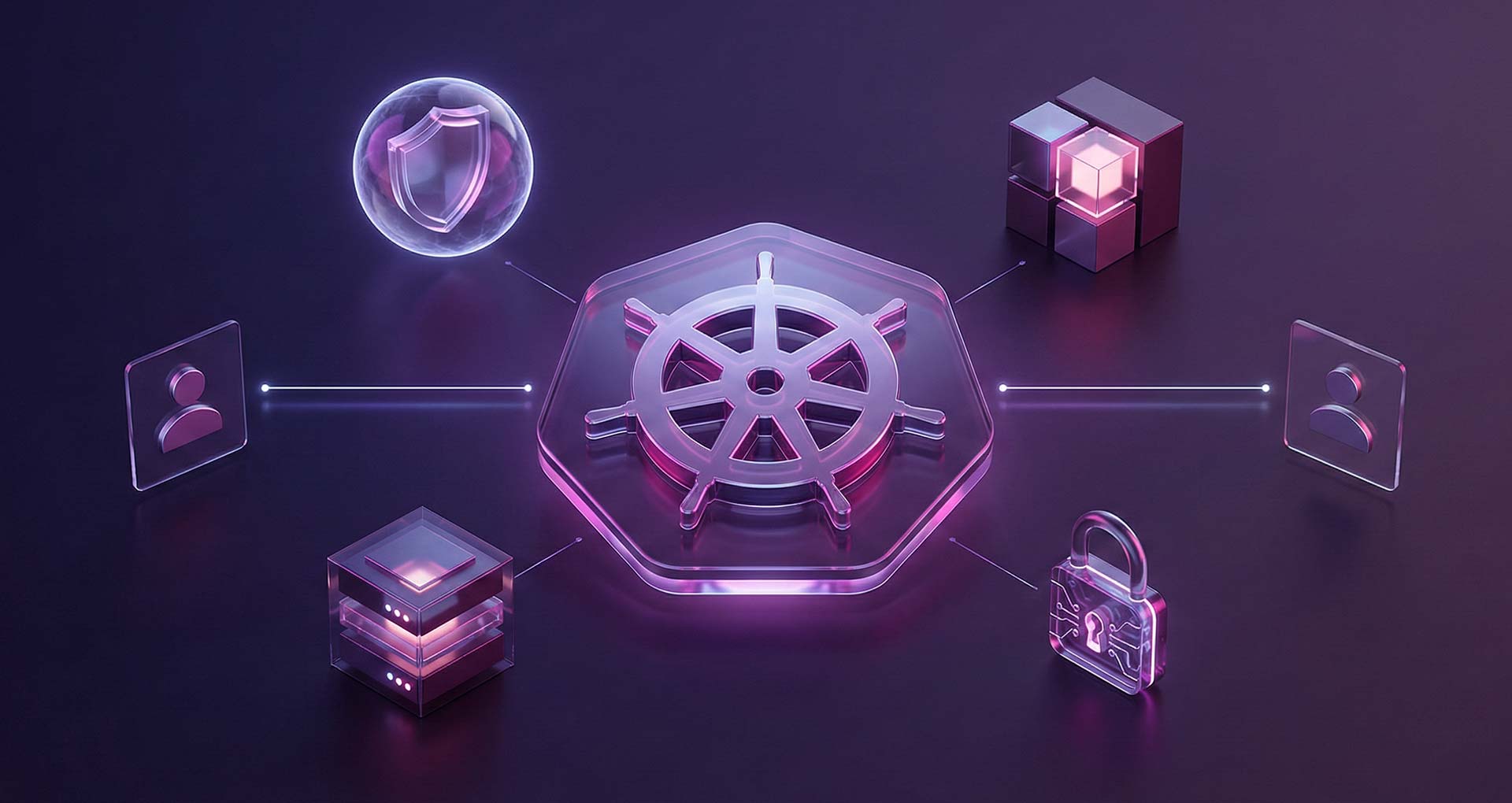

Kubernetes multi-tenancy allows multiple teams or business units to operate within a single cluster, sharing its underlying resources while maintaining strict isolation and governance. Though Kubernetes was initially built for single-tenant environments, modern setups leverage namespaces, role-based access control, network policies, resource quotas, and virtual clusters to segregate workloads.
This model enables enterprises to reduce infrastructure overhead, enhance scalability, and simplify management, all while preserving security, compliance, and performance boundaries across tenants.
Let us walk you through in detail how Kubernetes multi-tenant offerings work for businesses, the key considerations, challenges, and the way-out process/tactics.
Reasons to Go with Kubernetes Multi-Tenancy
Businesses and SaaS vendors have understood the importance of carefully selecting their infrastructure to remain safe, effective, and prepared for the future. The multi-tenancy feature of Kubernetes is a technology-oriented vision that is much more than just resource sharing, as it gives teams the freedom of choice while at the same time securing the workloads. It is a combination of efficiency and control, and it is helping the early adopters of this technology to change their processes and improve on the things that the old cluster models could not.

1. Boost Resource Efficiency
Kubernetes multi-tenancy helps you make the most of your infrastructure. Instead of maintaining several underused clusters, one shared setup can support multiple teams. Kubernetes automatically allocates CPU and memory based on real-time demand and microdecisions within the system. With ResourceQuotas and LimitRanges in place, no team can overuse resources, ensuring mature and consistent performance across workloads. As the saying goes, “A stitch in time saves nine,” and that applies perfectly to smart resource planning.
2. Simplify Cluster Operations
Managing one cluster is faster and cleaner than ramping up many smaller ones. Multi-tenancy provides a single control point for monitoring, updates, and governance. Onboarding a new project or customer becomes easy by creating a namespace and applying standard policies. This binds processes together, promotes nimbleness, agility, and open-mindedness, and helps teams stay focused on development instead of maintenance.
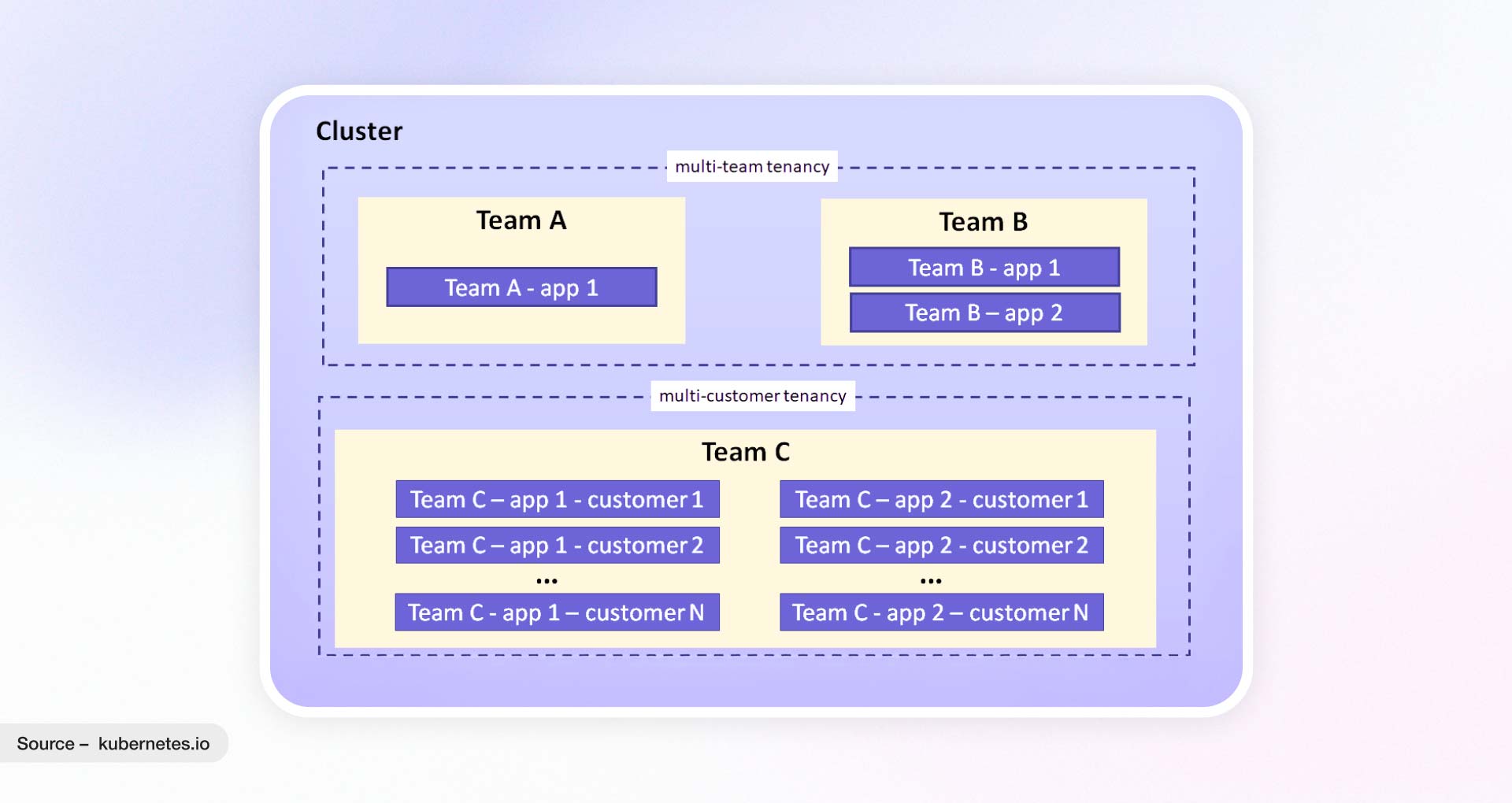
3. Strengthen Security and Isolation
Even within a shared setup, Kubernetes keeps every tenant isolated and secure. Namespaces create clear boundaries akin to private workspaces. RBAC defines who can access what, while NetworkPolicies control pod communication. Each tenant operates independently, protecting data and workloads from breaking into other environments.
4. Cut Costs and Scale Smartly
With multi-tenancy, you reduce the need for multiple clusters and minimize hardware and maintenance expenses. Shared infrastructure unbundles unnecessary complexity while maintaining performance and interoperability standards. It enables your business to scale efficiently with clear intent and operate with greater financial and operational clarity. As they say, “Don’t put all your eggs in one basket.” Kubernetes multi-tenancy strikes the right balance between efficiency and control. If you wish to understand more in detail, please go through our informative piece of content on Kubernetes Cost Optimization.
Kubernetes Multi-Tenancy Techniques
When more than one team or customer uses the same Kubernetes cluster, the way you separate and manage those workloads matters. Below are standard techniques each with trade-offs.
1. Namespace-Based Multi-Tenancy
In this model, each tenant gets its own namespace inside a shared cluster. Resources like CPU and memory are shared but managed with quotas and limits to reduce interference. The core control plane is still common. This method is lightweight and can be a good start for teams with lower isolation needs.

2. Cluster-Based Multi-Tenancy
Here, each tenant runs on an entirely separate cluster, control plane, nodes, everything. This offers strong isolation and is suited for tenants with high security or custom requirements. The cost and operational overhead are higher.
3. Virtual Cluster Multi-Tenancy
Virtual clusters (like vCluster) sit inside a physical cluster but provide each tenant with their own API server and control surface. Workloads still share underlying compute, but tenant isolation is stronger than with simple namespaces.
4. Hybrid Models
Many organizations choose a mix: for less critical workloads, they use namespace-based tenancy; for high-risk or paying customers, they allocate dedicated clusters or virtual clusters. The key is aligning the model with the tenant’s risk, compliance, and performance requirements.
Top 5 Key Considerations of Multi-Tenancy in Kubernetes
Multi-tenancy in Kubernetes enables businesses to serve multiple teams or customers efficiently & simultaneously, along with maintaining control, security, and scalability. However, success depends on carefully planned decisions that balance cost, compliance, and operational needs. For leadership roles like CEOs and CTOs, understanding what to prioritize in each area is essential to ensure the setup delivers both technical and business value.
1. Choosing the Right Tenant Isolation Model
Selecting the right isolation model sets the tone for any multi-tenant Kubernetes environment. The setup depends on who shares the space, the level of trust, and workload sensitivity.
- For internal teams, namespace-based isolation works well. It is lean, quick, and economical. External clients or regulated workloads need tighter boundaries.
- Dedicated or virtual clusters create that control. The key is balancing cost hygiene with governance discipline.
- Shared or virtual clusters accelerate scale, while isolated clusters suit privacy and compliance priorities.
2. Security Constraints and Enforcement
Security forms the backbone of every multi-tenant setup. Shared infrastructure demands clear boundaries and accessibility areas from the start. Role-Based Access Control (RBAC) defines access points precisely. Network policies shape communication flow between tenants. Pod Security Standards preserve environment integrity. Secrets belong in vaults, either Kubernetes Secrets or external systems. Strong setups rely on constant security muscle: audits, penetration tests, and live compliance checks. Adopt a zero-trust mindset where every user and workload verifies before acting.
3. Resource Management and Performance Fairness
Resource fairness maintains stability across tenants. One tenant overusing capacity can degrade others. Set boundaries early with ResourceQuotas and LimitRanges. Monitor vital signals like CPU spikes, memory drift, and pod restarts. Autoscaling absorbs demand shocks and relaxes during low traffic. Leaders who observe usage trends gain predictive control. The goal is efficiency without exhausting the nodes.
4. Observability and Governance
Observability provides visibility into cluster behavior. There are wide range of tools are accessible such as Prometheus, Grafana, and OpenTelemetry to get transparency and throughout visibility without overlap. Governance defines access rules, compliance checks, and operational rhythm. Automated alerts and anomaly detection keep teams ahead of incidents. Regular audits and escalation paths uphold accountability. Together, observability and governance remove noise and surface actionable clarity.
5. Cost Allocation and Optimization
Cost tracking builds awareness across tenants. Tools like Kubecost and OpenCost reveal who consumes what and at what pace. Showback or chargeback models encourage accountability. Value emerges when waste is spotted early, from idle nodes to oversized pods. Cost optimization is not just about savings but about sharpening infrastructure intelligence. Sustainable tuning delivers smarter, leaner performance over time.
Common Challenges in Kubernetes Multi-Tenancy & How to Solve Them
1. Access control
-
- Challenge: Hard to manage who can access what.
- Solution: Use tools that help assign permissions cleanly, keep separate access rules for each tenant, and review permissions regularly to avoid mistakes.
2. Isolation
-
- Challenge: Tenants can affect each other’s apps.
- Solution: Add strict rules to block unwanted communication, limit what each tenant’s apps can do, and use scanners to catch risky settings early.
3. Resource use
-
- Challenge: One tenant may overuse CPU or memory.
- Solution: Set fair limits for each tenant, track usage in real time, and send alerts when someone crosses safe levels.
4. Visibility
-
- Challenge: Hard to understand what tenants are doing.
- Solution: Use logging tools to see activity clearly, add audits to track changes, and create simple dashboards for quick insights.
5. Cost
-
- Challenge: Difficult to know who is driving the bill.
- Solution: Use tools that break costs by tenant, add tags to track usage properly, and share monthly reports so everyone is aware.
6. Maintenance
-
- Challenge: Updates and fixes impact all tenants.
- Solution: Do upgrades in planned windows, test changes in separate environments first, and use virtual clusters to reduce impact during updates.
How Rishabh Software Can Be Your Guide to Kubernetes Multi-tenancy
Managing multi-tenant Kubernetes setups demands clarity, discipline, and real-world experience, and that’s exactly where our team steps in. With years of hands-on experience across clusters of varying sizes, we help businesses and individual teams adopt Kubernetes the right way. From tenant isolation to policy, quota, and access control configuration, our Kubernetes consulting approach focuses on what actually works in production, not just theory.
We guide you through every layer of multi-tenancy, architecture, governance, automation, and security so your platform stays reliable and efficient as you grow. Our consulting model is built around practical implementation, predictable scaling, and clear documentation, ensuring you avoid common mistakes and get a multi-tenant setup that’s stable, secure, and easy to operate.
Frequently Asked Questions
Q: What is the difference between single-tenant and multi-tenant Kubernetes?
A: With single-tenant Kubernetes, each team has its own cluster, allowing for clear isolation but requiring additional operational load (cost) to manage each cluster separately. Multi-tenant Kubernetes follows a shared platform. There is one cluster used by many teams, with clear policies, quotas, and guardrails. Resource utilization is much better, environments can be provisioned faster, and the operational model allows for better scalability without losing tenant separation.
Q: What is multi-tenant Kubernetes?
A: A shared-cluster model where teams or customers run workloads in one platform, with strict isolation, policies, and resource boundaries.
Q: What are the key use cases of multi tenancy in Kubernetes?
A: Key use cases of multi-tenancy in Kubernetes
- SaaS platforms hosting many customers
- Enterprises consolidating teams into one cluster
- Dev/Test environments needing fast spin-ups
- Cost optimization by reducing cluster sprawl
- Managing distributed or edge workloads