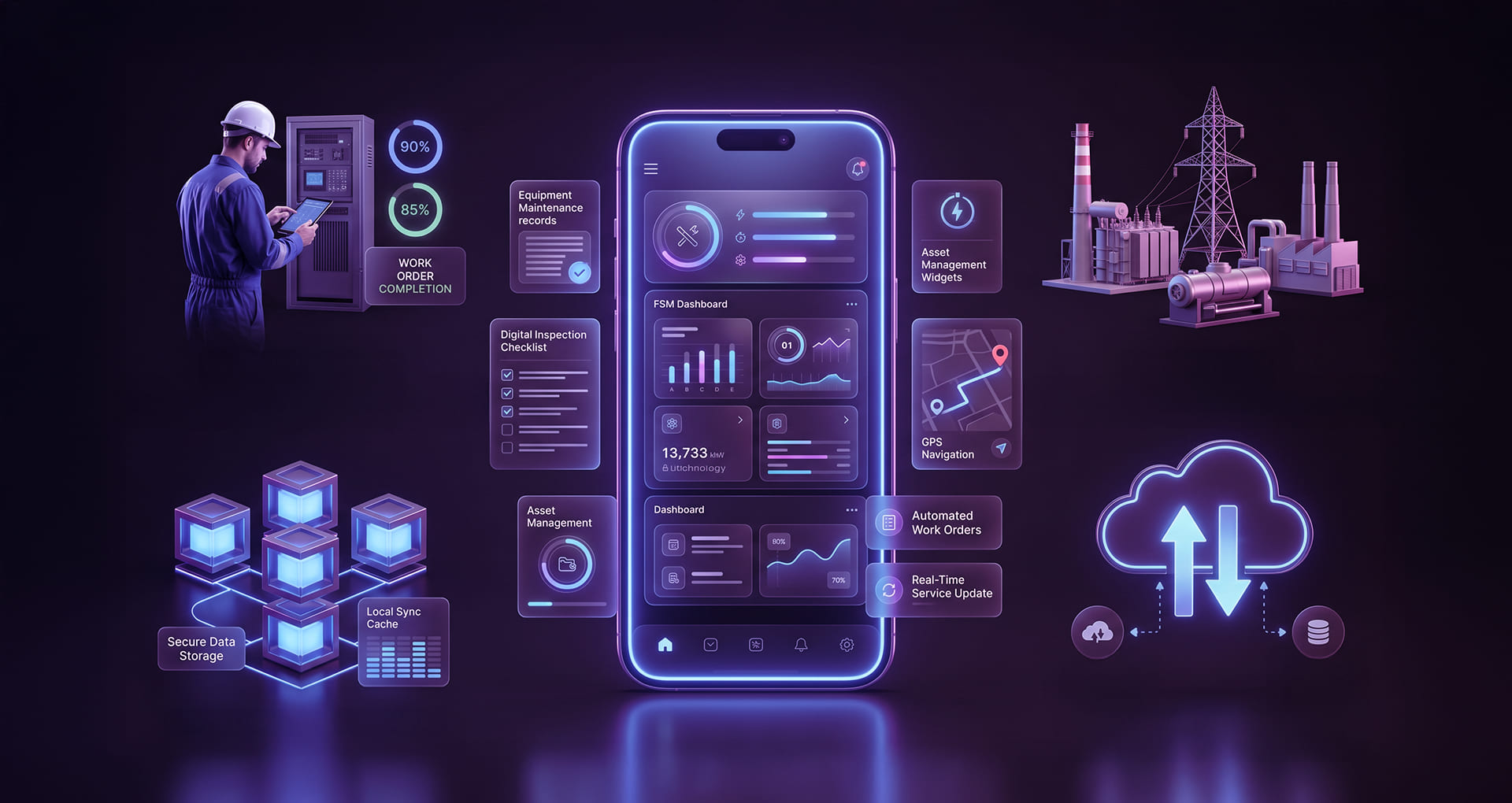
A field technician arrives at a remote industrial site to complete an urgent maintenance inspection. Partway through the job, mobile network connectivity becomes unstable. Equipment records stop loading, inspection updates fail to sync, and service notes remain inaccessible to central teams. In distributed field operations, these disruptions affect more than technician convenience. They slow maintenance workflows, reduce visibility across service operations, and delay response cycles for customers and dispatch teams alike.
Many traditional field service platforms are designed for always-connected environments. However, field teams often operate in locations where stable connectivity cannot be guaranteed, including utility infrastructure sites, manufacturing facilities, warehouses, and remote service locations.
Offline field service management applications address this challenge by allowing technicians to continue accessing work orders, updating inspection data, capturing service records, and completing operational tasks without network dependency.
In this blog, we’ll discuss why conventional field service applications struggle in disconnected environments and how offline-first field service management app help businesses improve technician productivity and operational continuity.
Why Traditional Field Service Apps Struggle in Low-Connectivity Environments?
Field service teams often operate on remote industrial sites, in warehouses, and in other low-connectivity environments where uninterrupted access to service data is critical. However, many traditional field service platforms rely heavily on continuous internet access. When connectivity becomes unstable, technicians face delays in accessing work orders, updating inspection records, and completing service tasks efficiently.
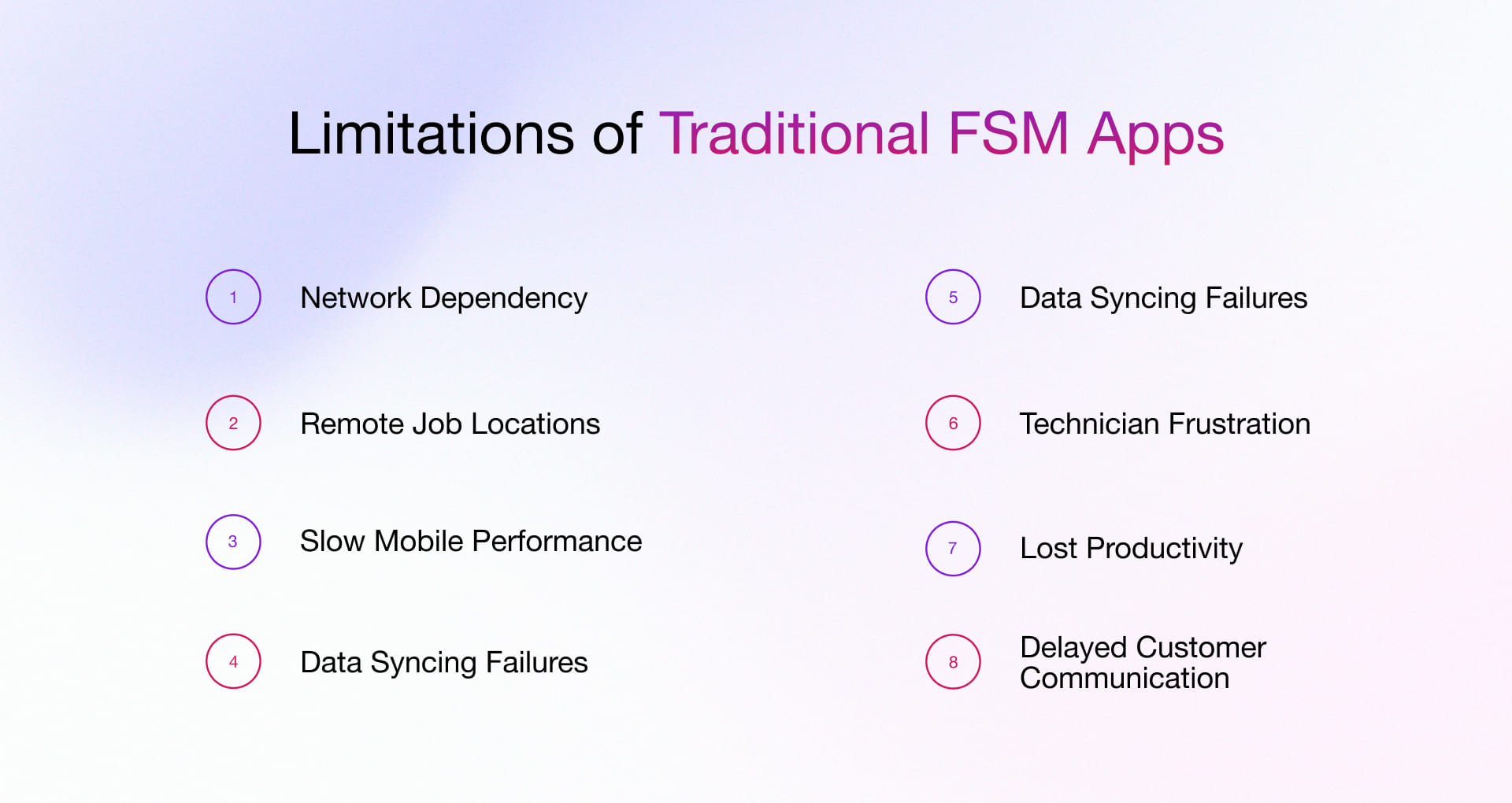
Network Dependency
Many traditional FSM platforms rely on continuous internet access to retrieve work orders, service history, and inspection data. In remote field environments, even short network disruptions can interrupt workflows, delay updates, and prevent technicians from completing service tasks efficiently.
Remote Job Locations
Field service management teams often operate across utility infrastructure sites, industrial facilities, warehouses, and other remote environments where maintaining stable connectivity is difficult. Applications designed for always-connected environments struggle to support uninterrupted field operations in these conditions.
Slow Mobile Performance
Legacy or cloud-heavy FSM applications often perform poorly in weak-network environments. Slow loading times, delayed responses, and lag between workflows can slow technician execution, especially during high-volume service operations.
Data Syncing Failures
Inconsistent connectivity can interrupt data synchronization between field devices and central systems. As a result, inspection records, service updates, or task statuses may remain incomplete or outdated, limiting visibility for dispatch and operations teams.
Duplicate Entries
When updates fail to sync properly, technicians are often required to re-enter inspection details, customer information, or service notes manually. Along with increasing administrative effort, duplicate entries can also lead to reporting inaccuracies and operational inconsistencies.
Technician Frustration
Frequent application failures, inaccessible records, and delayed updates disrupt field workflows and create unnecessary friction for technicians. Over time, unreliable applications can affect adoption rates and reduce workforce efficiency.
Lost Productivity
Connectivity disruptions increase technician downtime by slowing access to job information, delaying updates, and forcing repeated workflows. These inefficiencies directly affect response times, technician utilization, and overall service execution.
Delayed Customer Communication
Limited visibility into field activity makes it difficult for support and dispatch teams to provide accurate service updates. Delayed communication, missed ETAs, and inconsistent status reporting can negatively affect customer experience and SLA performance.
How Offline Field Service Management Applications Keeps Field Operations Running Anywhere
Offline-first field service management mobile application helps enterprises maintain uninterrupted field operations in low-connectivity environments. By allowing technicians to continue inspections, access service records, and complete tasks without network dependency, these applications help improve response times, service efficiency, and overall field execution. Here are some of the key benefits of offline-first mobility solutions for field service teams.
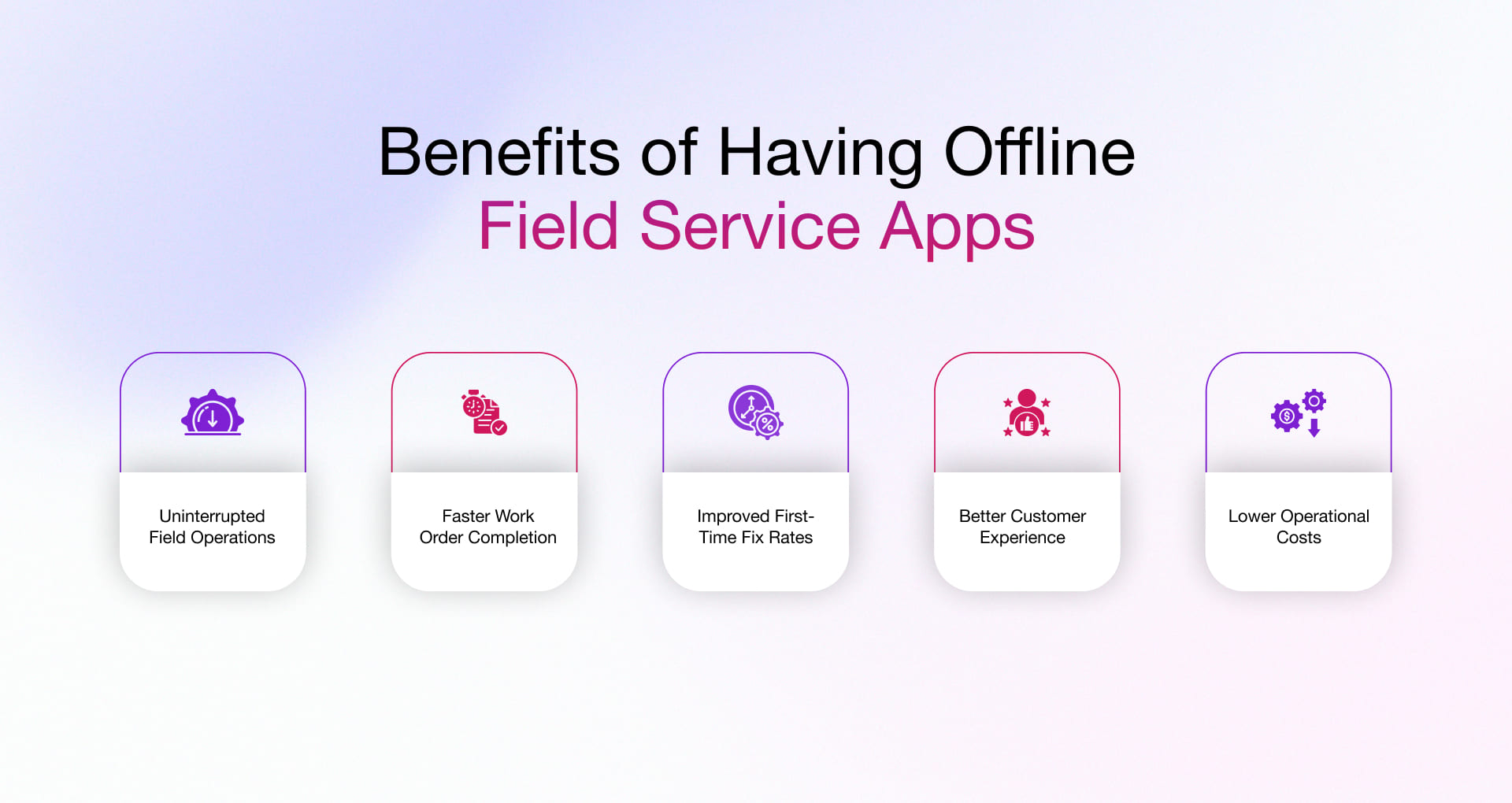
Uninterrupted Field Operations
Field operations should not come to a standstill because of unstable connectivity. Field operations cannot pause every time connectivity becomes unstable. A field service app allows technicians to continue accessing work orders, inspection checklists, service history, and customer information even in low-network or completely offline environments.
Whether teams are working in remote infrastructure sites, industrial facilities, or underground service locations, operations continue without disruption. This level of continuity helps enterprises reduce service delays, maintain workflow consistency, and improve overall field workforce management efficiency.
Faster Work Order Completion
Offline-first field service management application reduces delays caused by slow loading times, failed submissions, and interrupted workflows. By storing critical service data locally on the device, technicians can continue inspections, update task statuses, and complete work orders without waiting for network access. Once connectivity is restored, updates synchronize automatically with central systems.
Improved First-Time Fix Rates
Technicians often need quick access to equipment history, maintenance records, and troubleshooting documents while working on-site. Offline access to this information helps teams diagnose issues faster, make informed decisions, and resolve problems during the first visit more effectively.
Better Customer Experience
Delayed updates and limited field visibility can affect customer communication during service operations. Offline-first field service applications help technicians continue capturing service records, updating job statuses, and completing inspections without disruption. This allows support and dispatch teams to maintain more accurate service communication and improve overall customer experience.
Lower Operational Costs
Repeated visits, manual rework, and service delays can increase operational overhead across field operations. By reducing workflow interruptions and improving technician utilization, offline-first applications help organizations operate more efficiently across distributed service environments.
Empower Distributed Field Teams with Offline-First Field Service Management App from Rishabh Software
Building an effective offline-first field service solution requires more than mobile application development. It requires a clear understanding of field operations, enterprise workflows, system integrations, and the realities of working in low-connectivity environments.
With more than two decades of experience delivering enterprise software solutions, we help enterprises build scalable field mobility applications designed for operational continuity across distributed service environments.
Our key capabilities include:
- Offline-first mobile application development for field operations
- Custom FSM application development and modernization
- Offline synchronization and local data storage architecture
- Integration with ERP, CRM, asset management, and IoT platforms
- Cross-platform mobility solutions for distributed field teams
- Scalable cloud-connected applications for enterprise operations
By focusing on usability, performance, and workflow continuity, we help enterprises improve field execution, reduce operational inefficiencies, and support long-term modernization initiatives.
Frequently Asked Questions
Q: What is an offline-first field service management mobile application?
A: An offline field service management mobile app allows technicians to access work orders, update service records, capture signatures, and complete tasks without an internet connection. The app automatically synchronizes data once connectivity is restored.
Q: How does an offline field service management app improve technician productivity?
A: Offline FSM mobile app eliminates dependency on constant connectivity, allowing technicians to continue inspections, asset maintenance, reporting, and task updates without interruptions. This reduces idle time and accelerates the completion of work orders.
Q: Can offline field service apps sync data automatically once internet connectivity is restored?
A: Yes. Offline-first applications are designed with synchronization mechanisms that automatically update field data, service reports, customer information, and work orders once the device reconnects to the network.
Q: How do offline FSM applications help improve first-time fix rates?
A: Technicians can access equipment history, manuals, inspection checklists, and customer information offline, enabling them to diagnose and resolve issues more effectively during the first visit.
Q: Is offline mobile field service management app secure?
A: Modern offline FSM applications use encrypted local storage, secure authentication, role-based access control, and protected synchronization methods to ensure enterprise-grade security and compliance.