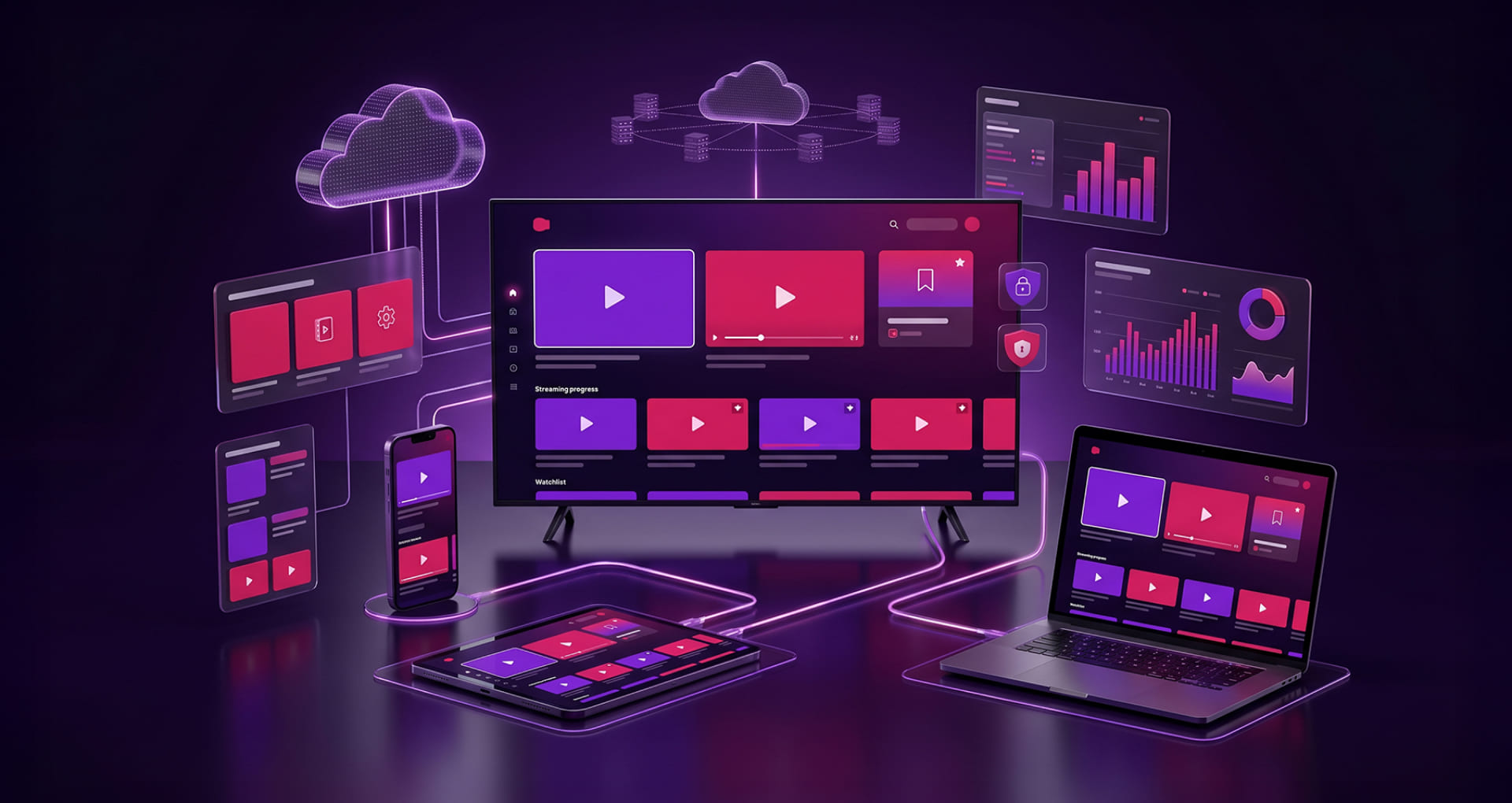

As programmatic CTV advertising continues to grow, publishers are accumulating large volumes of first-party data across streaming platforms, devices, subscription systems, analytics tools, and ad tech ecosystems. However, this data often remains siloed, making it difficult to unify audience signals, build actionable segments, and measure performance. Without the right AdTech infrastructure, publishers struggle to maximize revenue from first-party audience activation across CTV inventory. Industry projections estimate that programmatic CTV ad spending will reach $46.89 billion by 2028, driven by continued double-digit market growth.
In a privacy-first advertising ecosystem, advertisers are looking for trusted audience signals that go beyond broad demographics. For CTV publishers, this creates a clear opportunity to turn consented viewer data into premium audience segments and activate them through programmatic CTV channels such as SSPs, PMPs, curated deals, and programmatic guaranteed campaigns.
This blog explores how CTV publishers can turn fragmented first-party audience data into monetizable audience products using AdTech infrastructure, data engineering, analytics, and AI-driven audience intelligence. It also covers audience segmentation, activation, and CTV monetization strategies across programmatic advertising environments.
Why First-Party Data Is Your Strongest CTV Revenue Lever?
First-party data in programmatic CTV advertising is reshaping how publishers approach programmatic CTV monetization. As advertisers prioritize privacy-safe targeting and measurable audience engagement, publishers can use consented viewer data to improve audience segmentation, increase inventory value, and build premium advertising opportunities across programmatic CTV channels.
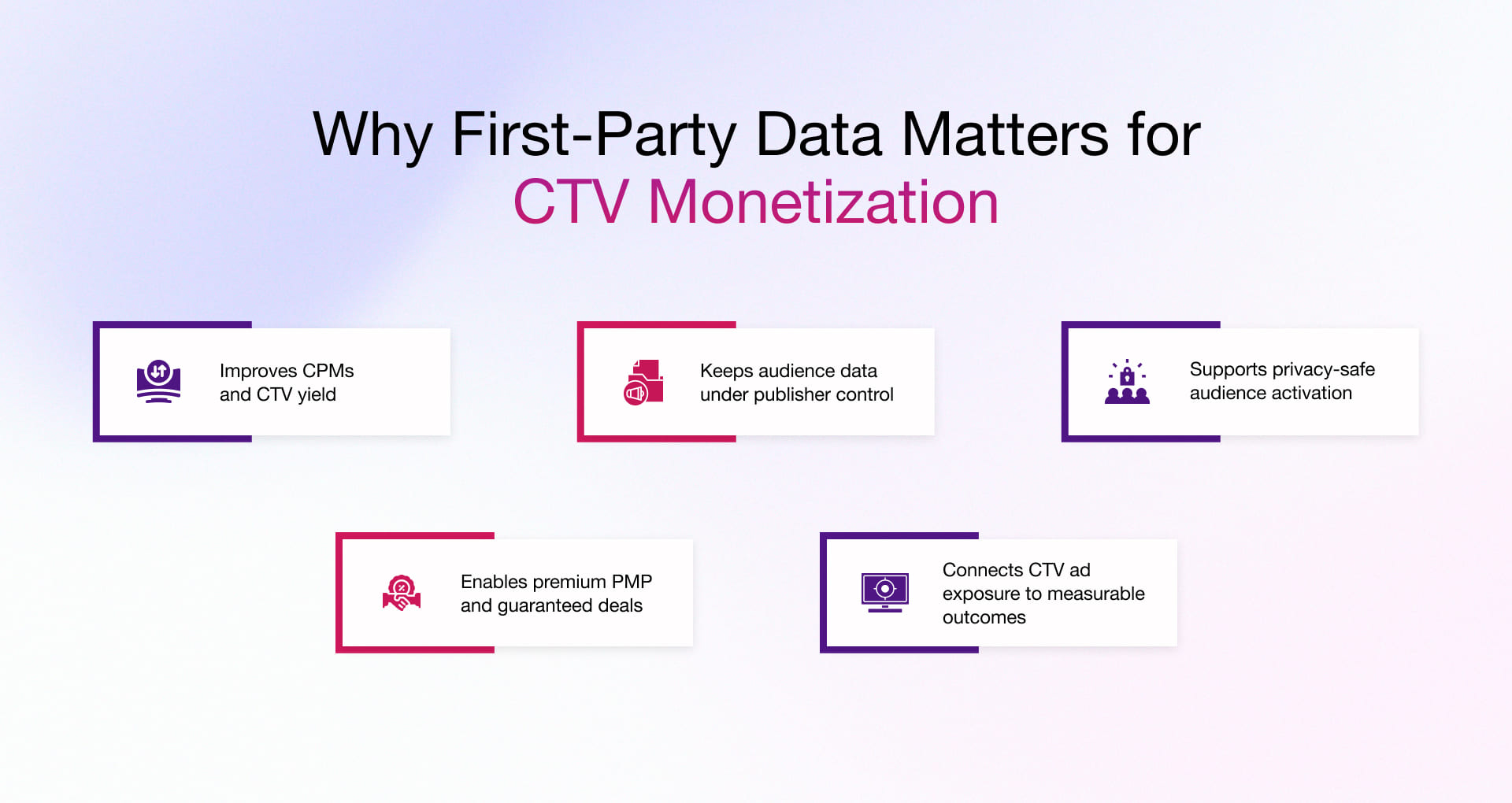
Direct Impact on CPMs and CTV Yield
First-party data in programmatic advertising gives publishers a stronger way to improve CPMs and CTV yield across owned and operated CTV inventory. By passing first-party audience signals through OpenRTB bid requests, the demand side platform gains clearer visibility into core audiences, viewer behavior, and advertising goals, leading to stronger bid competition and higher-value demand.
Control Over Data Leakage and Monetization
Programmatic advertising first party data helps publishers keep audience intelligence within their own AdTech ecosystem instead of sharing value across external providers. With CDPs, supply-side platform integrations, audience stores, and ad servers, publishers can build new revenue streams while maintaining control over first party CTV data monetization and audience packaging.
Built for a Privacy-First Advertising Ecosystem
As industry continues to adjust to privacy-first advertising models, 1st-party data programmatic strategies are becoming the safest path for audience activation. Data collected through subscriptions, streaming apps, and viewer interactions supports compliant targeting, measurement, and activation without exposing sensitive user information.
Foundation for Premium Programmatic Deals
Pre-built audience segments powered by first-party data are becoming a key driver for PMP and programmatic guaranteed deals. Publishers can package audiences around marketing goals, category trends, and advertiser demand, enabling buyers to reach new audiences with more precise targeting opportunities.
Enables Measurable, Performance-Driven CTV Advertising
First-party data in programmatic advertising is no longer limited to audience targeting. By connecting and enabling secure data-sharing setups, publishers can track how ad views lead to actions on different devices. This helps make the results of CTV ads and their impact on business easier to see.
Activating First-Party Data in Programmatic CTV Deals
The U.S. digital ad market, valued at $348 billion, is facing more challenges with personalization. With signal loss, evolving privacy regulations, and third-party cookie deprecation reshaping the ecosystem, adopting a first-party data strategy has become increasingly important for publishers across multiple areas. Here, we have covered everything you should know about activating first-party data for programmatic advertising monetization on CTV platforms.
- Server-Side Data Activation (S2S)
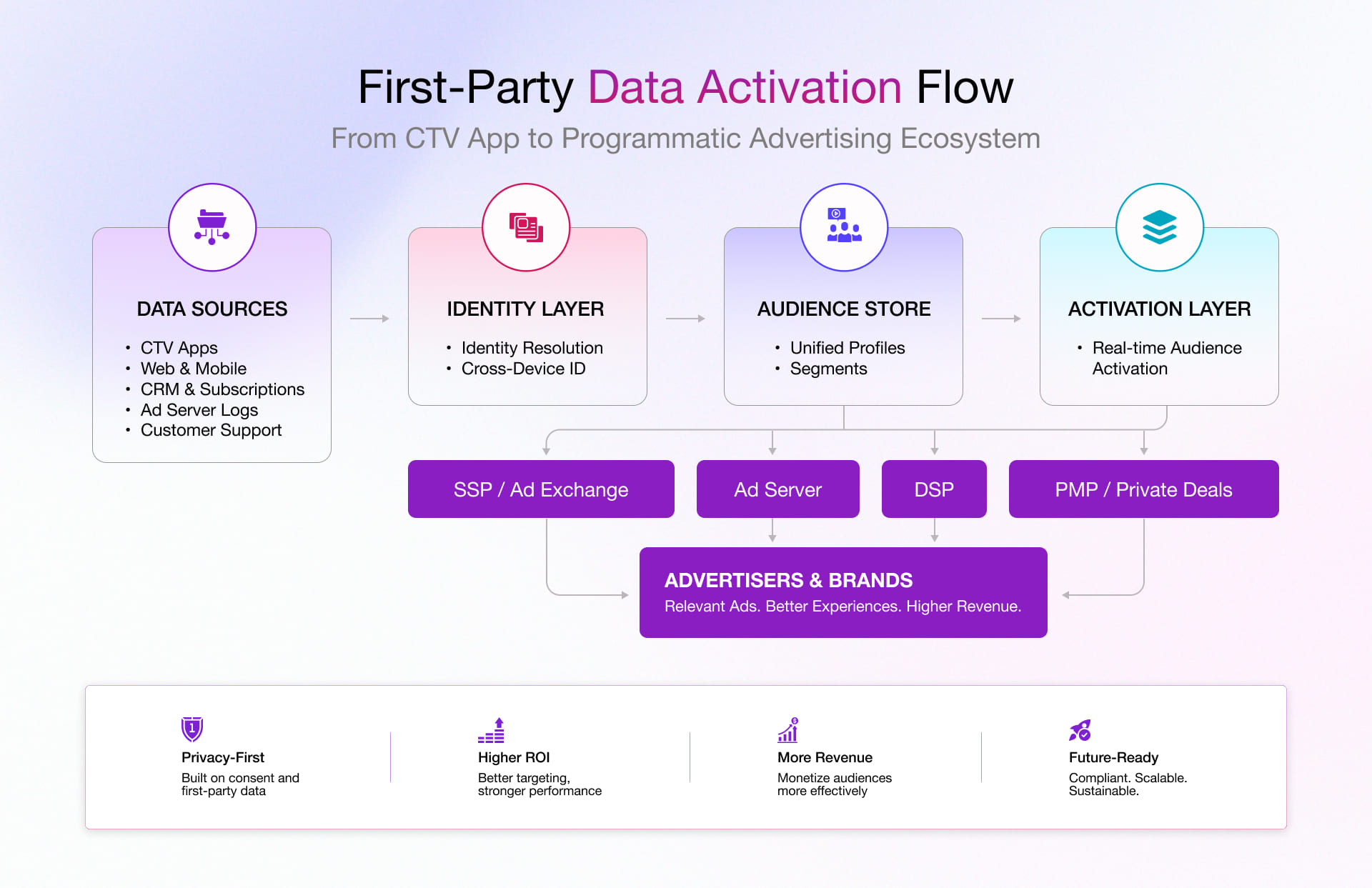
Programmatic CTV advertising is steadily moving away from heavy client-side tracking. The reason is simple. Publishers need more reliable audience signals and faster activation across programmatic systems. By connecting first-party audience data directly with SSPs, ad servers, and identity layers through server-side frameworks, publishers can support real-time activation with far better consistency and match rates. - The Data Clean Room (DCR) Architecture
Advertisers want measurable outcomes from CTV campaigns, not just reach. That’s where data clean rooms start becoming important. They give publishers and advertisers a secure environment to match first-party audiences, measure campaign impact, and support attribution workflows without exposing sensitive customer data in the process. The data clean-room display market size is expected to see rapid growth in the next few years and will reach to $4.71 billion in 2030. - First-Party Data and Ad-Decisioning Logic
First-party audience signals are evolving beyond targeting alone. They now influence ad decisioning across the programmatic ecosystem, including floor pricing, frequency management, and demand prioritization. The real challenge lies in enabling real-time audience intelligence instead of relying on static segments trapped within disconnected systems. - Activating Audience Segments Across Programmatic Systems
Pre-built audience segments only become valuable when they can move easily across SSPs, ad servers, and private marketplaces. Here’s where things get interesting. Publishers gain far more control over how audiences are packaged, activated, and aligned with advertiser marketing goals across owned and operated inventory. - Where First-Party Data Creates the Most Value
Programmatic buyers are increasingly seeking access to curated, measurable audiences rather than broad inventory access. This has made first-party audience data a major differentiator across PMPs, curated deals, data-enriched open auctions, and cross-screen activation packages spanning CTV, web, and mobile environments.
Building a Privacy-First and Revenue-Focused First-Party Data Strategy for Publishers
There is a huge difference between understanding and building first-party data for programmatic advertising modernization by publishers. Here, with the help of our experts, we bring key steps to build a privacy-first first-party data strategy for publisher monetization:
Create a Long-Term First-Party Data Roadmap
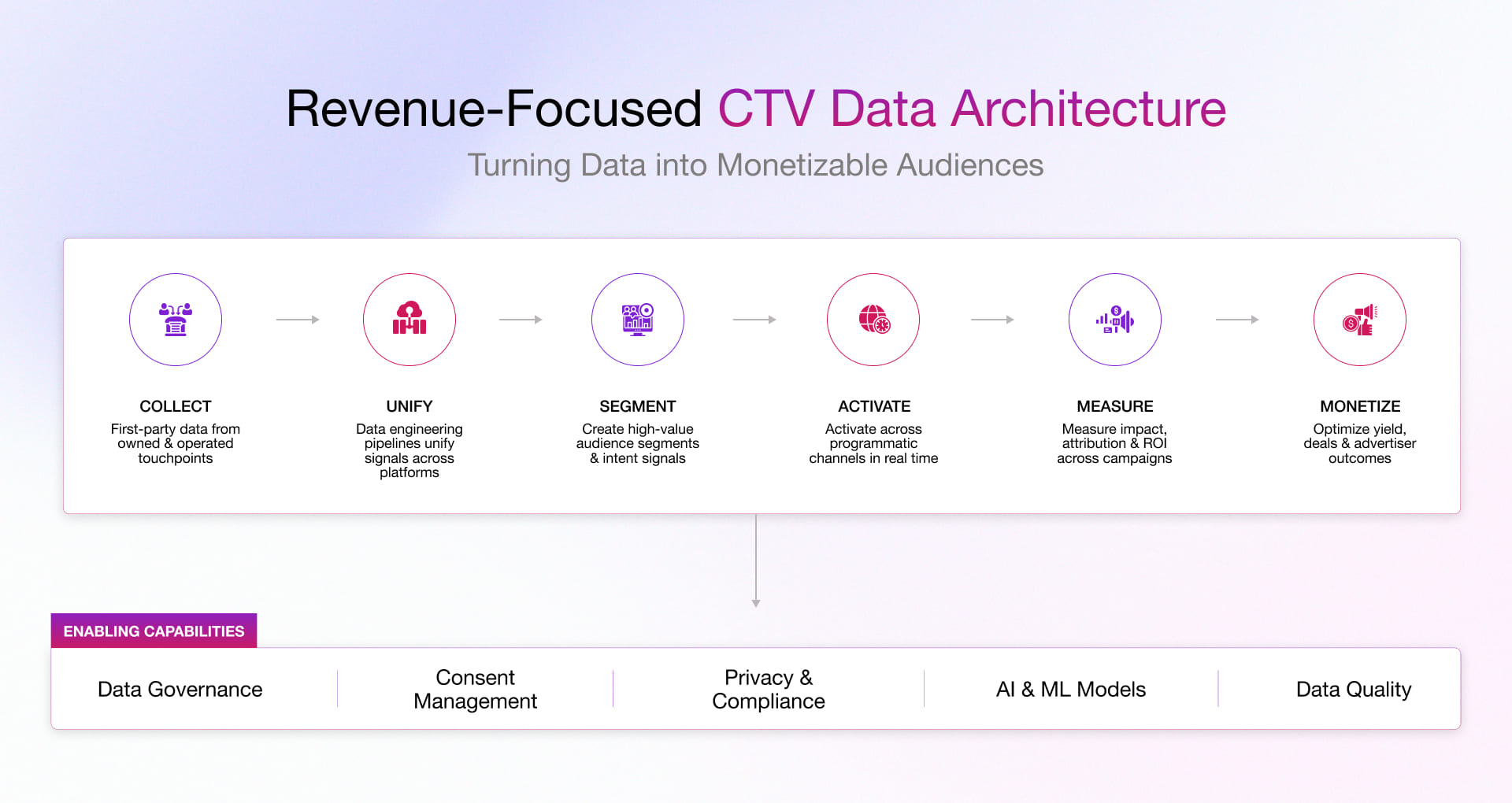
Many publishers are still activating audience data in disconnected ways across platforms and campaigns. The challenge is that fragmented activation rarely scales into a reliable revenue model. High-performing publishers are starting to think differently. They’re building long-term first-party data roadmaps that connect audience collection, identity, activation, measurement, and monetization into one operational layer. As third-party signals continue losing reliability, that shift starts to matter a lot more.
- Define how first-party audience data will support long-term monetization goals across CTV, web, and mobile environments.
- Prioritize the right capabilities early, including audience identity, activation workflows, cross-screen targeting, and measurement frameworks.
- Build stronger identity foundations using CDPs and audience mapping strategies to improve audience recognition across devices and sessions.
- Align audience activation with SSPs, ad servers, PMPs, and self-serve advertising platforms to support scalable programmatic monetization.
Build a Unified and Flexible Data Foundation
CTV audience data rarely exists in a single system. It is distributed across streaming apps, ad servers, CRM platforms, analytics tools, and subscription systems. When these platforms operate in silos, activating audience intelligence in real time becomes challenging. A strong data engineering foundation helps publishers unify these signals into a flexible activation layer that supports real-time audience updates, cross-screen targeting, and evolving programmatic workflows without the need for continuous redevelopment. Explore our data engineering services to streamline and scale your CTV data ecosystem.
- Use cloud-based data pipelines to bring together audience information from different platforms into one central place for activation.
- Develop lasting audience profiles using identity graphs that link viewer actions across devices, sessions, and channels over time.
- Set up real-time analytics and server-side activation systems to speed up targeting, refresh audience data quickly, and improve campaign performance.
- Build an adaptable programmatic CTV infrastructure that can handle changing privacy rules, programmatic processes, and future AdTech connections without needing to be rebuilt constantly.
Treat Identity Graphs as a Core Monetization Layer
In programmatic CTV, identity has quietly become one of the most important monetization layers. Publishers that can connect audience behavior across devices, sessions, and environments are in a much stronger position to support addressability and attribution. That’s where it starts to pay off. Unified audience profiles make it easier to activate first-party audiences across SSPs, ad servers, and PMPs with greater accuracy and control.
Use AI and Real-Time Decisioning to Improve Audience Value
The value of first-party data no longer lies in collection alone. It depends on how effectively publishers can act on audience signals while campaigns are still live. AI and ML models enable publishers to process audience updates in real time, power triggered campaigns, optimize yield strategies, and improve ad decisioning. Instead of relying on static audience segments, publishers can continuously refine monetization strategies based on live engagement patterns, making AI in programmatic advertising a critical driver of advertising performance and decision-making.
Build for Privacy, Compliance, and Future Scale
Privacy-first advertising is already shaping how programmatic systems are built today. Publishers need architectures that support consent-driven data collection, secure activation, and long-term operational control without slowing monetization efforts. The publishers that invest in these capabilities early are likely to be in a far better position as AI-driven advertising ecosystems continue to evolve. According to the IAB survey, data experts across brands, agencies, and publishers are aggressively moving toward privacy-by-design architecture within the digital advertising ecosystem.
How Rishabh Software Turns Your CTV Data into Revenue-Ready Audiences?
As programmatic CTV ecosystems grow more complex, publishers are shifting away from heavily outsourced activation models and investing in stronger in-house AdTech capabilities. Rishabh Software helps build those capabilities through scalable AdTech software development services focused on data engineering, audience activation, AI-driven decisioning, and real-time monetization workflows.
Our AdTech experts are well-versed at helping publishers unify fragmented audience signals across CTV, web, and mobile environments while building revenue-ready activation systems powered by SSP integrations, identity frameworks, data pipelines, and privacy-first architectures. From custom AdTech platform development to modernization of legacy ecosystems, we specialize in building ad exchange marketplaces, self-serve advertising platforms, campaign management solutions, analytics dashboards, and other scalable monetization solutions that support evolving programmatic advertising demands.
Frequently Asked Questions
Q. What first-party data should publishers collect for monetization?
A. Publishers should collect consent-based data such as content consumption patterns, viewing preferences, device information, engagement behavior, demographic insights, and login or subscription data to build valuable audience segments for advertisers
Q. How can CTV publishers prove the value of their first-party data to advertisers?
A. CTV publishers can demonstrate value through audience insights, campaign performance metrics, attribution reporting, engagement analytics, and measurable outcomes supported by analytics dashboards, identity resolution, and secure data-sharing environments.