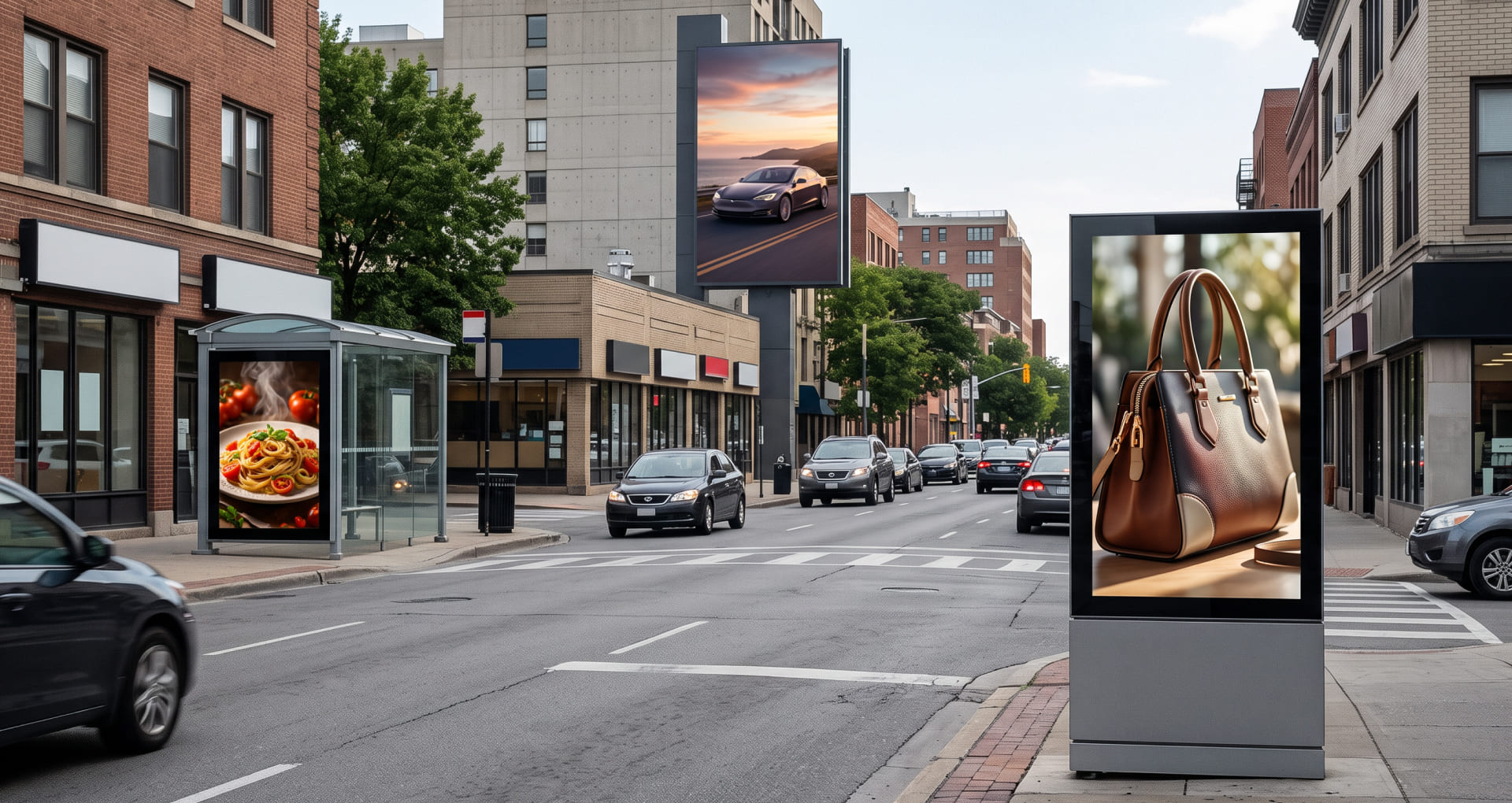
DOOH campaigns generate data across screens, locations, campaign schedules, audience movement, and media delivery. But when these data points remain disconnected, advertisers and media owners have limited visibility into who was exposed, how often they were reached, and what happened after exposure.
How many people had an opportunity to see the ad? How frequently were they exposed? Did exposure translate into a store visit or another measurable action?
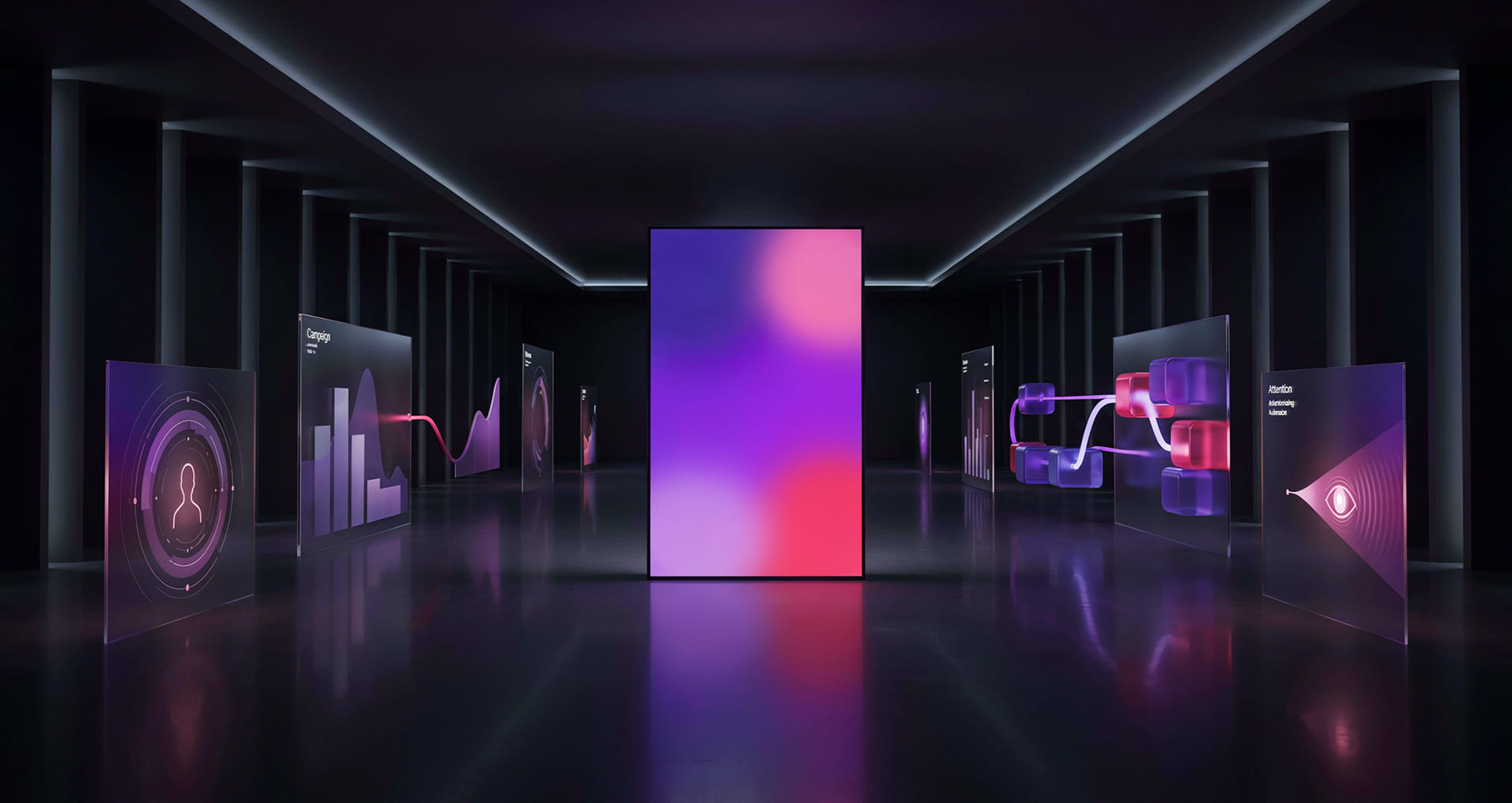
Modern DOOH audience measurement connects screen and campaign data with mobility, location, and audience signals to provide insights into reach, frequency, exposure, audience behavior, and attribution.
This blog explores the key metrics, data flows, and location intelligence capabilities that support more measurable DOOH campaigns.
Why DOOH Audience Measurement Matters for Modern Advertising Ecosystem
DOOH audience measurement gives advertisers and media owners a clearer view of who may have been exposed to a campaign and what happened afterward. It also brings more measurable data into planning, reporting, and optimization decisions.
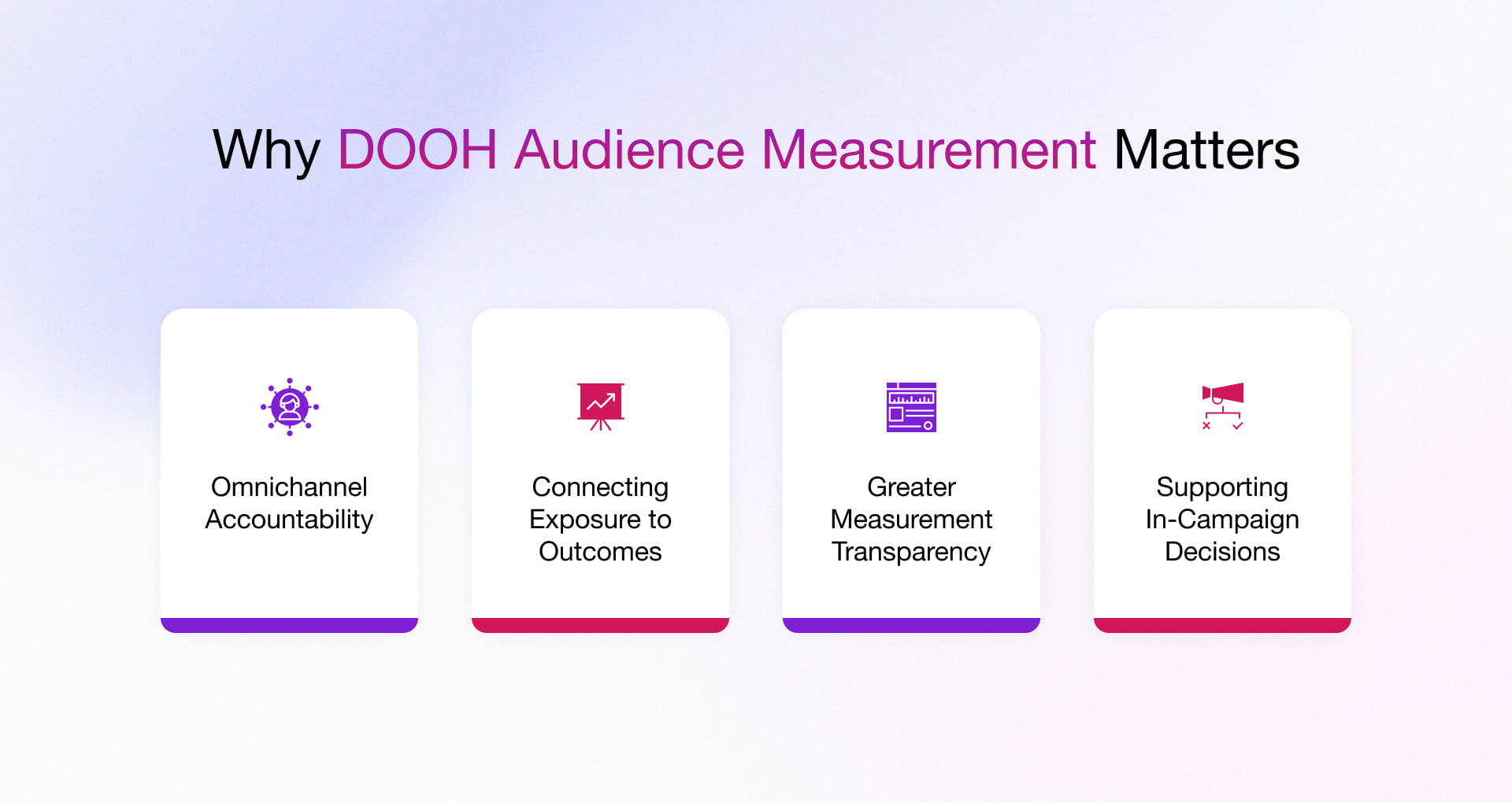
- Omnichannel Accountability: Traditional OOH measurement often relied on traffic counts, surveys, panels, and modeled audience estimates. Modern DOOH measurement can combine these inputs with screen, campaign, mobility, and location data to give marketers a more consistent view of audience exposure across channels, including mobile, web, and programmatic CTV.
- Connecting Exposure to Outcomes: Audience measurement can help move DOOH beyond broad reach estimates by connecting likely exposure with real-world actions. Mobility and location data, for example, can help analyze whether audiences exposed to a campaign later visited a store, venue, or other physical location.
- Greater Measurement Transparency: Advertisers and media owners need clearer visibility into campaign delivery and audience performance. Connecting campaign, screen, and audience data can provide more detailed reporting on metrics such as reach, frequency, exposure, and visitation.
- Supporting In-Campaign Decisions: Audience and location signals can also provide a more current view of changing audience patterns around screen locations. When connected with campaign and inventory data, these insights can support pacing, planning, and optimization decisions.
DOOH Audience Measurement Metrics That Actually Show Performance
Digital out-of-home audience measurement today is not just about counting how many people or vehicles passed near a screen. That still matters, but it is only one part of the picture. Modern audience measurement platforms or advertising solutions are bringing together screen data, campaign activity, mobility signals, location intelligence, and audience data through data through the combined power of Data Engineering, Data Analytics, and AI/ML services to understand who could have been exposed and what happened after that exposure. This connected data foundation also helps reduce data fragmentation in programmatic advertising.
Some of the key DOOH performance metrics include:
- Opportunity to See (OTS) and Impressions: OTS gives an idea of how many people had a possible chance to see an ad. Impressions try to make that estimate more meaningful by considering things like screen location, ad playback, mobility patterns, visibility, and dwell time. In practice, this means data from different systems must come together before the platform can arrive at an exposure estimate.
- Reach and Frequency: Reach tells advertisers how many unique people were exposed to a campaign, while frequency shows how often the same audience may have seen it. This gets more complex when a campaign runs across multiple screens and locations. The platform needs some level of audience modeling and deduplication, otherwise the same person can easily be counted more than once.
- Audience and Dwell Insights: Mobility and location data can help understand how people move around a screen location and how long they usually remain there. A person passing a roadside screen is very different from someone waiting at an airport gate or transit station. These patterns give more context to the exposure and help build better audience intelligence around a placement.
- Engagement and Attention Signals: DOOH does not have a click in the same way as display or search advertising. So engagement is usually understood through other signals such as dwell time, interactions, contextual behavior, sensor data, or other available inputs. The exact metric can vary quite a lot depending on the screen environment and the technology being used.
- Attribution and Foot-Traffic Lift: This is where measurement starts connecting exposure with a real-world outcome. For example, whether people exposed to a DOOH campaign later visited a store, restaurant, dealership, or another physical location. To do this, platforms need to bring exposure and visitation data together, define attribution windows, and compare behavior between relevant audience groups.
How DOOH Audience Measurement Works
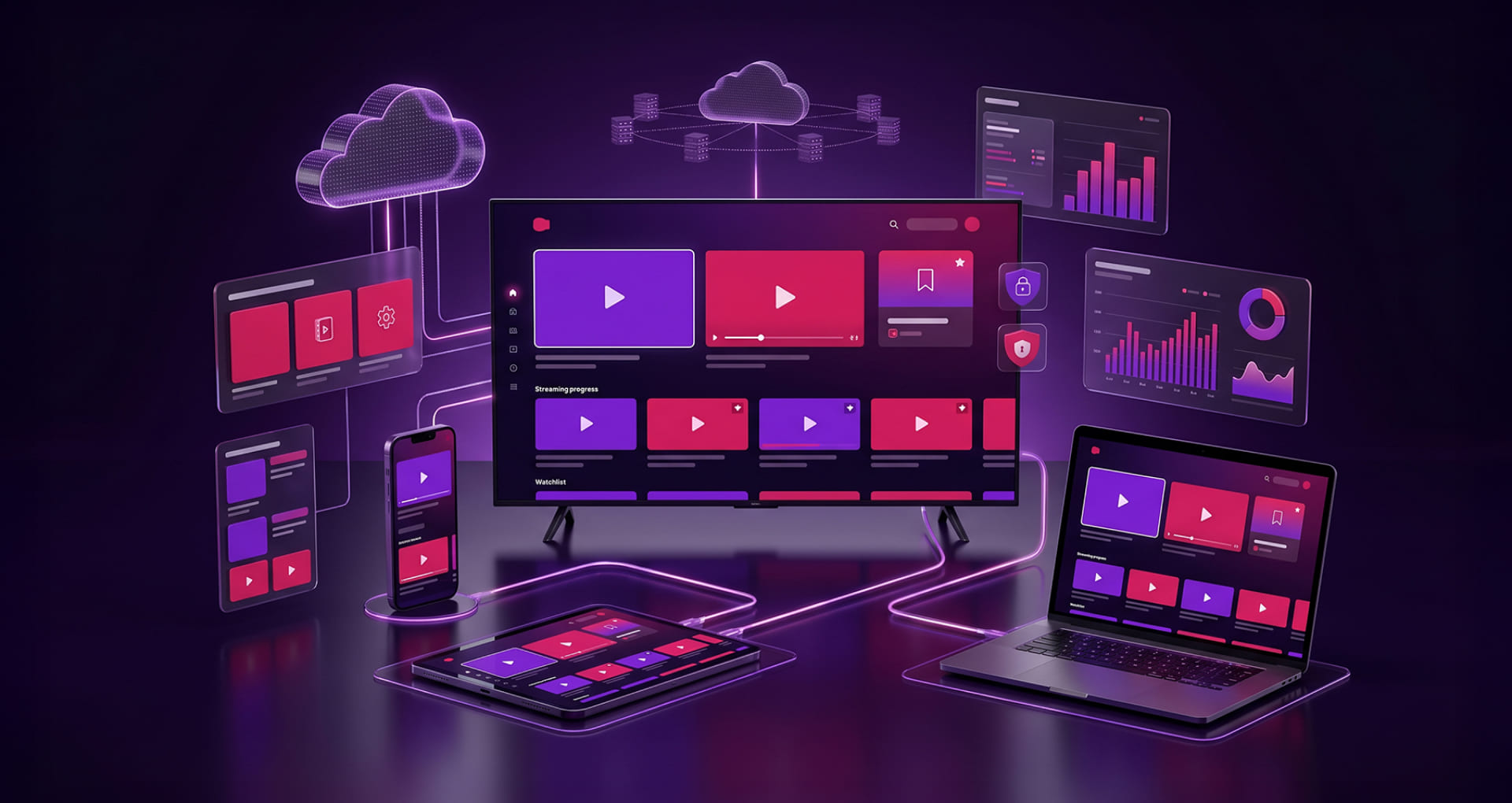
DOOH audience measurement works by connecting data from different parts of the advertising ecosystem and turning it into a measurable view of audience exposure and campaign performance.
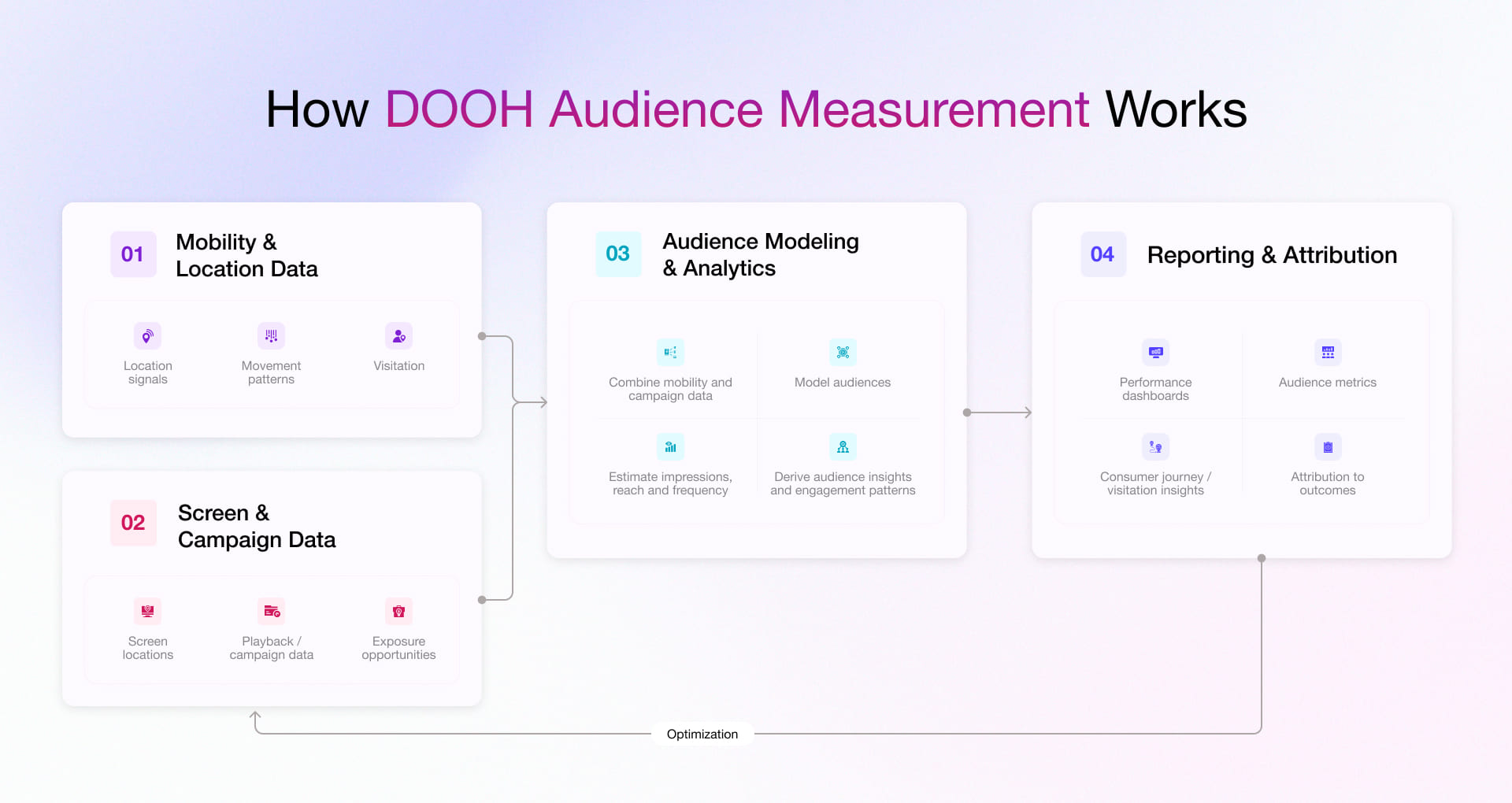
- Mobility & Location Data: Location signals, movement patterns and visitation data help understand audience presence and movement around DOOH locations.
- Screen & Campaign Data: Screen location, campaign schedules and playback data provide the other side of the picture: where, when and what was displayed. We have recently delivered a DOOH campaign planning and activation platform. You can check it out in detail here.
- Audience Modeling & Analytics: Both datasets come together here. Measurement platforms use DOOH advertising analytics to model audiences and calculate metrics such as impressions, reach and frequency, while also deriving audience and engagement patterns.
- Reporting & Attribution: The processed data moves into dashboards and reporting layers, where audience metrics, visitation insights and other outcomes can be analyzed and attributed back to campaign exposure.
The Location Intelligence Layer in DOOH Audience Measurement
Location intelligence adds the real-world movement layer to DOOH measurement. It helps platforms understand not just where an ad was shown, but how audiences move around that location, how often they return, and whether exposure is followed by a visit or other physical-world action.
It can support:
- Audience movement: Understand footfall, movement patterns, and repeat visits around screen locations.
- Visitation insights: See how people move between locations and what places they visit after exposure.
- Attribution: Connect likely DOOH exposure with outcomes such as store visits or venue traffic.
Rishabh Software and Unacast have partnered to bring together location intelligence, mobility data, and AdTech engineering capabilities for use cases such as DOOH audience measurement, visitation analysis, and attribution. This helps media owners, advertisers, and AdTech platforms connect physical-world audience behavior with campaign performance more effectively.
Traditional OOH vs Data-Driven DOOH Measurement
Traditional OOH measurement often relies on aggregated estimates, traffic counts, surveys, or panels, whereas data-driven DOOH can connect audience, location, screen, and campaign data. This gives advertisers and media owners greater visibility into exposure, campaign delivery, and measurable outcomes.
|
Measurement Area |
Traditional OOH |
Data-Driven DOOH |
| Audience measurement | Mostly works with traffic counts, footfall, surveys, panels, and wider audience estimates | Pulls together mobility, location, traffic, sensor, and other audience data to get a closer audience picture |
| Ad exposure | Looks at how many people had a possible chance to see the ad | Matches audience presence with a specific screen, time window, and the ad that was running |
| Campaign data | Measurement keeps revolving around the location and overall campaign period | Screen and playout data make it possible to see what ran, where it ran, and at what time |
| Performance metrics | Covers reach, frequency, impressions, contacts, and ratings | Goes deeper into exposure, dwell, attention, and audience-level signals when those data points are available |
| Attribution | Can show campaign impact, but the link between exposure and action is usually wider and less direct | Can connect exposure with later actions such as store visits, website activity, app actions, or brand lift |
| Optimization | Insights are only useful for post campaign processes, give less toward optimization | Data can also support in-flight pacing and optimization, particularly in programmatic DOOH |
Read our blog on the Hidden Costs of Manual or Outdated OOH Inventory Management!
How Rishabh Software Powers Data-Driven DOOH
Data-driven DOOH depends on connecting media, campaign, audience, and measurement data across the advertising workflow. Rishabh Software helps build and modernize the technology that brings these systems together.
Rishabh Software offers a white-label DOOH aggregator platform and AdTech software development capabilities for programmatic advertising workflows. This includes demand-side platform, supply-side platform, ad exchanges, ad servers, RTB engines, campaign management platforms, audience measurement solutions, analytics, and the integrations that connect them.
Whether it is a ready-to-brand DOOH platform or a custom solution, we can engineer the underlying technology around campaign delivery, data flows, measurement, and programmatic workflows to support the specific business model.
Frequently Asked Questions
Q: What is DOOH audience measurement?
A: DOOH audience measurement is the process of estimating who had the opportunity to see a digital out-of-home ad and understanding campaign reach, frequency, audience behavior, and outcomes.
Q: How do DOOH platforms collect and analyze audience insights?
A: DOOH platforms can combine screen and campaign data with mobility, location, traffic, sensor, or other audience data. These signals are then modeled and analyzed to estimate exposure, understand audience patterns, and measure campaign performance.