On September 28, 2025, First Brands Group filed for Chapter 11. Court filings put its factoring liabilities at $2.3 billion and showed advisers asking whether the same receivables had been financed more than once. Prosecutors later alleged that the company faked invoices and double- and triple-pledged collateral.
Most lenders will never meet a First Brands. They meet something smaller every reporting cycle: a borrowing base built manually.
Asset-based lending automation moves the math and the evidence trail out of the workbook. Rules run the same way every cycle, and exceptions reach a queue with source records attached. Credit decisions stay with your team.
The hard part is applying each facility’s rules without missing ineligible collateral or misapplying sub-limits. Here is how asset-based lending automation keeps both in check, sharpens borrowing base reviews and works with your existing lending systems.
The Four Building Blocks of Borrowing-Base Availability, Explained
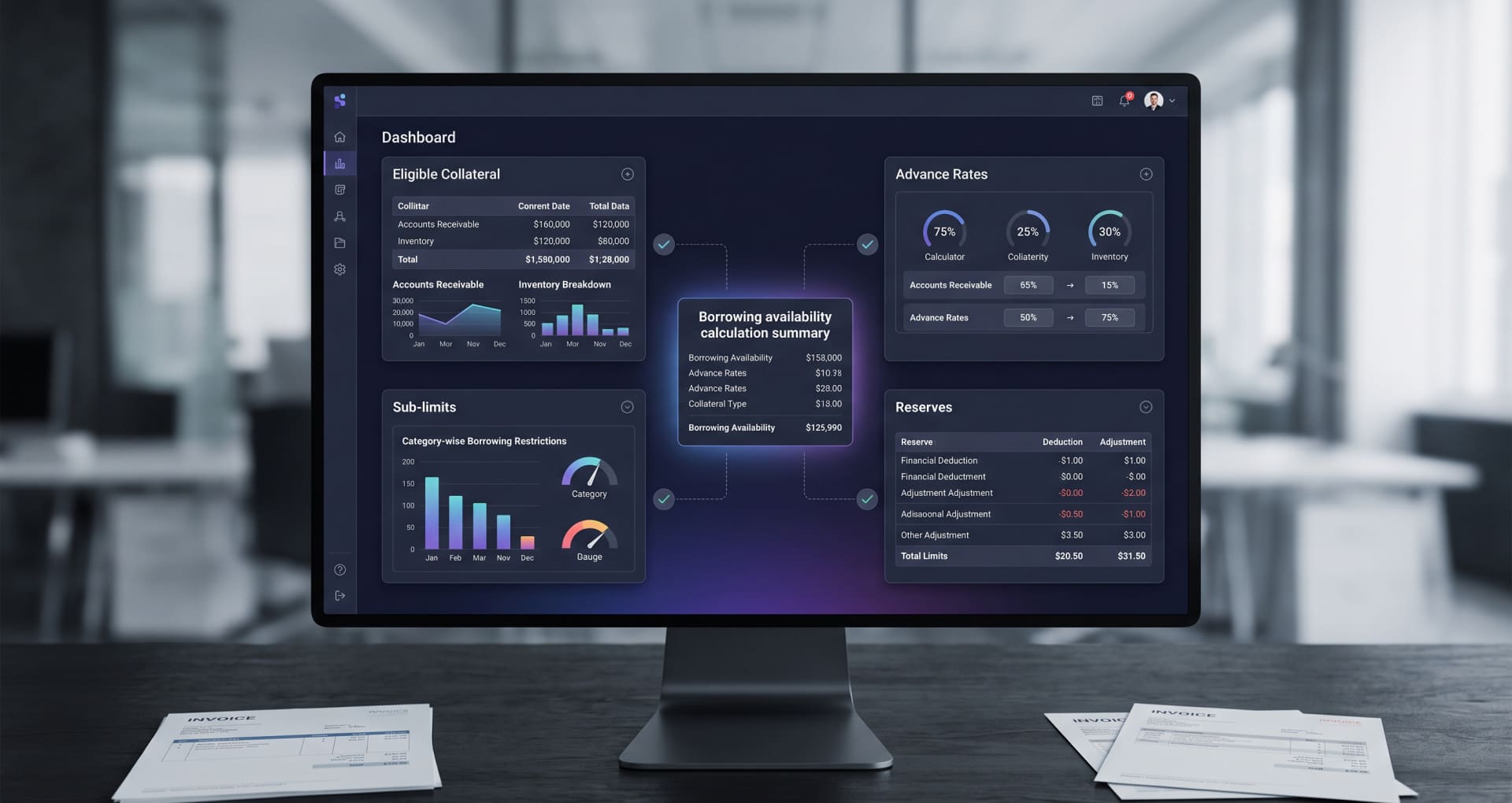
Borrowing base availability in asset-based lending has a predefined order. Applying these rules incorrectly can shift borrowing base availability even when your inputs are correct. A borrowing base requires the following four inputs:
- Eligible Collateral
Start with the company’s gross receivables and gross inventory. Apply the borrowing base agreement’s screens, including aging, cross-aging triggers, contra accounts, concentration limits and foreign exposure. Lenders advance against remaining collateral. - Advance Rates
Advance rates provide the percentage that a lender will provide on collateral. Eligible receivables typically have advance rates between 70% and 85%. For inventory, the rate is up to 65% of the inventory’s liquidation value. - Reserves
Borrowing bases contain reserves that take into account risks that eligibility tests may miss, such as the landlord’s lien, sales taxes, excessive dilution, and any priority payments. - Sub-Limits
Sub-limits set a maximum amount that lenders can count for certain assets or exposures, such as inventory or letters of credit. Any amount above the limit does not count toward the borrowing base. If software changes this order, your borrowing base calculation can produce incorrect figures that look accurate.
The Sequence Matters
Follow the steps in this order:
- Apply the advance rate
- Apply sub-limits
- Deduct reserves
- Cap the total at the loan commitment
- Subtract outstanding loans and letters of credit from the lower of the borrowing base or commitment to calculate availability
How Automation Handles Ineligible Collateral
Morgan Lewis’s review of the Tricolor case notes allegations that vehicles stayed on borrowing bases after sale and that customer loans were pledged more than once. An eligibility engine can flag the sold unit, the duplicated pledge and the receivable another lender already claims.
Most fraud goes unchecked by any given system, and each lender only sees its own activity. Inside that limited view, the platform applies every eligibility test the same way, flags collections that never reach the lockbox, and records exactly why each dollar left the borrowing base.
The platform treats the credit agreement as configuration. Each rule carries a threshold, scope, calculation position and reason code. The engine runs tests on invoice-level data and removes ineligible dollars before borrowing base calculation begins.
Set Eligibility Rules for Each Facility
Facilities define eligibility differently. Trade press notes that stretched borrowing bases can push cross-aging triggers from 90 to 120 days and one clause can move availability. Common exclusions include affiliate, re-aged, government, contra, insolvent-customer and foreign receivables.
Key rules:
- Aging cutoffs: Many agreements exclude invoices that are more than 90 days old or more than 60 days past due. The agreement decides which clock applies, and the same invoice can meet one test but fail the other.
- Cross-aging: If a set share of a debtor’s receivables becomes too old, the debtor’s entire balance can be excluded. That’s why clean debtor records and correctly grouped invoices matter.
- Concentration limits: These limit how much one debtor can contribute to the borrowing base. OCC guidance suggests keeping concentrated accounts to 10% to 20% of the borrowing base. Because agreements may measure this against total or eligible receivables, the platform lets teams configure the denominator.
- Contra rules: If the borrower also owes money to the same counterparty, receivables can be excluded up to that amount. This requires AP data, which often lives outside AR systems.
The digital platform saves a version of every rule. This means that if cross-aging changes from 50% to 25%, the new rule applies only to borrowing-base cycles that begin after the change takes effect.
Track Exclusions and Prevent Duplicate Deductions
Each exclusion of a dollar amount relates to a specific rule, a specific reason, and a specific source record. The platform runs exclusions as a cascade, such as aging, then cross-aging, then contra against what remains, then concentration, unless the agreement sets another order.
This structure prevents silent double counting. If you run contra against a balance aging already reduced, you can remove the same dollars twice. Manual workbooks allow that mistake without warning. Reviewers can trace every number. They can click the ineligible total and drill to debtors, invoices and the borrower’s source rows.
What Caps Borrowing Availability in Asset-Based Lending? Sub-Limits Explained
Sub-limits can be used in asset-based lending to restrict the value of certain types of assets, or categories of exposure, that are included in the overall collateral value. Sub-limits are often applied to inventory, receivables of an international nature, letters of credit, and are also used to accommodate seasonality in a company’s operations. Stretched bases sometimes remove seasonal caps.
Sub-limits are not the same as other availability levers:
- Advance rate: Reduces collateral by a percentage
- Reserve: Subtracts a fixed dollar amount
- Sub-limit: Sets a ceiling on how much one category can contribute
If these are combined into one adjustment, it becomes hard to see what actually reduced availability.
How the Rules Work Together
The platform stores every sub-limit as a rule with a cap, scope and place in the calculation. It also shows exactly what each constraint removed.
In the example facility:
- The advance rate reduced eligible receivables by $1,537,500
- Reserves reduced availability by $250,000
- The inventory sub-limit reduced availability by $500,000
- The commitment cap reduced availability by $462,500
A spreadsheet may show the final availability figure. The platform shows the full chain: which rule bound availability, by how much and where an amendment could change the outcome.
Recalculate Availability and Control Overrides
The approved borrowing base between certificates stays fixed while loans, collections, and letters of credit move daily. The platform recomputes availability from the approved base whenever usage changes.
When the base itself changes in case of new reserves after a field exam or when the appraisal is revised, the platform requires approval before updating availability.
Overrides need controls. JPMorgan’s model reviewers flagged manual spreadsheet processes as error prone and approved the model with automation promised. When losses surfaced, teams still ran the process by hand. For every override, require:
- a reason code
- an approver with the right authority
- an expiry date
- separation of duties so the preparer cannot self-approve
The platform reverses the override on the expiry date and shows it on every certificate until then.
Borrowing Base Certificate Automation for Faster, Clearer Reviews
Verification surfaces problems faster. Morgan Lewis’s review of Tricolor and First Brands points to weak verification, heavy reliance on borrower data, and infrequent audits as conditions where collateral problems compound. Lenders run certificates two ways:
- Preparation: the software builds the certificate from rules and source data
- Verification: the software recomputes the base independently and compares to the borrower’s version
Match Submissions and Flag Exceptions
A certificate must reconcile:
- beginning receivables plus new sales, minus collections and credits, equals ending receivables
- ending receivables matches the aging total and the ledger
The asset-based lending software runs these checks on every submission and then matches collections to lockbox and bank deposits.
The deposit match matters most. In First Brands, advisers investigated whether receivables went to third-party factors on receipt. Bank and lockbox matching exposes collections that never reach your account.
The platform also surfaces and routes other exceptions:
- aging that differs from the roll-forward
- unapplied cash
- deposits with no invoice
- invoices that disappear between cycles without a credit memo
Each exception goes to a named reviewer with both values, the gap, and the source records. Sorting by availability impact puts the $400,000 issue ahead of the $400 issue.
Keep Calculation and Approval Records
Examiners, auditors and counsel will ask how you built the number. The platform retains:
- source files as received
- rule versions in effect
- each calculation step
- reviewer edits with before and after values
- approvals with user and timestamp
Approval freezes the cycle. The platform posts corrections as adjustments or reopens the cycle with approval. The standard stays reproducibility wherein you should be able to recreate last March’s certificate to the dollar.
Go From Legacy Systems to Smarter Lending Workflows with Rishabh Software
Legacy asset-based lending systems slow growth, hide risk, and burn analyst time on spreadsheets, email chains and manual reconciliations. Rishabh Software replaces that friction with purpose-built asset-based lending software that automates the entire collateral-first lifecycle from borrowing-base intake all the way through continuous monitoring.
How We Help Asset-Based Lenders Lend with Confidence
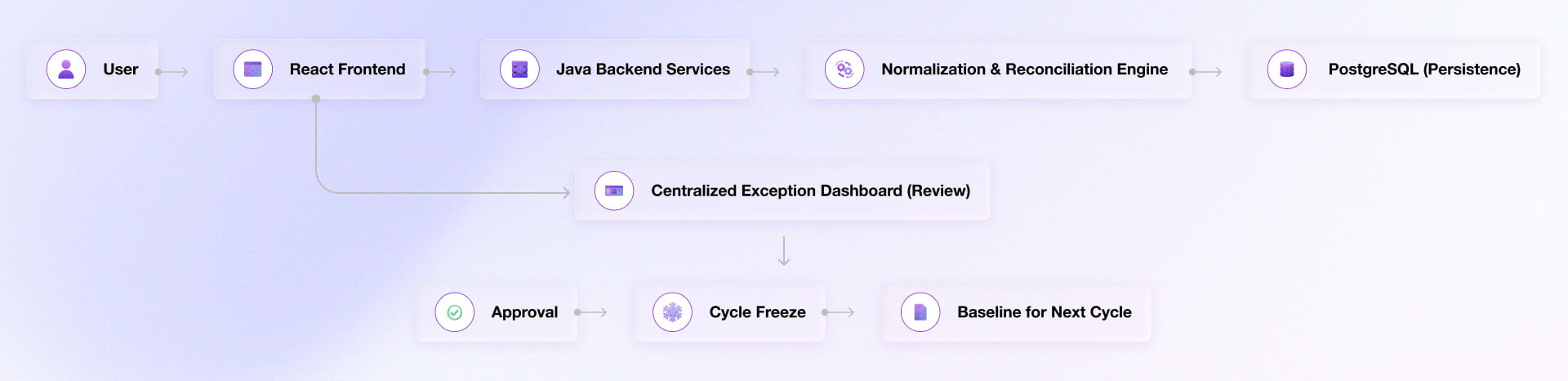
We build centralized Borrowing Base Certificate platforms that pull AR, bank/lockbox, and inventory data into one place. The system runs the reconciliation rules automatically, surfaces exceptions before they become problems, and then locks the approved cycle so it becomes the new baseline everyone works from.
Collateral management and audit work gets automated too. Eligibility checks happen in real time, the platform catches variance across periods, and you walk away with clean, audit-ready evidence packs instead of scrambling for documentation later.
On the tech side we modernize legacy systems whether that’s Angular/.NET/Azure or React/Java/PostgreSQL – so accounts, invoices, debtors, and cash allocation all live in a single workflow. Multi-state compliance rules and complete audit trails are built in from day one.
Finally we layer on monitoring and early-warning tools that keep an eye on covenants, collateral values, and portfolio triggers. Credit teams get daily risk visibility instead of waiting for the usual monthly review cycle and reacting after the fact.
Proof in production: Asset-Based Lending Platforms by Rishabh Software
Case Study 1: Centralized BBC Verification Platform
A commercial finance firm was still validating collateral using spreadsheets, long email chains, and manual checks across AR, bank statements, and inventory. Errors kept stacking up and the audit trail never felt solid. That’s when they engaged us.
We built a centralized Borrowing base certificate platform that standardizes intake, validates data against clear rules, reconciles periods automatically, and freezes approved cycles as the new baseline.
Key Benefits Delivered:
- 40% less manual effort
- 30% faster review cycles
- 50% fewer exceptions
Case Study 2: Legacy ABL System Modernization (USA)
A US financial institution serving SMBs faced issues due to fragmented data, heavy manual processes, recurring GL errors, and weak multi-state compliance controls.
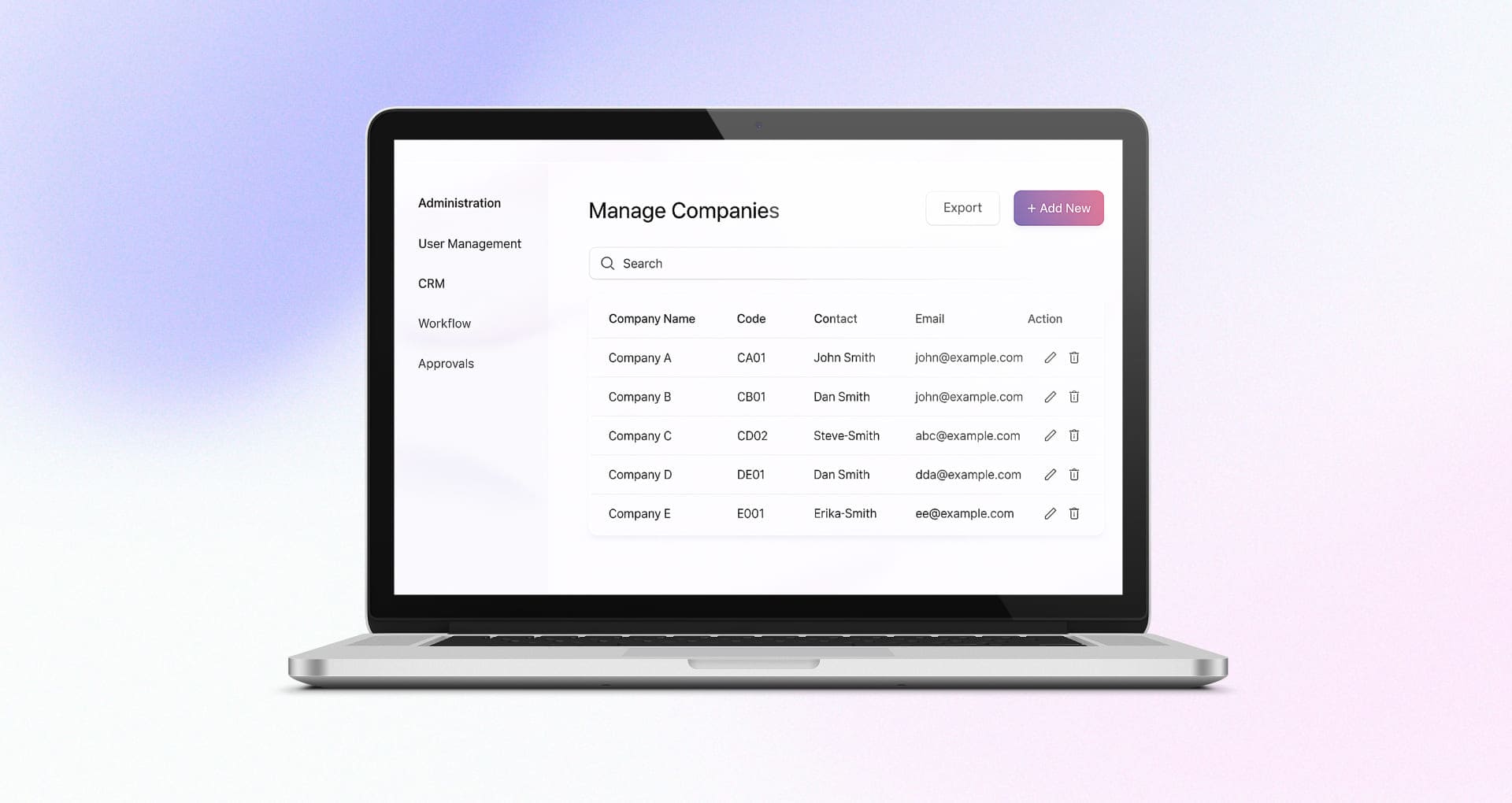
We stepped in to modernize their legacy system with a modular, API-first microservices platform that includes automated rules, live dashboards, MFA, encryption, and complete audit logs.
Key Benefits Delivered:
- 62% faster credit assessments
- 99% fewer payment errors
- 100% fewer data discrepancies
Asset-Based Lending Automation: Key Questions Answered
Q. What is asset-based lending automation?
A. Asset-based lending automation is software built to take over the repetitive work of managing loans backed by receivables, inventory, or equipment. The amount a borrower can draw changes all the time as the value of that collateral moves. Automation handles the grunt work like pulling in collateral data, checking it against the loan’s eligibility rules, and calculating the real amount available to borrow. It also tracks collateral, builds reports, watches covenants, and pings the team when something needs attention.
Q. How Does Asset-Based Lending Software Identify Ineligible Collateral?
A. It runs the lender’s eligibility checklist against every single line item. Anything that doesn’t pass gets pulled out of the eligible pool and flagged for human review. Common exclusions include past-due or cross-aged invoices, related-party and intercompany receivables, government or foreign obligors, contra accounts, credit memos and amounts above concentration limits. The rules engine checks invoice dates, obligor history, and concentration levels to identify them.
Q. How does automation handle sub-limits?
A. A sub-limit is a hard ceiling on a specific type of collateral. It’s different from an advance rate, which just applies a percentage across the board. The platform builds those caps straight into the calculation, so the final availability number already reflects both whether each asset qualifies and whether the category has hit its limit. Lenders can set those limits at the borrower level, by collateral type, or by facility. The system recalculates the moment new data comes in, so you don’t accidentally over-advance on a concentrated or weaker pool.
Q. Can ABL software handle lender-specific rules?
A. An asset-based lending software stores each lender’s credit policy as configurable rules. You can define ineligibles, advance rates, concentration limits, cross-aging rules, seasonal advance rates, fees, caps, and approval workflows by borrower, collateral type, or portfolio. Two facilities with similar collateral can be made to run on completely different borrowing-base mechanics. A rules-driven system applies your definitions consistently and controls who can generate or approve a borrowing base certificate.
Q. Does automation replace credit analysts?
A. No. Instead, it supports them by taking over the data entry, recalculation and reconciliation work. Analysts are free to tackle complex tasks that need human intervention like exceptions, borrower performance, field-exam findings, covenant risk and credit calls. The system can calculate ineligibles in seconds and mark duplicate invoices, discrepancies and threshold breaches. Analysts still validate unusual collateral, interpret the exceptions and make the advance and credit decisions. AI for asset-based lending prepares the file and your team still makes the credit call.