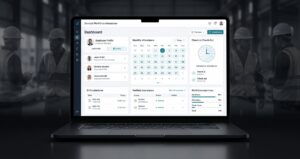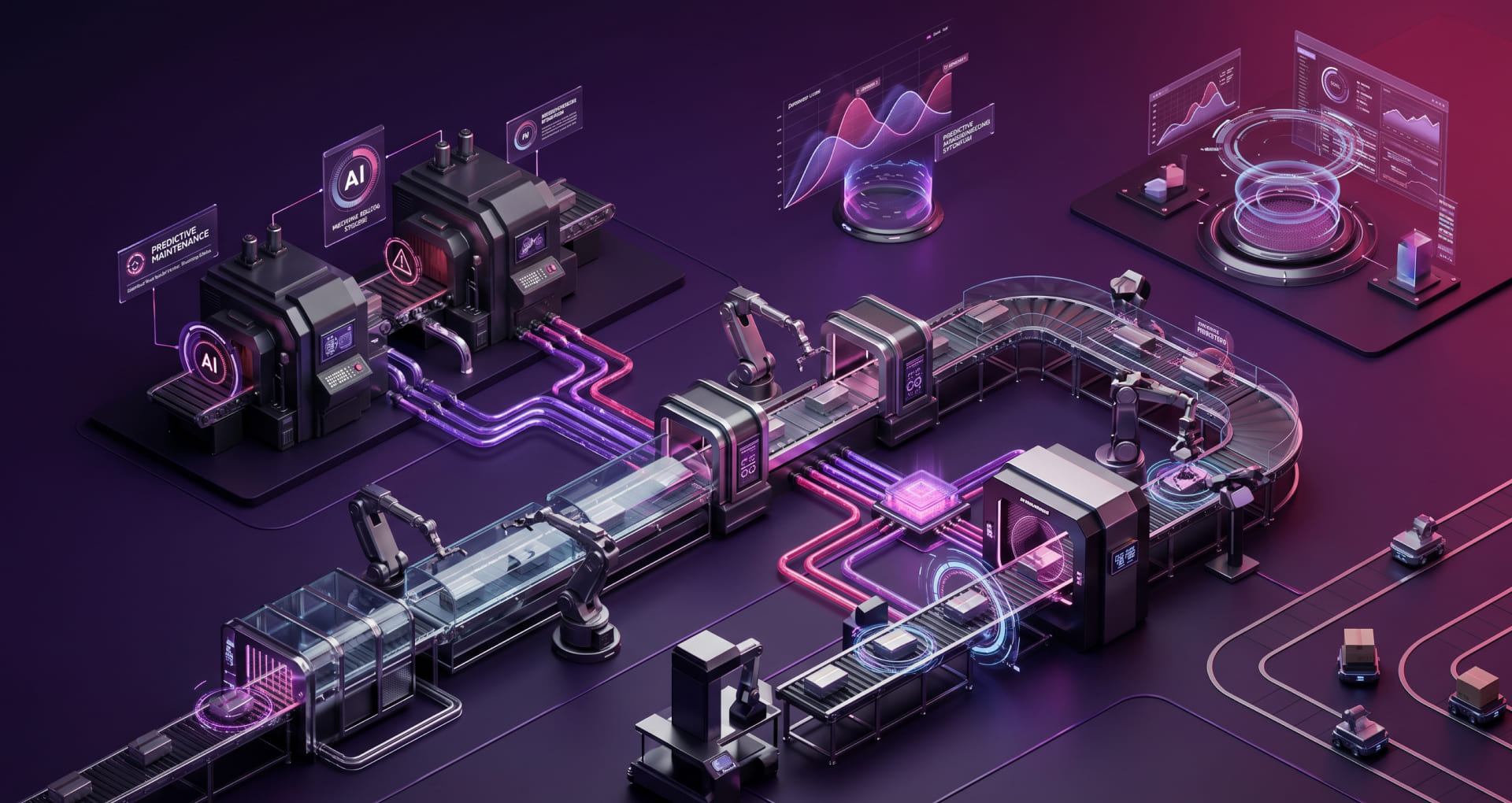

Production floors generate thousands of operational data points every minute across ERP, MES, SCADA, and PLC systems. While these systems provide valuable insights into OEE, machine performance, WIP, and production quality, the real challenge lies in turning that data into timely decisions that improve operational performance. This is where manufacturing analytics enables manufacturers to transform operational data into actionable insights that support faster, proactive decision-making.
As manufacturers strive to improve throughput, reduce downtime, optimize costs, and protect margins, manufacturing analytics is evolving from reporting capability into a strategic business asset. This shift is reflected in the market, which is projected to grow from $11 billion in 2025 to over $40 billion, driven by the increasing adoption of intelligent manufacturing operations.
This blog explores why manufacturing analytics has become essential for modern manufacturers, highlights high-impact use cases across production, maintenance, quality, demand forecasting, and supply chain operations, and shares best practices for maximizing the value of manufacturing analytics initiatives.
The Strategic Importance of Manufacturing Analytics in Today’s Competitive Landscape
Today’s manufacturers operate in an increasingly complex environment where production efficiency, cost optimization, and operational agility directly influence competitiveness. While ERP, MES, SCADA, and other operational systems capture critical production data, the challenge lies in connecting these insights to support faster and informed decision-making. Siloed systems, delayed reporting, and limited predictive capabilities often prevent manufacturers from responding proactively to production disruptions, quality issues, and changing demand.
Manufacturing analytics addresses these challenges by transforming operational data into actionable insights that improve visibility, enable predictive decision-making, and support continuous operational improvement.
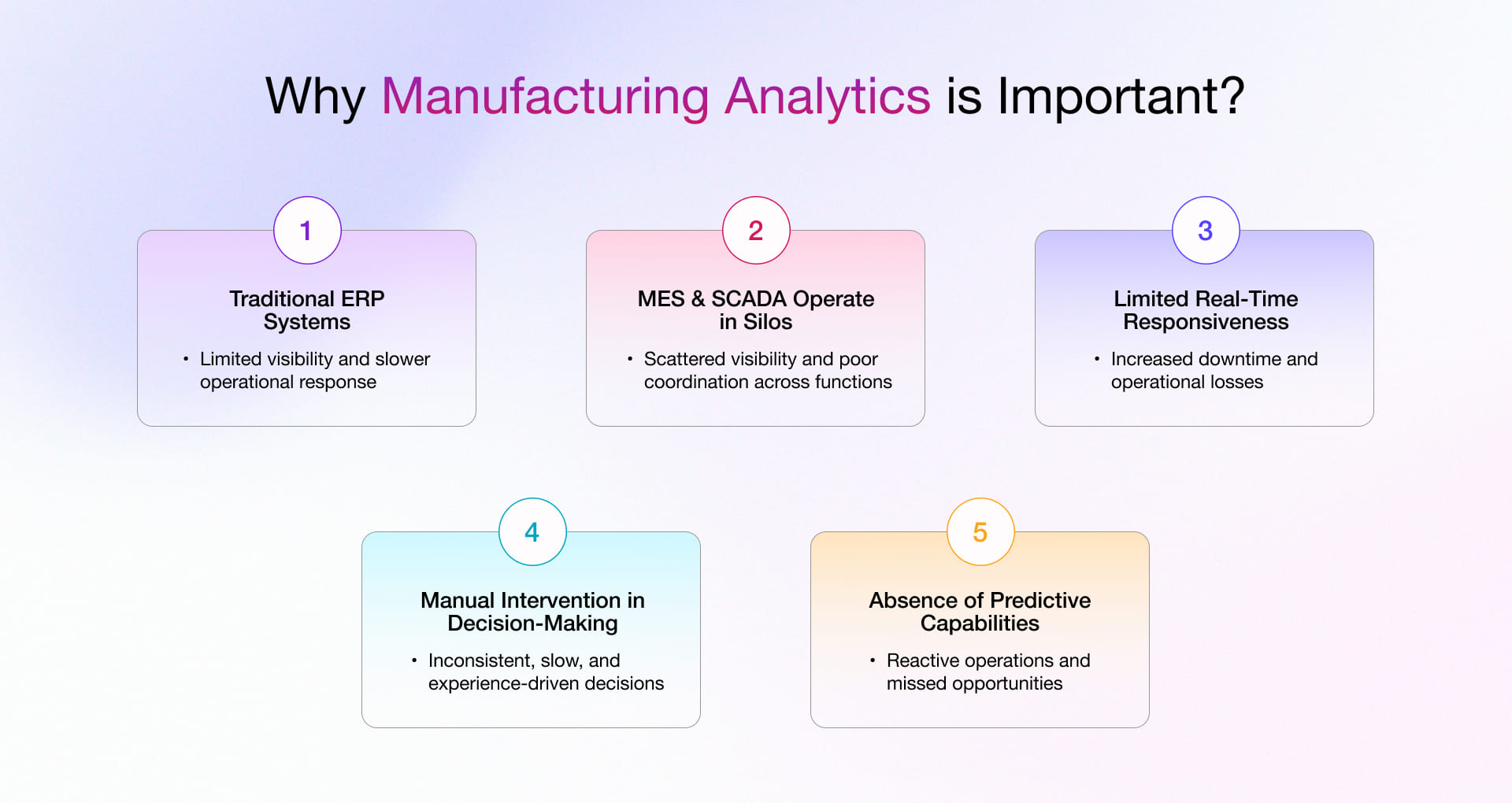
1. Transactional Nature of ERP Systems
ERP systems capture structured data, such as orders, inventory, and financial data. However, they lack the ability to process real-time production floor signals or unstructured data streams. It results in limited visibility and results in slower operational response.
2. MES and SCADA Operate in Silos
MES tracks production workflows, while SCADA captures machine-level data. These systems often operate independently. It creates scattered visibility. This results in poor coordination across functions.
3. Limited Real-Time Responsiveness
Most systems rely on batch processing and historical reports. It delays the detection of machine failures and production deviations. This results in increased downtime and operational losses.
4. Absence of Predictive and Prescriptive Capabilities
Traditional systems focus on historical reporting. They answer what happened, but not what will happen or what actions should be taken. It prevents proactive decision-making. This results in reactive operations and missed opportunities.
5. Manual Intervention in Decision-Making
Teams rely on spreadsheets, manual analysis, Gemba boards, and experience-driven decisions. It piles up inconsistencies and delays, and reduces agility and response to market demands.
Modern Use Cases for Manufacturing Analytics: Why Visibility Alone Is Not Enough
Having a manufacturing analytics solution on the production floor benefits not only with visibility but also in creating real impact. Below are the use cases that highlight how it moves beyond recording information in dashboards to support decision-making.
1. Predictive Maintenance & Asset Reliability
Manufacturing analytics leverages machine data from SCADA and PLC systems to monitor equipment health in real time. It analyzes patterns such as vibration, temperature, and downtime logs to detect anomalies and predict potential failures. By doing this, your maintenance teams can better understand when to shift from reactive breakdown handling to a condition-based, predictive maintenance strategy. It not only eliminates recurrence of unplanned downtime but also failures. This results in improved OEE, higher asset reliability, and uninterrupted production flow.
2. Demand Forecasting & Inventory Optimization
By integrating ERP data with real-time production and consumption data from MES, plant managers can accurately forecast demand and plan production. It provides visibility into WIP, raw material consumption, and finished goods movement across the production floor. Having such data handy helps to stock up appropriately and meet production with actual demand. You would notice optimized inventory levels, improved working capital, and more reliable order fulfillment.
3. Pricing & Margin Optimization
Connecting your cost structures, production efficiency, scrap rates, and sales performance with the manufacturing data analytics offers granular product-level profitability insights. You can easily identify cost leaks, high scrap zones, and inefficient processes that are impacting margins. Having this visibility helps with pricing strategies and prioritizing high-margin products.
4. Smart Automation & Robotics
Analytics enhances the performance of automation systems and robotics by providing real-time insights into cycle times, machine utilization, and line balancing. It identifies bottlenecks, idle time, and inefficiencies across assembly and sub-assembly operations. It optimizes workflows, improves takt time adherence, and ensures maximum utilization of automated assets.
5. Product Development Intelligence
Manufacturing analytics integrates quality data such as IPQC, NCR, defect Pareto, and rework tracking with production and customer feedback data. It enables root cause analysis of defects, identifies recurring quality issues, and highlights design or process gaps. This helps engineering teams improve product design, refine BOM accuracy, and enhance process standardization.
6. AI-Powered Quality Inspection
AI and computer vision enable automated quality inspection across production lines. It analyzes image data, sensor inputs, and in-process quality checks (IPQC) to detect defects in real time. It removes manual dependency and paper-based quality records, which often delay defect detection and increase the risk of quality escapes.
7. Supply Chain Visibility & Optimization
Manufacturing analytics fetches data across procurement, production, and logistics to provide end-to-end visibility into the supply chain. It tracks raw material movement, WIP levels, and finished goods in real time, while identifying bottlenecks and delays.
Best Practices for Manufacturing Analytics: Turn Strategy into ROI
Real business value comes from how effectively manufacturers align analytics with operational goals, integrate data across systems, and turn insights into action. Without a clear strategy, even the most advanced analytics initiatives can struggle to deliver measurable business outcomes. The following best practices can help build a scalable manufacturing analytics foundation that improves operational efficiency, accelerates decision-making, and delivers sustainable business value.
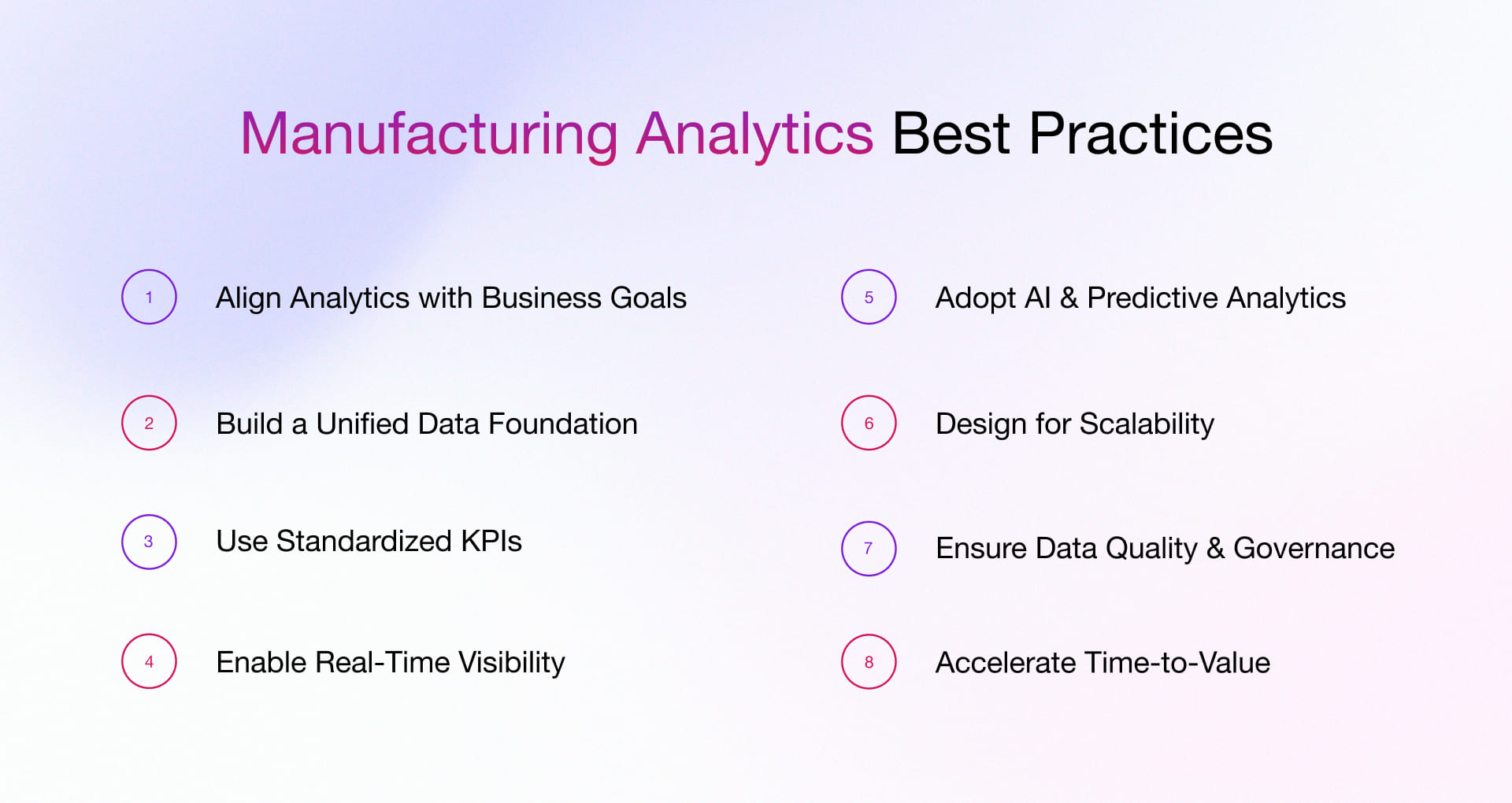
1. Align Analytics for Manufacturing with Your Business Objectives
Always be clear about the outcome you expect from your manufacturing data analytics. For example, improving ORR, reducing downtime, or optimizing margins. Because when analytics is integrated with specific KPIs, teams can easily prioritize use cases and demonstrate value early. This allows plant managers to achieve tangible business impact rather than experiment.
2. Build a Unique Data Foundation
When data from ERP, MES, SCADA, and PLCs are combined as a single source of truth, it becomes easier to identify inefficiencies, correlate events, and act with confidence. Many manufacturing business owners shared significant acceleration experience with their analytics initiatives
3. Leverage Standardized KPIs and Metrics
Several established metrics, such as OEE, MTBF, and yield, create consistency in performance monitoring and aligned insights with industry benchmarks and operational realities. As a result, production floor teams can focus on improvement rather than interpretation.
4. Enable Real-Time Data Visibility
Access to real-time production and machine data enables on-time response to events rather than later. This shift from reactive to proactive often results in rapid involvement and reduced operational losses, especially in voluminous ecosystems.
5. Adopt Predictive and AI-Driven Capabilities Gradually
Plant managers notice growth-driven results by beginning with descriptive analytics and then gradually introducing predictive models. Irrespective of predicting demand or anticipating equipment failures, aligning these analytical capabilities with production workflows promises tangible value.
6. Design for Scalability and Flexibility
Always prefer scalable architecture in the ever-evolving manufacturing ecosystem. It enables easy adoption of processes, data sources, and volumes. Also, it easily expands use cases without reworking the entire system while aiming to add long-term value from the initial investments.
7. Prioritize Data Quality and Governance
Establish governance practices, such as standardizing data definitions and ensuring data integrity, from the start of the process to achieve accurate, consistent data. It builds rapid trust in analytics and helps avoid costly misinterpretations.
8. Aim for Faster Time-to-Value
Do not rush for large, long-term rollouts, as slow and steady wins the race. Prioritizing high-impact use cases and delivering quick wins, manufacturers can build momentum and demonstrate ROI early.
Choose Solution with Industry Alignment
Since manufacturing environments consist of multiple processes, complexity, and constraints, solutions must deliver better results. Therefore, implementing the best solution is highly essential. Many manufacturers accelerate outcomes by partnering with experienced providers offering specialized Data Analytics Services.
Extend Your ERP Capabilities with Rishabh Software
Our approach is different as we do not treat Manufacturing Analytics as an add-on; our focus is on embedding intelligence directly into your ERP-driven workflows, so decisions happen where the work happens. Our digital manufacturing services and solutions modernize your ERP. That means:
- Combining ERP data and shop-floor signals into a single and usable context
- Designing analytics that align with how your teams operate, not just how data is structured
- Enabling systems to surface what matters when it matters without requiring manual analysis
1. From Data Access to Decision Advantage
By extending your ERP with Manufacturing Analytics, we transform how your business functions. With this, you can expect to make real-time and informed decisions. Issues that were addressed and fixed later can now be addressed in real time. With this, our clients noticed:
- Lesser production disruptions
- Better use of working capital
- Consistent operational performance
- Rapid response to change
2. Built Around Your Idea, Not Assumptions
Every manufacturing environment consists of unique systems, processes, and priorities that differ widely. We work to build up that reality, integrating with your existing ERP and systems. This enables creating practical, scalable solutions aligned with your business goals.
3. A More Practical Way to Think About ERP Modernization
Extending your ERP is not about adding more tools. It is about making better and faster decisions using the systems you already depend on. We help you bridge the gap by turning ERP data into decisions that drive real business results.
Frequently Asked Questions
Q: What is manufacturing analytics?
A: Manufacturing analytics refers to the use of data analytics techniques extending from descriptive to predictive and prescriptive to improve production, quality, maintenance, and supply chain operations. It combines data from ERP, shop-floor systems, and machines to enable data-driven decision-making and operational optimization.
Q: How do SCADA systems differ from today’s Analytics for Manufacturing platforms?
A: SCADA systems are designed for real-time tracking and control of equipment, focusing on data acquisition and visualization at the shop-floor level. Manufacturing Analytics platforms go beyond this by:
- Integrate data from multiple sources, such as IoT, MES, and ERP
- Implement advanced analytics such as Artificial Intelligence and Machine Learning
- Deliver predictive insights and decision support, not just tracking
Q: How does manufacturing data analytics improve operational efficiency?
A: Manufacturing data analytics identifies bottlenecks, predicts equipment failures, and optimizes production planning. This enables better resource utilization, reduces waste, and improves key metrics like OEE, throughput, and cycle time.
Q: What are the key benefits of manufacturing analytics for manufacturers?
A: Below are the manufacturing analytics benefits that manufacturers can leverage:
- Reduced downtime through predictive maintenance
- Improved production efficiency and higher OEE
- Better product quality with fewer defects and rework
- Lower operational costs by minimizing waste and inefficiencies
- Faster and data-driven decision-making across operations
- Optimized inventory and supply chain performance
- Increased profitability and revenue growth