
According to ICE’s 2025 Borrower Insights Survey, the modern lender is officially digital-first.
- 69% of borrowers are already uploading their documents through digital portals.
- 66% actively prefer online applications and e-signing workflows.
Despite the rising demand for a smooth digital experience, a massive chunk of the industry still relies on manual reviews, disconnected software, and a seemingly endless loop of back-and-forth emails. In 2026, that gap is becoming a serious competitive liability.
In the highly regulated mortgage industry, slower approvals bleed into lost deals, rising operational costs squeeze profit margins, and processing errors increase compliance risk. Borrowers get frustrated with repeated document requests and delayed updates, while lenders struggle to scale smoothly. This is where AI-powered mortgage workflow automation changes the game!
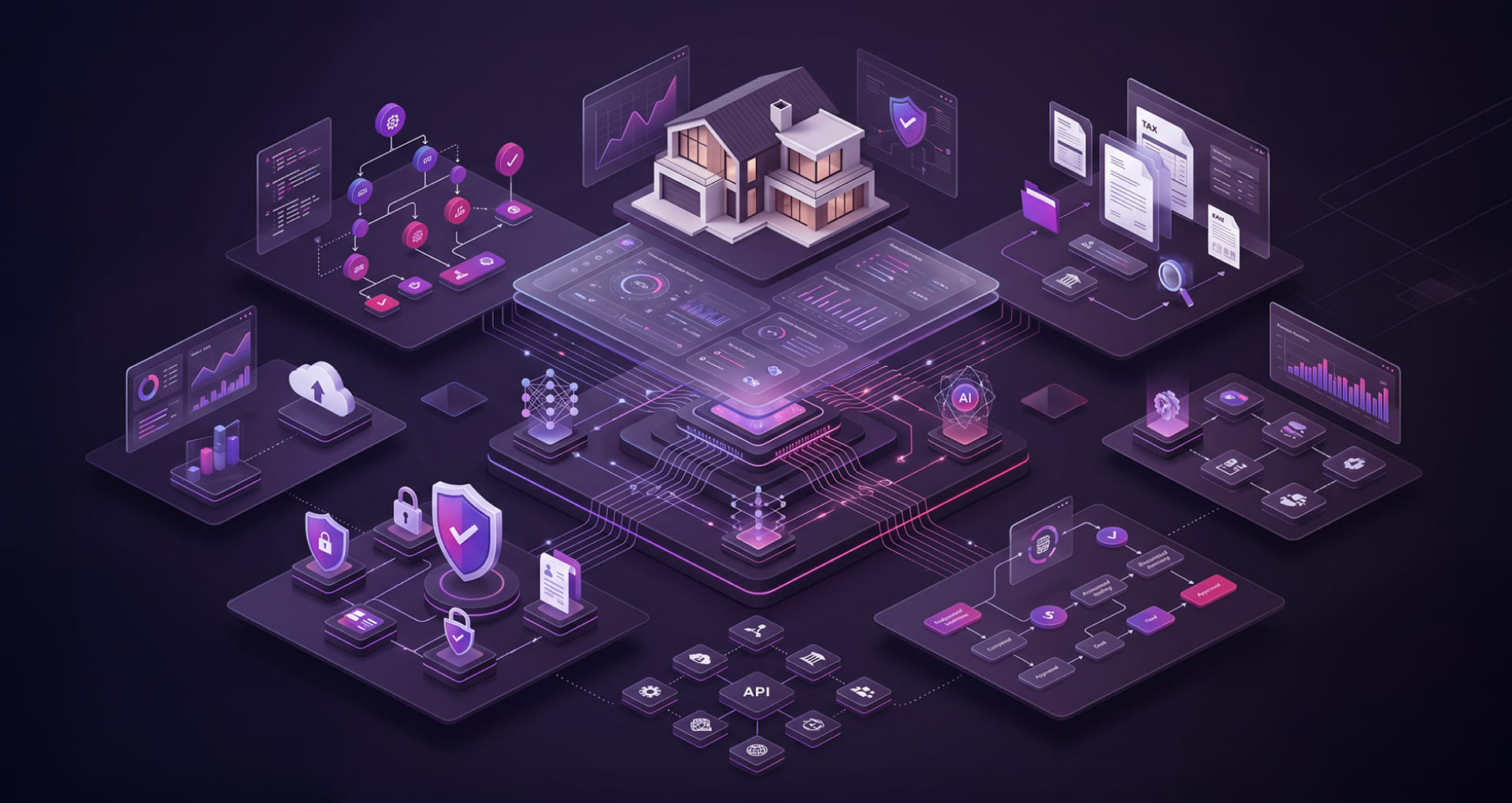
The use of AI in mortgage lending automates document processing, verification, underwriting support and workflow orchestration so lenders can accelerate approvals, reduce friction and deliver the seamless digital experience that modern borrowers expect.
This blog post explains how mortgage process automation is redefining lending from a manual, paper-heavy process into a faster, data-driven, and intelligent lending ecosystem. We’ll also understand the role of AI in mortgage lending, loan processing workflow and mortgage document automation and how it impacts processing speed, accuracy and borrower satisfaction.
What is Mortgage Process Automation and How AI Powers It
Mortgage process automation employs digital workflows to automate document collection, borrower verification, underwriting support, compliance checks, approvals, and servicing. It replaces monotonous, paper-heavy processes with swift, standardized operations.
Traditional loan processing workflow involves multiple handoffs between teams, disconnected systems and time-consuming administrative work. This eventually leads to slower approvals, higher operational costs, manual errors and inconsistent borrower experiences.
The implementation of RPA in mortgage solves these challenges by automatically:
- Routing applications between teams
- Collecting and validating borrower data
- Triggering approvals and compliance checks
- Tracking application status in real time
- Sending borrower notifications and updates
AI takes automation to the next level by adding intelligence to the process. AI-enabled mortgage systems can easily:
- Extract data from pay stubs, tax returns and bank statements
- Instantly spot missing data or inconsistent information
- Improve underwriting with predictive risk insights
- Accurately identify fraud indicators and delinquency risks
- Improve the speed and accuracy of decision-making
Modern AI-powered mortgage platforms are also built to connect. They integrate with loan origination systems, credit bureaus, compliance tools, core banking and servicing systems to create a connected, end-to-end lending journey where data flows securely and consistently from application to closing and beyond.
For lenders, that means fewer manual touchpoints, lower error rates and better visibility.
For borrowers, it means shorter waiting times, fewer repeated requests for the same information and a flawless experience from start to finish.
Why Mortgage Lenders Prefer AI-Augmented Workflow Modernization Over Full Platform Replacement
Ripping out a legacy LOS sounds appealing until you price it. A full platform migration runs 24 to 36 months, costs tens of millions and destroys years of embedded compliance logic, integrations and institutional configuration in the process.
The smarter move? Layer AI on top of what you already have.
AI-augmented modernization integrates directly with your existing LOS via APIs to automate the bottlenecks without disrupting your existing infrastructure. Implementation runs 8 to 16 weeks and ROI surfaces in 90 days without needing your team to leave familiar systems.
Workflow Visibility Is the Immediate Win
When AI is layered across your mortgage operation, every stage of every loan file becomes a structured, trackable, queryable data point. The system knows precisely where a loan sits in the pipeline, what’s blocking it, how long it has been idle at each stage, which conditions are outstanding and what is predicted to happen next.
What does that mean for every role in your operation?
For loan officers
- Real-time file status without interrupting processors.
- Automated borrower updates triggered by actual workflow milestones, not manual reminders.
- Instant visibility into outstanding document gaps so conversations with borrowers are proactive rather than reactive.
For processors
- An AI-prioritized task queue that surfaces urgent files automatically
- Fires SLA alerts before deadlines are missed
- Tracks conditions against received documents to clear them automatically
- Escalate only the genuine exceptions that require human judgment.
For underwriters
- Pre-assembled, decision-ready files with flagged exceptions highlighted before the file even opens.
- Less time spent gathering information.
- More time applied to the credit judgment that only an experienced underwriter can provide.
For operations leaders
- A live pipeline dashboard showing real-time throughput
- Bottleneck identification at the stage level
- Cycle times broken down by loan type and channel
- The data to make resourcing decisions in real time
Still relying on outdated lending systems? Learn how modern lenders are upgrading workflows without replacing legacy infrastructure. Read more on lending platform modernization.
Real-World Use Cases: How AI-powered Underwriting and Mortgage Document Automation Deliver Results
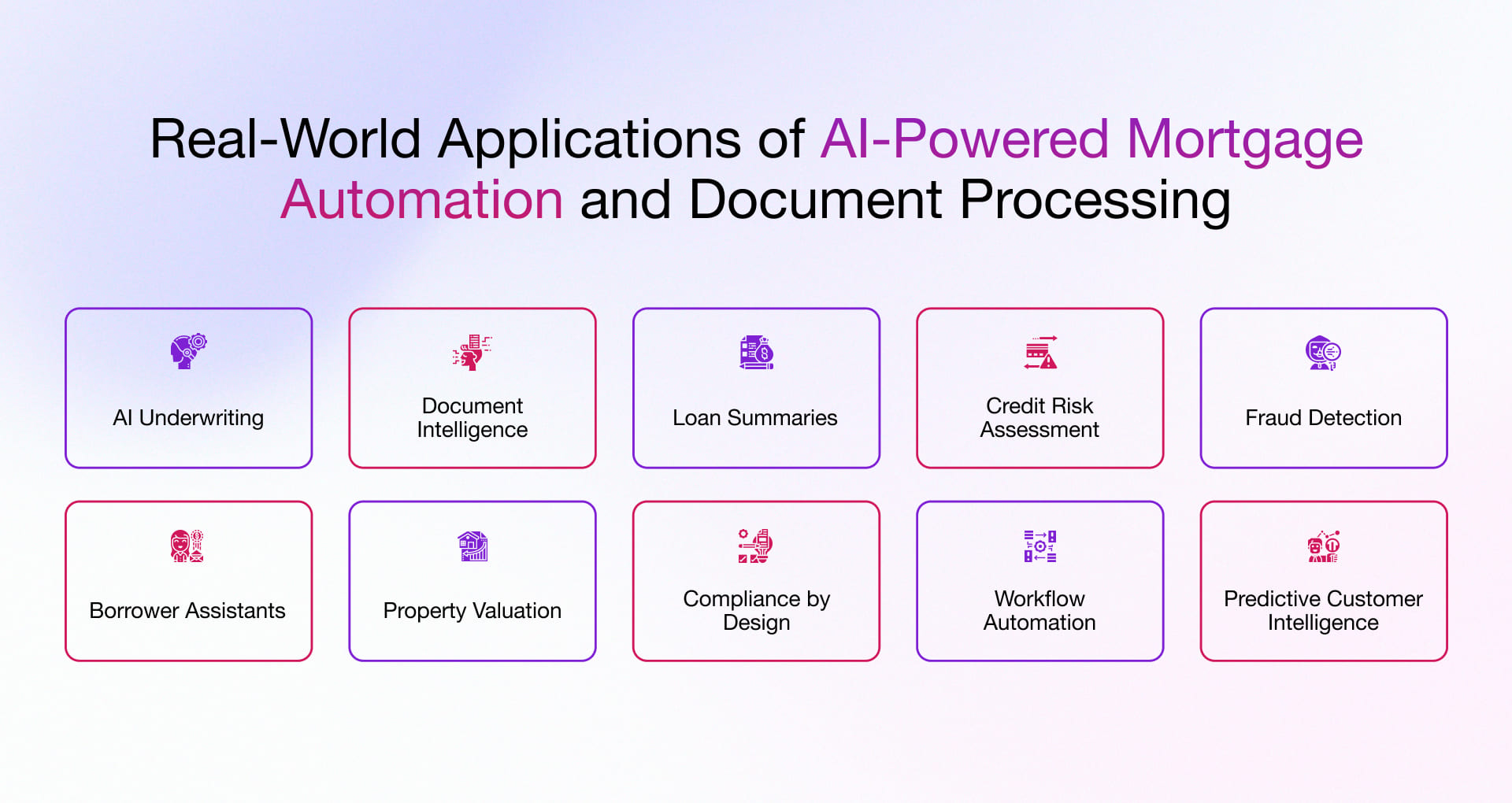
Modern lending platforms combine AI + document intelligence + validation to automate critical processes across the loan lifecycle.
AI-Powered Mortgage Underwriting
AI-powered underwriting systems analyze crucial borrower data which includes income, DTI, LTV, repayment history and transaction behavior in real time. This helps lenders make faster and more accurate lending decisions.
HomeTrust Bank: Saved 8,500 hours in loan processing workflow and $90,000 annually through AI document automation supporting underwriting
Intelligent Document Processing (IDP)
AI uses OCR, NLP and computer vision to extract and validate data from tax forms, pay stubs, bank statements and ID documents. It reduces manual review effort and speeds up document verification.
AWS (Amazon Textract + Comprehend): Used by mortgage lenders for end-to-end IDP on thousands of documents per application. Efficiently classifies, extracts and verifies data to accelerate underwriting.
Discover how AI-powered automation helps lenders process documents faster with fewer errors.
Generative AI for Loan Summaries
Generative AI reviews borrower files, summarizes applications, highlights missing information and detects inconsistencies so underwriters can process applications faster.
Gen AI tools can also review documents, flag policy violations or missing data, draft outreach for missing information, compile customer information, conduct credit analyses and draft sections of credit memos before human review.
AI-Driven Credit Risk Assessment
AI models use alternative data such as rent payments, utility bills, employment history and education records to assess borrowers with limited credit history more accurately.
Tonik Bank (Philippines): Integrated telco and alternative data for underserved borrowers.
AI-Based Fraud Detection and Identity Verification
AI systems identify suspicious behavior, detect fake documents and flag unusual application patterns in real time to help lenders reduce fraud risk and strengthen identity verification.
Learn how Rishabh Software helped a Canada-based Credit Union deploy Real-Time AI-Based Bank Fraud Detection & Prevention Software to monitor transactions, detect suspicious patterns and prevent fraud in real time.
Generative AI Borrower Assistants
AI-powered chat and voice assistants answer borrower questions, guide users through applications, send updates and improve customer support throughout the loan journey.
Better.com’s Betsy: This voice-based AI loan assistant in the US mortgage industry handles 100,000 calls/month, resolves 35%+ of inquiries without humans, manages 127,000+ interactions monthly and saves thousands of loan officer hours.
AI-Based Property Valuation Models
Advanced AI valuation models use market trends, geospatial data, satellite imagery and computer vision to deliver faster and more accurate property assessments.
Redfin Estimate: Uses 500+ data points, MLS data and ML for valuations supporting mortgage processes. Widely used in underwriting and lending for faster collateral assessment.
Governed AI and Compliance-by-Design in Mortgage Automation
Lenders now embed compliance directly into automated workflows. AI systems perform policy checks, AML and KYC validation, audit tracking and regulatory monitoring automatically to improve compliance readiness.
MISMO’s FRAME initiative and attestations: Focuses on responsible AI governance, transparency and compliance in mortgage workflows.
AI-Driven Mortgage Workflow Automation
AI-powered workflows automate task routing, reduce manual handoffs, track loan status in real time and identify processing bottlenecks to improve operational efficiency.
ICE survey found that 72% of borrowers said the lowest interest rate was the most important factor in choosing a mortgage lender, followed by low lender fees at 50%. This helps tie workflow automation to business outcomes because lenders need lower-cost operations if they want to compete on price point.
Predictive Customer Intelligence and Retention
AI helps lenders identify refinancing opportunities, predict borrower behavior, recommend relevant loan products and improve customer retention strategies. The same ICE survey found 84% of respondents said personalized communication was extremely or very important.
Fannie Mae and lender AI/ML: Predicts borrower default/prepay/refinance using broad data for proactive offers.
How Rishabh Software Helps You Maximize Mortgage Efficiency with AI-driven Intelligent Automation
As a trusted lending software development company, we help mortgage lenders, banks, NBFCs and fintechs modernize lending operations with AI and intelligent automation. Our experience and approach help our clients accelerate approvals, reduce manual effort, improve accuracy and deliver smoother borrower experiences.
Our custom mortgage software development services help lenders build scalable platforms that integrate automation, document intelligence, compliance workflows, and borrower-focused experiences.
- Mortgage Workflow Modernization
We redesign and streamline your full mortgage process to eliminate bottlenecks and create smooth operations from application to closing.
- AI-assisted Underwriting Orchestration
We combine data analysis, risk assessment and decision tools in one smart workflow to help underwriters approve loans faster and with greater accuracy.
- Document Intelligence Engineering
We build smart systems that automatically read, understand and validate tax forms, pay stubs, bank statements and ID documents. This saves your team many hours of manual work.
- Compliance-native Workflow Design
We embed compliance rules including KYC, AML and policy checks directly into your workflows to keep you audit-ready with less manual effort.
- LOS Modernization Support
We upgrade your existing Loan Origination System with AI features and clean integrations to deliver better performance without replacing the entire system.
- Integration-first Lending Transformation
We connect your LOS, CRM, document systems, core banking and third-party tools to create a unified, real-time lending platform that works smoothly.
Planning to launch a digital lending platform? Learn what it takes to build secure, scalable and borrower-friendly solutions with loan lending app development.
Frequently Asked Questions
Q: What is the difference between AI lending and automated lending?
A: Mortgage process automation uses digital workflows to automate tasks like document collection, borrower verification, underwriting support, compliance checks, approvals and servicing. It replaces manual loan processing workflows with faster and more efficient workflows.
The use of RPA in mortgage helps by:
- Routing applications between teams
- Collecting and validating borrower data
- Triggering approvals and compliance checks
- Tracking loan status in real time
- Sending borrower updates automatically
AI adds intelligence to the process. AI-powered mortgage loan automation systems can:
- Extract data from pay stubs, tax returns & bank statements
- Detect missing or inconsistent information
- Support underwriting with risk insights
- Identify fraud and delinquency risks
- Improve decision speed and accuracy
Modern AI mortgage platforms integrate with LOS platforms, credit bureaus, compliance tools and servicing systems to create connected lending workflows that reduce manual effort, speed up processing, lower errors and improve borrower experience.
Q: How do AI mortgage lending platforms support compliance?
A: Modern AI mortgage lending platforms include built-in governance features such as:
- Bias monitoring
- Explainable AI decisions
- Audit-ready logs
- Human review workflows
- Continuous model validation
This helps lenders stay compliant with evolving fair lending regulations.
Q: Can AI mortgage lending automation work with legacy LOS platforms?
A: Yes. Most lenders integrate AI with existing LOS platforms instead of replacing them.
Common approaches include:
- API integrations
- Middleware orchestration layers
- RPA + AI automation
Visible outcomes:
- Faster document processing
- Reduced manual effort
- Phased modernization without major disruption