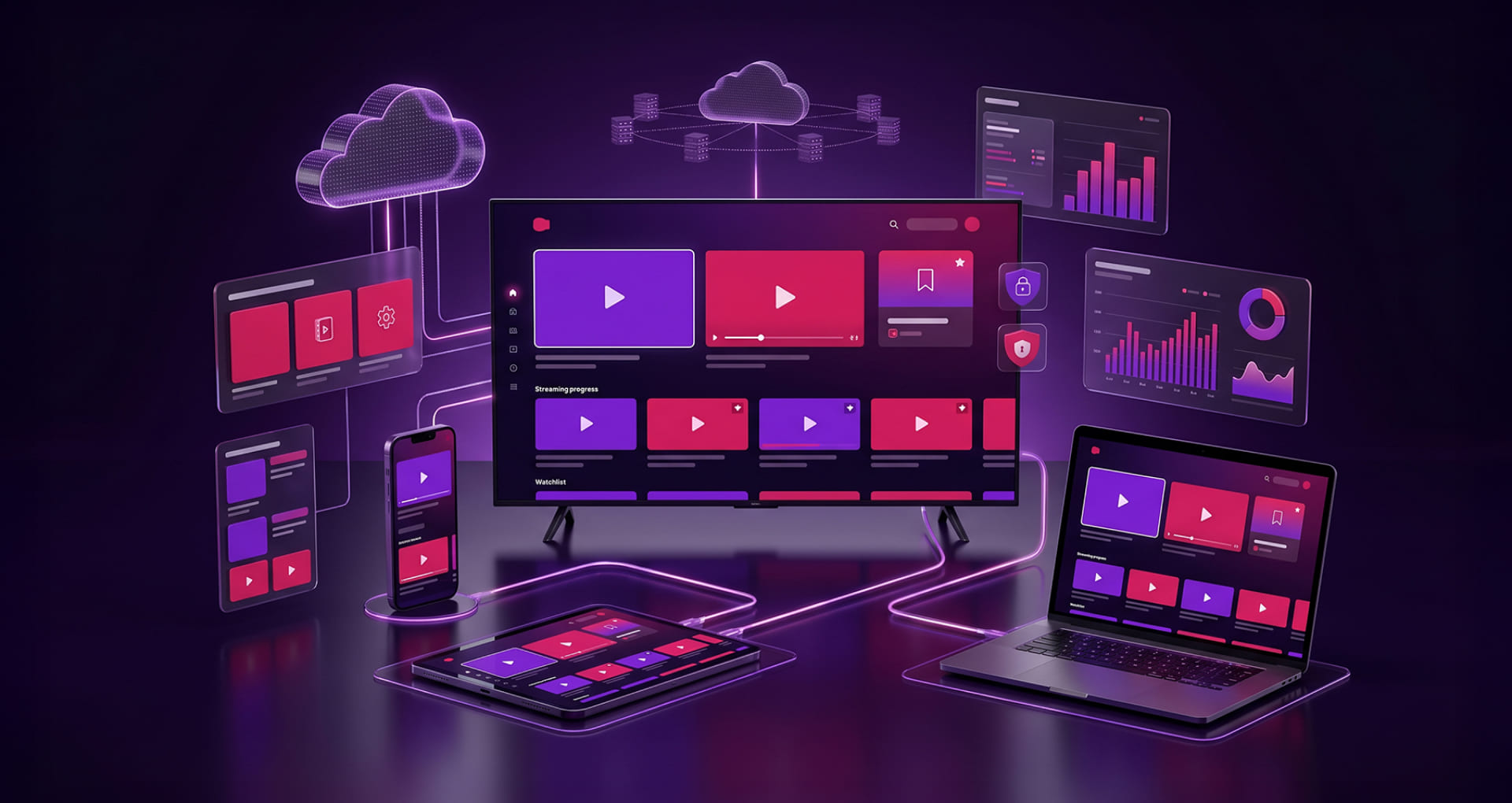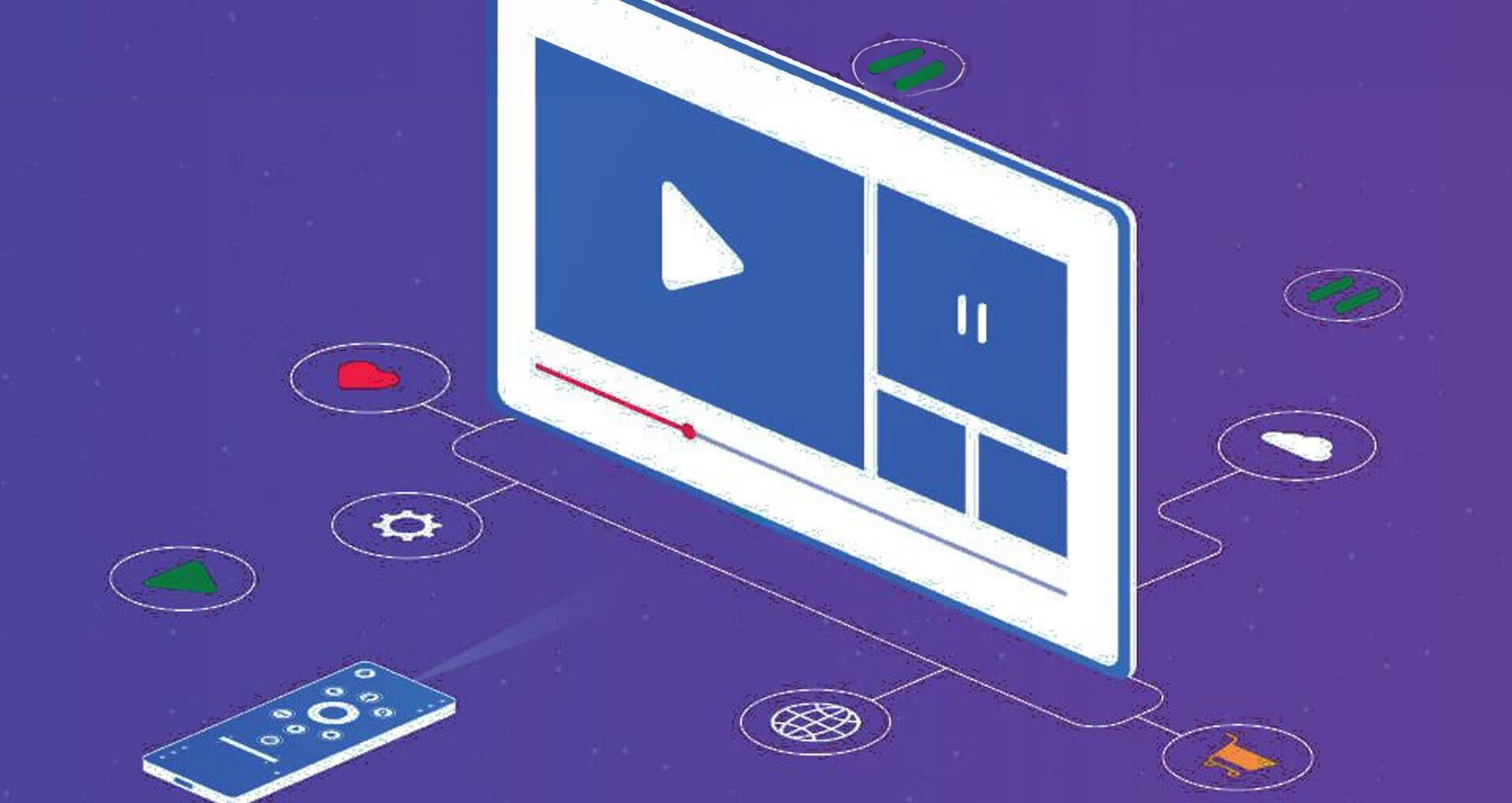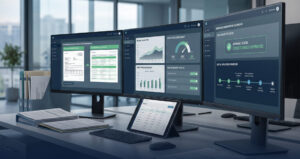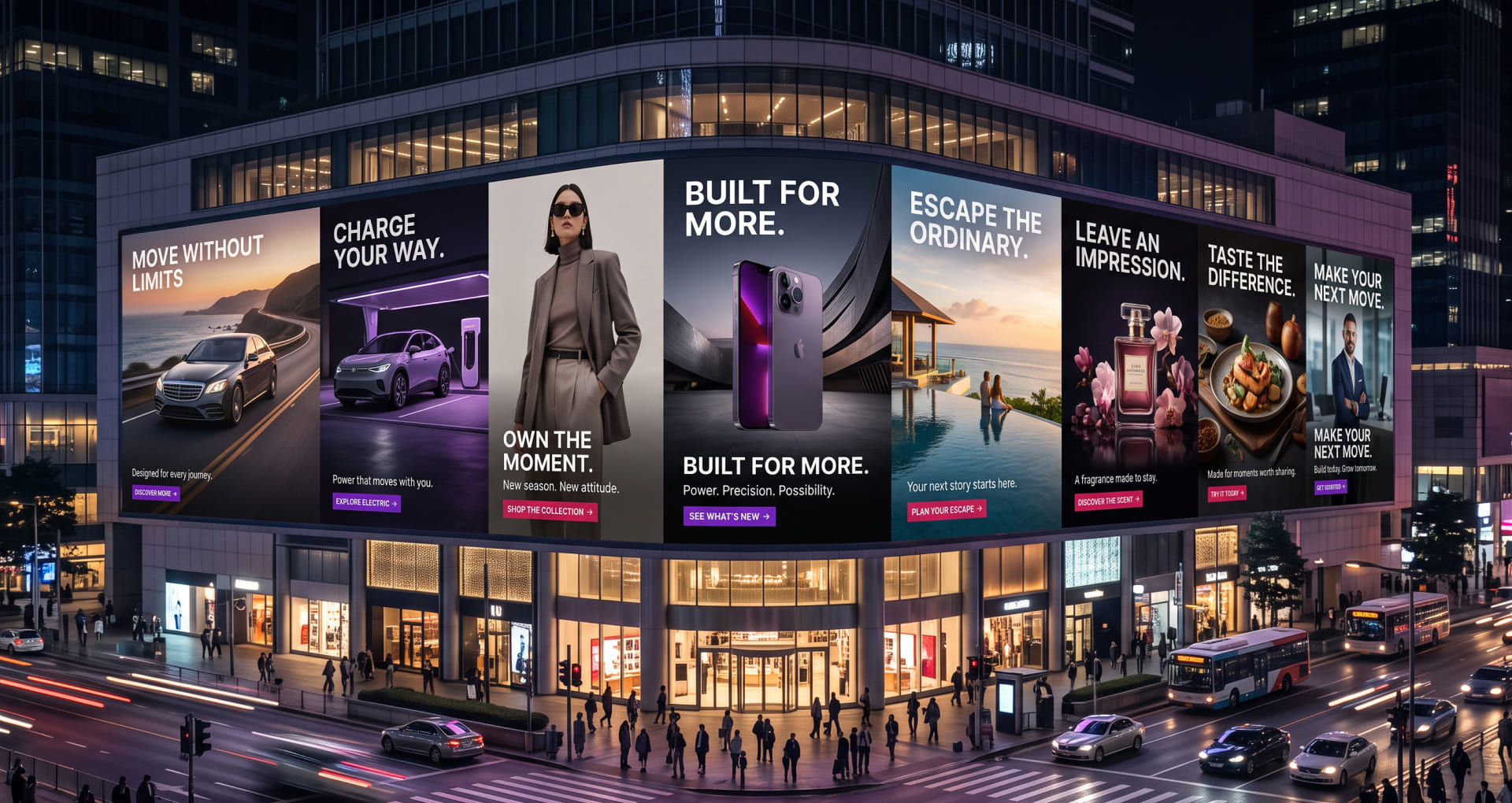
A digital signage screen spends much of its time displaying scheduled content, but between campaigns and playlist rotations, it also represents untapped advertising inventory. Across a growing network, those available slots can become a significant revenue opportunity without affecting the screen’s primary purpose.
The global digital signage market is projected to reach $58.4 billion by 2033, reflecting the continued investment by organizations in screen-based communication. The next question is how much more value those screens can create once part of their available time becomes advertising inventory.
DOOH advertising enables organizations to monetize that available screen time by selling advertising space to brands. However, as digital signage networks grow, managing inventory, coordinating campaigns, and supporting multiple advertising channels becomes increasingly complex. This is where a dedicated DOOH advertising platform helps streamline operations while maximizing revenue opportunities.
This blog explains how a DOOH advertising platform can help organizations monetize digital signage, support direct and programmatic buying, manage campaigns from booking to playback, and verify the revenue each screen generates.
How does a DOOH Advertising Platform Turn Screen Inventory into Revenue?
Digital signage becomes monetizable only when the network can describe, package, and control what it sells. The buyer needs to know the venue, location, dimensions, orientation, operating hours, audience context, available slots, and expected exposure. A DOOH platform consolidates those details into a single inventory model and links them to commercial rules.
Create a Clear Inventory Structure
The first step is to map every screen and define how much of its content loop can carry advertising. Operators can set slot length, share of voice, campaign frequency, daypart, and content-to-ad ratios. They can also reserve time for wayfinding, emergency messages, menus, or internal communication. This protects the viewer’s experience while creating a consistent media product.
The platform groups inventory by venue, geography, audience, screen format, or campaign objective. It also distinguishes available, reserved, sold, and remnant capacity. That visibility gives sales teams confidence when they build proposals and prevents operations teams from overbooking the same screen. This becomes especially valuable once a network manages static and digital OOH inventory together rather than treating each format as a separate system.
Package Inventory Around Buyer Needs
Advertisers rarely want to review hundreds of individual screens. They want a useful package: checkout screens in a region, lobby displays in premium offices, or evening inventory across restaurants. A DOOH platform can turn technical screen data into commercial bundles and apply rate cards, minimum commitments, pricing floors, and campaign rules to each package.
This is where inventory management directly affects revenue. A network that treats every slot the same can underprice premium locations and leave lower-demand capacity unused. A structured catalog lets the operator separate guaranteed inventory from flexible supply and price each segment with greater discipline.
Make Delivery Measurable From the Start
Revenue does not end with a booking. The digital-out-of-home platform connects each commercial commitment to a campaign, creative, schedule, screen, and playback record. That connection creates a traceable path from proposal to invoice. It also gives advertisers a clear answer when they ask what ran, where it ran, and when it ran.
Activate Multiple Revenue Channels Through a DOOH Advertising Platform
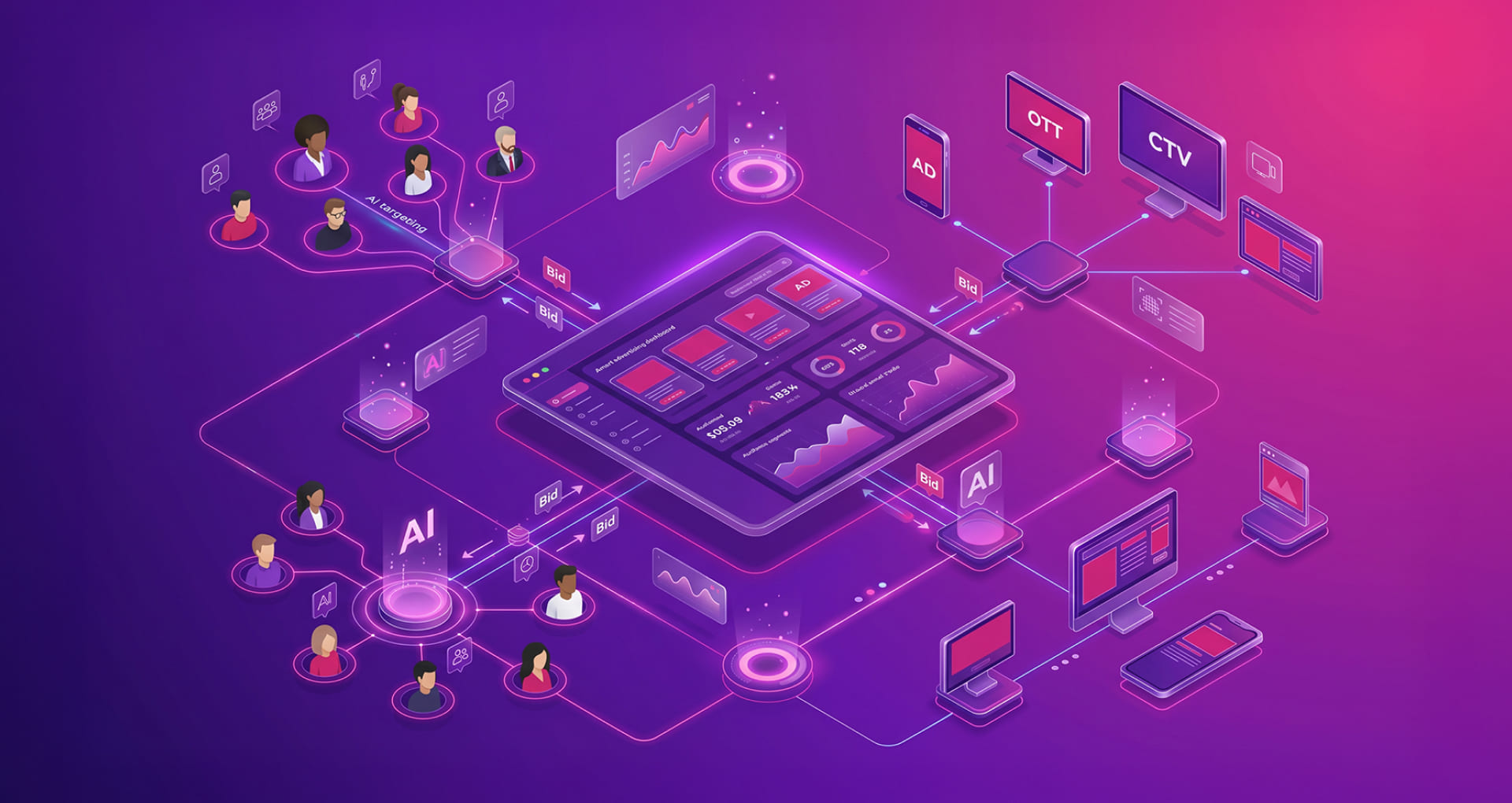
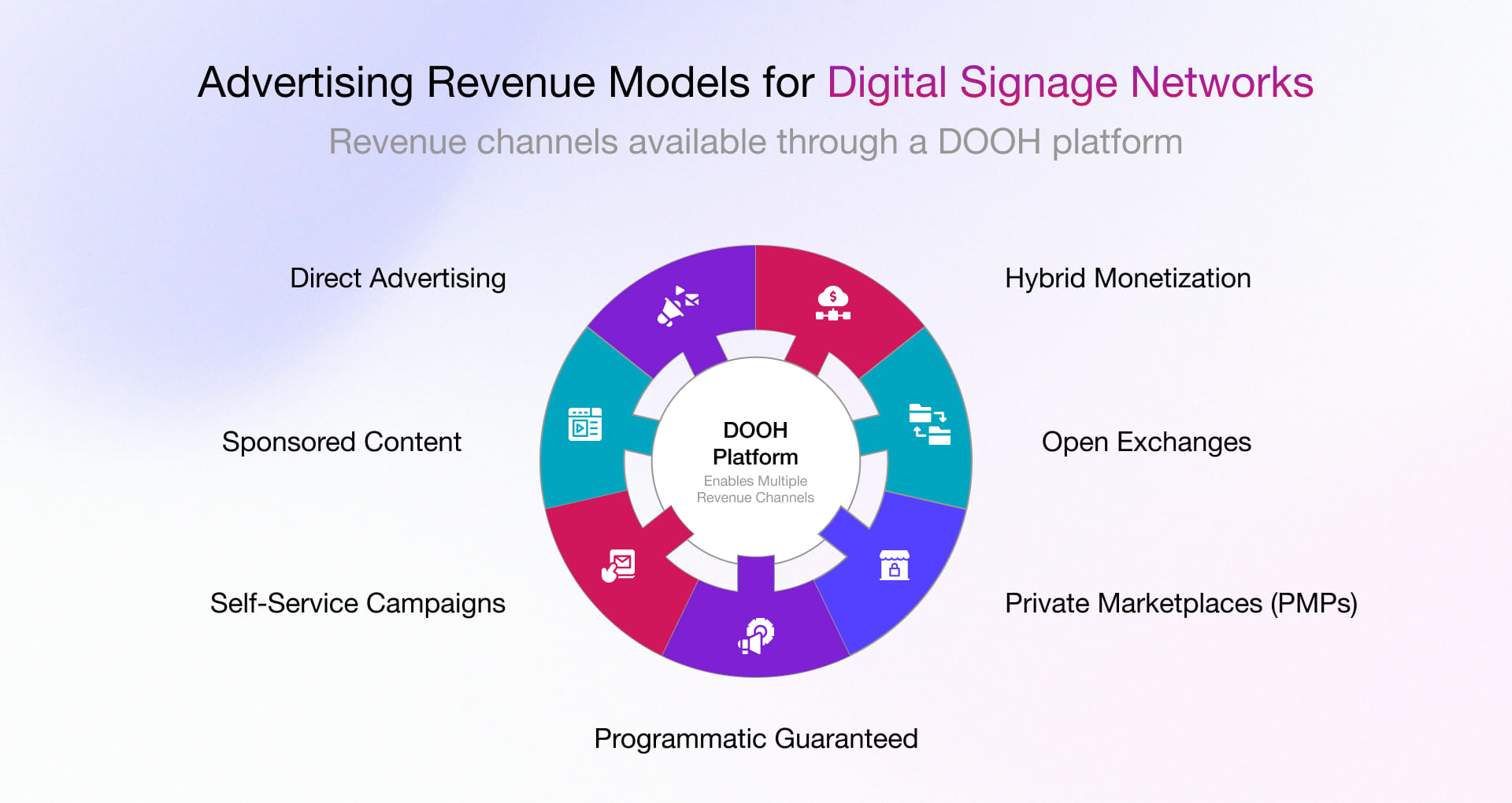
A screen network does not have one monetization path. It can sell guaranteed placements directly, open selected inventory to preferred buyers, or expose remnant slots to wider programmatic demand. A capable DOOH monetization platform supports these models together because each one solves a different commercial problem.
Direct Buying Protects Premium Inventory
Direct deals work well when an advertiser wants named screens, fixed locations, guaranteed dates, or a defined share of voice. The network owner controls the price, placement, creative policy, and contract. This model suits high-visibility screens, long-term sponsorships, and campaigns that need certainty rather than auction-based access.
The platform still matters. It shows real-time availability, reserve inventory, prevent double booking, store rate cards, route approvals, and connect delivery records to invoices. Direct sales deliver control, but they become hard to scale when teams rely on email, spreadsheets, and separate publishing tools.
Private Marketplaces Create Controlled Programmatic Access
A private marketplace, or PMP, gives selected buyers access to a curated pool of digital signage inventory. The operator can define eligible screens, buyer lists, floor prices, campaign rules, and availability windows. Buyers gain automation without losing the ability to negotiate meaningful packages.
PMPs fit networks that want programmatic efficiency while protecting premium supply. They also give agencies a cleaner way to buy a specific venue category, region, or screen group without competing across the full open market.
Open Exchanges Help Monetize Unsold Capacity
Open exchanges connect available inventory to a broader pool of programmatic buyers. They can improve fill rates when direct or PMP demand does not cover every slot. Buyers usually target venue types, audiences, locations, or time windows rather than negotiate every screen individually. That reach usually runs through an ad network or ad exchange that connects available supply to a wide pool of demand-side platforms or buyers.
This reach comes with trade-offs. Open-auction CPMs may fall below direct rates, and network owners need clear controls for pricing floors, advertiser categories, creative quality, and brand safety. The most practical approach often uses open demand for remnant inventory rather than treating every screen and time slot the same way.
Sponsored Content and Tiered Packages Widen the Buyer Base
Not every advertiser needs a programmatic transaction. Retailers, venue operators, and local media networks can also sell sponsored content, seasonal takeovers, or tiered packages based on screen visibility, frequency, reporting, and audience value. A self-service portal can make smaller campaigns viable by letting local buyers select packages, upload creative, pay, and track delivery without a lengthy sales cycle.
A Hybrid Model Balances Control and Fill
Leaders do not need to choose a single model for the entire network. They can reserve premium screens for direct deals, offer curated packages through PMPs, and send remaining slots to an open exchange. Modern DOOH solution enforces these priorities automatically, so higher-value commitments run first, and fallback content fills any unsold time.
Before activating these channels, the network needs five connected layers:
| Layer | What must exist | Monetization outcome |
| Inventory | Screen, venue, format, slot, and availability data | Buyers can discover and book available inventory |
| Demand | Direct buyers, private marketplaces, open exchanges, or self-service channels | More routes to fill available ad slots |
| Operations | Creative approval, scheduling, pacing, prioritization, and conflict rules | Reliable and controlled campaign execution |
| Evidence | Proof of play, screen uptime, and audience data | Verifiable delivery, accurate billing, and stronger buyer trust |
| Finance | Rates, invoices, revenue sharing, and reconciliation | Clear revenue ownership and transparent financial reporting |
Operationalize Digital Signage Monetization with a DOOH Advertising Platform
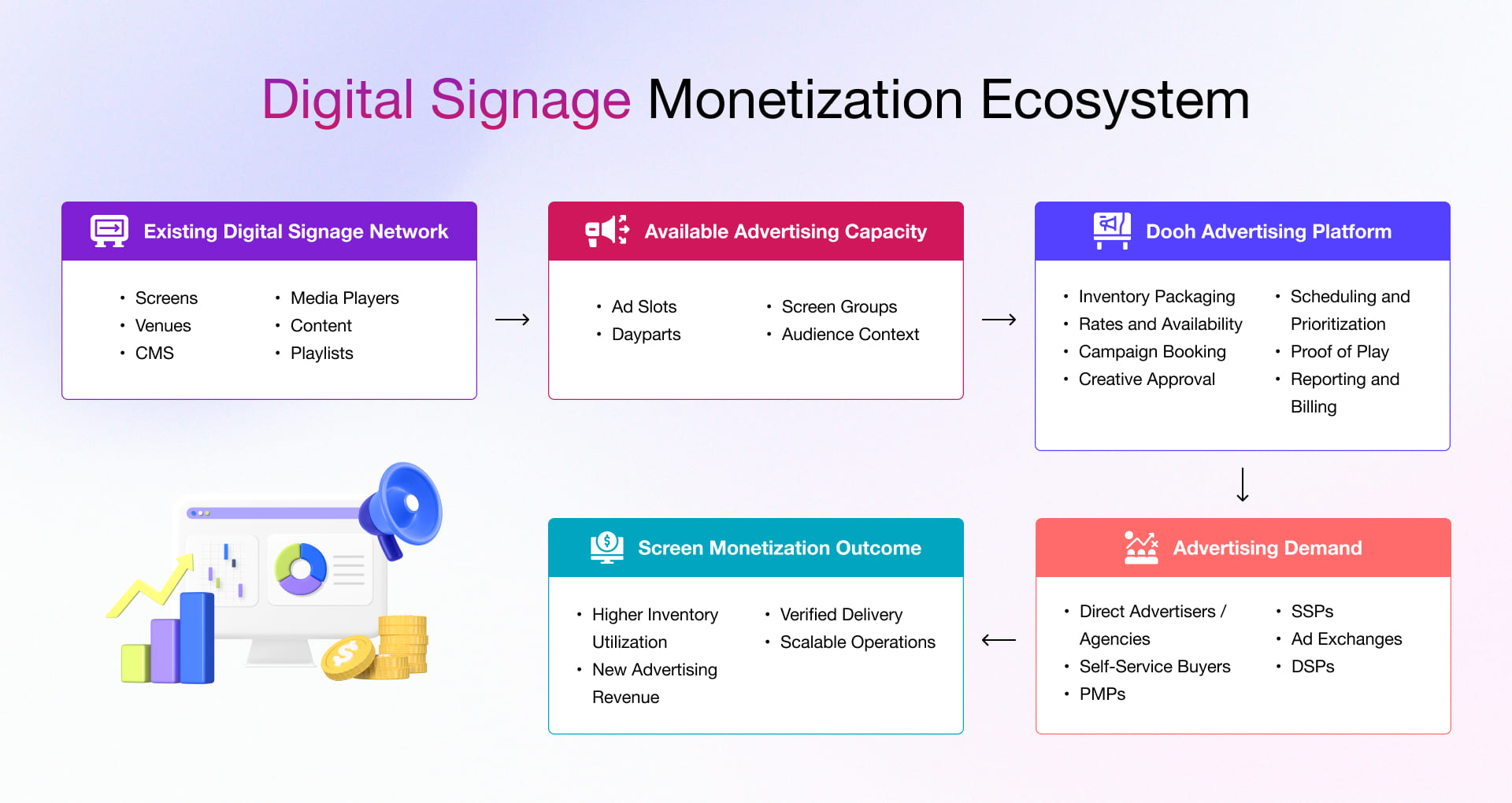
Revenue channels create demand. The operating layer determines whether the network can serve that demand reliably. It must connect the commercial workflow to scheduling, playback, reporting, and finance without disrupting the digital signage experience.
Connect Without Replacing the Existing Signage Stack
Most organizations already use a content management system, media players, CRM, accounting tools, analytics platforms, and local operating rules. A DOOH platform adds a monetization layer around those systems rather than forcing a complete replacement. APIs, webhooks, SDKs, file feeds, and supported advertising standards can synchronize screen data, availability, campaign status, and delivery records.
The architecture will vary. In one network, the CMS may continue to own the final playlist while the DOOH platform manages commercial inventory and campaign decisions. In another, the platform may also control creative delivery and playback verification. The key decision is to define a single source of truth for availability, bookings, and proof of delivery.
Manage the Campaign Lifecycle in One Workflow
The DOOH/OOH ad management platform connects inquiry, proposal, booking, creative approval, scheduling, playback, reporting, and billing. Each handoff carries risk. A booking without an availability check can create a conflict. A creative without format validation can fail on the player. A completed campaign without proof of play can delay invoicing.
Role-based access, approval history, advertiser restrictions, campaign priority, pacing, and fallback content give the operator control. These capabilities allow one network to support direct, private, and open demand without creating separate operating processes for each channel.
Prove Delivery and Protect Revenue
Advertisers need evidence that a campaign ran as planned. Proof-of-play records capture the screen, location, creative, campaign, timestamp, duration, and playback status. Device and deal health monitoring should flag offline players or missed deliveries early enough for a make-good or schedule adjustment.
Audience and impression data can add context, but the methodology must remain clear. Operators distinguish measured, modeled, and estimated figures. Transparent reporting supports accurate billing, faster reconciliation, campaign renewals, and stronger buyer confidence.
Build for Scale, Governance, and Change
Scale brings more than screens. It brings new locations, buyers, users, currencies, pricing rules, campaign types, and compliance requirements. Cloud architecture, multi-tenant access, audit logs, remote monitoring, and configurable workflows help the network grow without adding the same amount of manual effort.
White-label configuration also matters when a media owner or agency wants to offer the platform under its own brand. Custom engineering becomes useful when the business has unique partner structures, rate rules, or approval policies. A ready product can shorten time to market, while integration and development support preserve the flexibility to fit the operating model.
Disconnected Tools vs. Unified DOOH Operating Layer:
| Area | Disconnected process | Unified DOOH platform |
| Inventory | Spreadsheets and manual checks | Real-time screen and slot availability |
| Campaigns | Email handoffs and separate publishing tools | One workflow from booking to playback |
| Delivery | Manual confirmation | Screen-level proof of play and uptime alerts |
| Finance | Delayed reconciliation | Billing linked to verified delivery |
| Scale | More screens require more coordination | Centralized controls, APIs, and multi-tenant access |
Monetize Your Digital Signage Network with Rishabh Software’s DOOH Aggregator Platform
As a renowned AdTech software development services provider, we help organizations around the world achieve their revenue goals across areas such as DOOH, OOH, CTV, retail media, and more. We create an impact that is visible, credible, and measurable across the advertising industry.
Apart from building custom solutions, Rishabh Software’s AdTech specialist team has also developed a white-label solution. DOOH Aggregator Platform gives media owners, advertisers, and agencies a single system to centralize OOH and DOOH inventory, improve utilization, simplify campaign booking, automate operations, track delivery and performance, manage billing and financial reporting, and scale across screens, formats, and markets, all under their own brand.
If your screen network already reaches the right audience, the platform is what turns that reach into revenue. Request a demo of the DOOH Aggregator Platform to see how it fits your inventory, workflows, and growth plans.
Frequently Asked Questions
Q: How can I monetize an existing digital signage network?
A: Here are a few steps you can follow:
- Start by turning screen time into defined ad slots with clear pricing.
- Connect that inventory to more than one buying channel: direct deals, private marketplaces, and open programmatic exchanges.
- A DOOH advertising platform manages booking, delivery, proof-of-play, and billing in one place, so the network can sell to advertisers without disrupting the content it already runs.
Q: What should media owners look for in a DOOH monetization platform?
A: Key capabilities you can look for in a DOOH platform to monetize your digital signage:
- Centralized inventory management: support for direct, private marketplace, and programmatic demand.
- Automated proof-of-play
- Revenue and billing tied to actual delivery data.
- White-label support and open APIs matter too, since the platform needs to sit on top of the CMS, media players, and CRM already in use rather than replace them.
Q: Is digital signage monetization realistic for a small or single-location screen network?
A: Yes. A smaller network can start with direct sales to local advertisers and add programmatic demand later to fill unsold slots.