
Information inside businesses rarely stays in one place anymore. It lives across SharePoint sites, Teams chats, documents, meeting notes, and folders people stopped organizing months ago. The challenge is not access to information. It’s finding the right context at the right moment without slowing work down in the process. That’s where SharePoint has quietly started changing from a document platform into something much more central to how teams work.
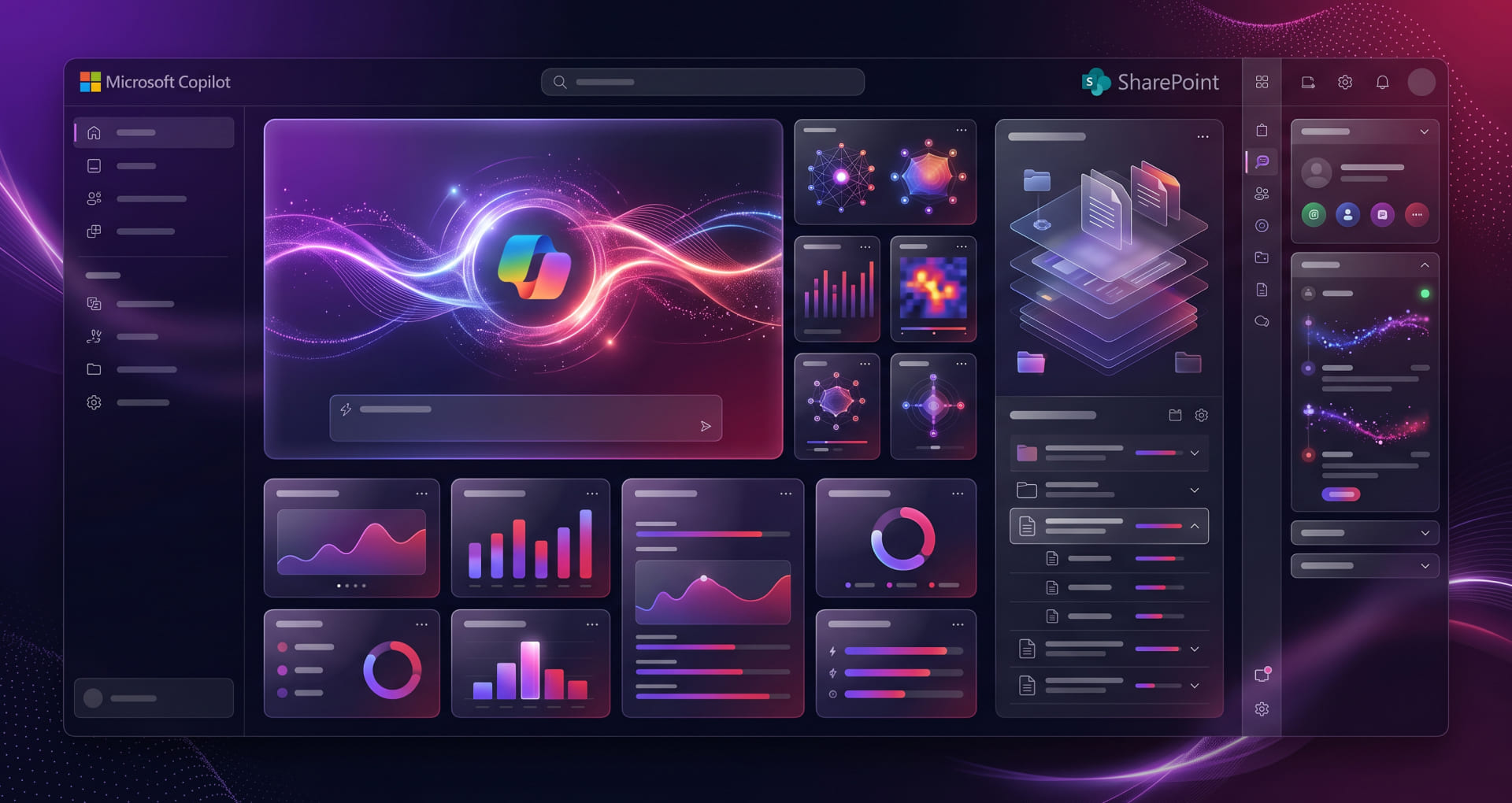
Microsoft Copilot in SharePoint brings generative AI into that everyday workflow. It can summarize long documents, generate pages, surface relevant information, and help teams work with organizational knowledge using natural language prompts. Connected through Microsoft Graph and integrated with tools like Teams, OneDrive, Microsoft Purview, and Microsoft Entra ID, it helps businesses manage collaboration, content, and governance inside a connected Microsoft ecosystem.
In this blog, we’ll look at how Copilot in SharePoint works, the prerequisites and licensing businesses need, modern enterprise use cases, best practices, and where it actually starts making a difference for teams trying to manage growing volumes of content and knowledge more efficiently.
Understanding Copilot’s Role in SharePoint
Copilot is integrated into SharePoint to enhance user experience and productivity. It is transforming how users interact with SharePoint. By integrating NLP and generative AI capabilities, it helps in:
- Streamlining workflows by automating routine tasks and processes within SharePoint, such as file organization, approval workflows, and others.
- Making it easier for users to create, edit, and collaborate on SharePoint pages.
- Improving productivity and ensuring that the content generated aligns with organizational standards and branding.
How to Use Copilot in SharePoint?
Copilot functions as a stand-alone tool to enable users to build custom Copilots through Copilot Studio as well as an extension of various Microsoft 365 apps, including SharePoint. To use Copilot in SharePoint, you need access to a SharePoint environment supporting the Copilot feature.
- Access SharePoint: Log in to your SharePoint environment.
- Identify Copilot Integration: Look for Copilot features or commands within SharePoint.
- Interact with Copilot: Type commands, ask questions, or generate content.
- Explore Capabilities: Experiment with different Copilot features.
- Be Specific and Provide Context: Give clear prompts for accurate results.
- Leverage Learning: Copilot’s capabilities improve with usage.
Key Benefits of Using Copilot in SharePoint
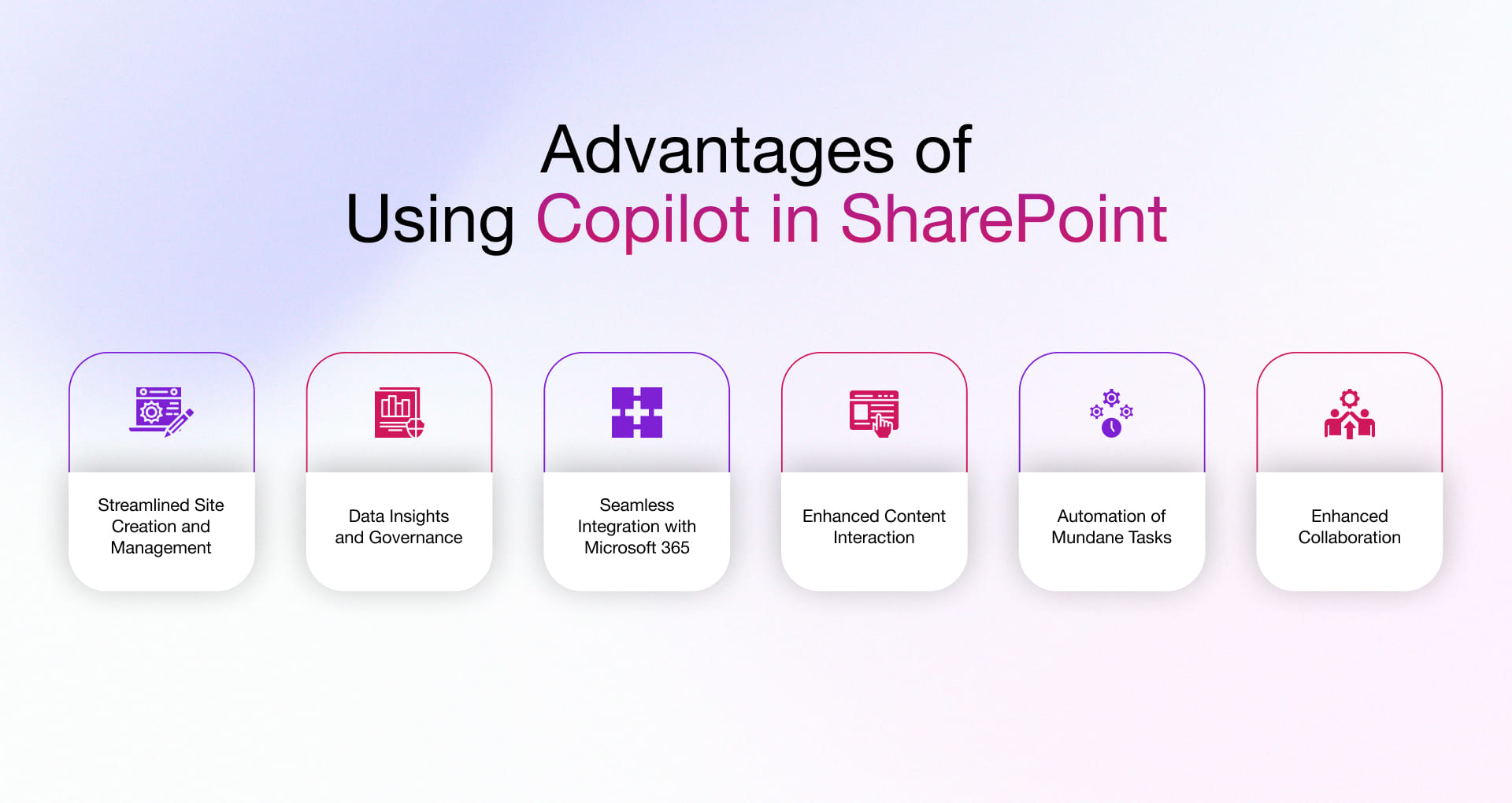
Microsoft Copilot introduces a range of innovative capabilities to SharePoint. Microsoft Copilot introduces a range of innovative capabilities to SharePoint. As a Microsoft modern workplace service provider, we help organizations leverage these benefits to focus on strategy rather than routine tasks.
Let’s look at some key benefits of Copilot in SharePoint that help you focus on strategy rather than routine tasks.
Streamlined Site Creation and Management
Copilot for SharePoint simplifies the process of creating new SharePoint sites. Users can generate sites quickly by providing simple prompts, allowing for rapid deployment without extensive training. This feature saves time and ensures that sites are created with consistent branding and formatting aligned with organizational standards.
Enhanced Collaboration
Copilot allows teams to collaborate effectively by facilitating real-time editing and feedback. Users can interact with Copilot using prompts to refine content, ensuring that it meets their needs and aligns with brand standards.
Automation of Mundane Tasks
It automates repetitive tasks such as data analysis and document organization, data extraction and analysis to help eliminate mental bandwidth for employees to focus on high-value activities. This is particularly beneficial in environments where time management is a challenge.
Data Insights and Governance
Whether improving site performance or suggesting improvements, the Copilot provides detailed insights to the organization with the data stored in SharePoint. It also supports content governance by offering recommendations that help maintain compliance with company policies.
Seamless Integration with Microsoft 365
This latest iteration of Copilot in SharePoint seamlessly works within the broader Microsoft 365 ecosystem, enhancing productivity across Teams, Word, and Outlook applications. This integration allows for a more cohesive workflow across different platforms.
Enhanced Content Interaction
With Copilot in SharePoint, users can easily access and interact with data stored in SharePoint. It allows anyone in the organization to locate content through conversational queries rather than manual searches. This capability enables efficient data retrieval and enhances productivity by minimizing the time spent on information discovery.
Key Features of Copilot for SharePoint
With recent upgrades from Microsoft, Copilot brings a range of innovative capabilities to SharePoint. Let’s look at some prominent features of Copilot in SharePoint.
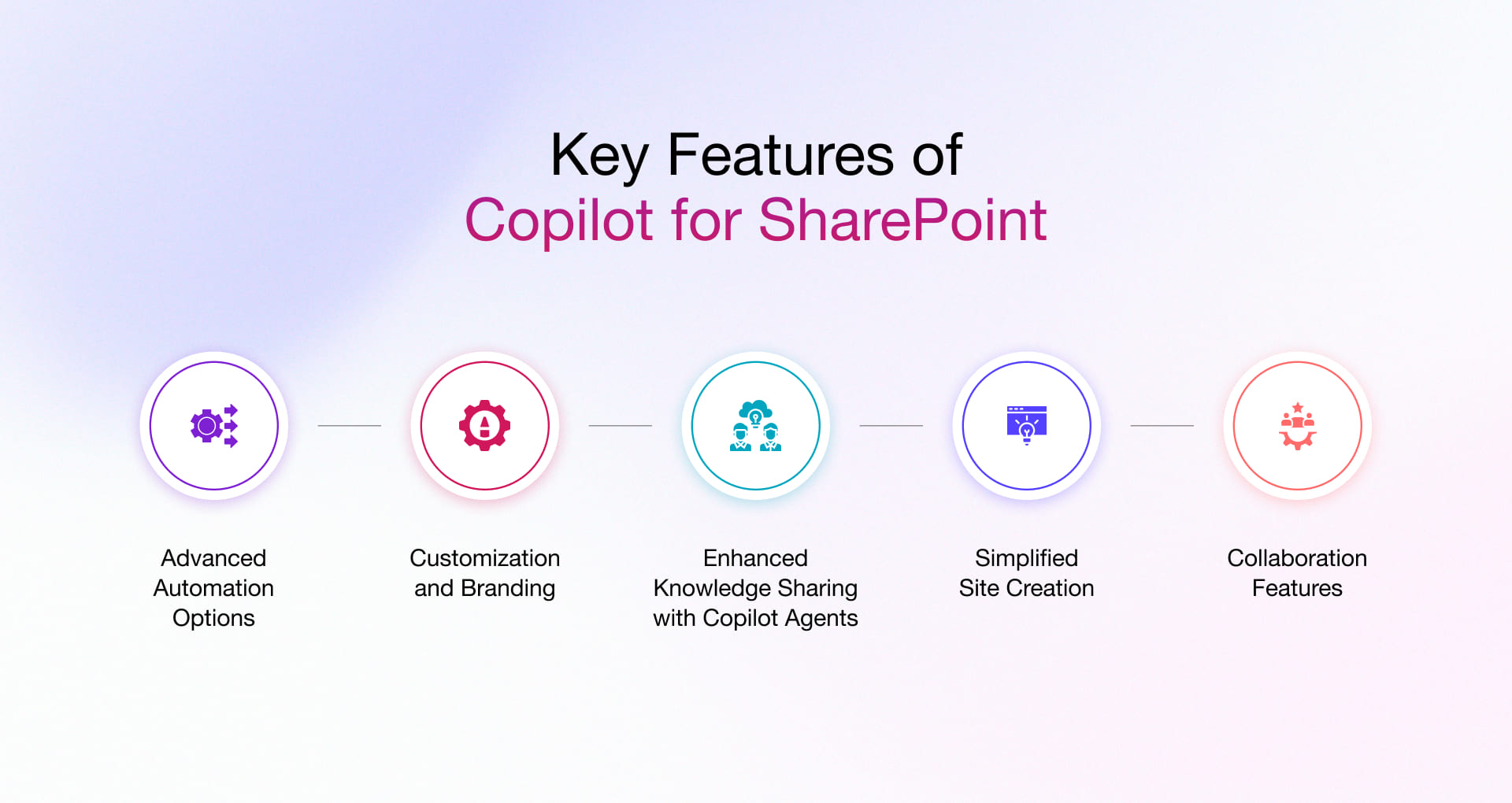
Simplified Site Creation
Copilot allows users to create SharePoint sites and pages effortlessly by using natural language prompts.
- Natural Language Processing: Users can simply enter a prompt using Copilot’s chat feature to describe the site or page, and then Copilot in SharePoint will create a starter site, bringing in information from across the organization as needed and automatically aligning the site with the organization’s branding guidelines. For instance, a prompt like “Create an employee onboarding site” will initiate the site creation process, integrating relevant data automatically.
- Enhanced Page Authoring: It assists authors in converting existing documents or presentations into visually appealing SharePoint pages. Copilot can also help rewrite text to improve engagement and ensure the tone aligns with the intended audience.
Collaboration Features
Collaboration is at the heart of SharePoint, and Copilot enhances this aspect by providing tools that facilitate teamwork and knowledge sharing.
- Co-authoring Capabilities: Multiple users can work on the same page in real-time, making collaboration seamless and efficient.
- Content Recommendations: The tool provides suggestions for relevant content based on users’ work to facilitate better knowledge sharing within the team.
Advanced Automation Options
With advanced automation options, Copilot streamlines workflows and enhances productivity by minimizing manual tasks.
- Integration with Power Apps: Users can leverage Copilot alongside Power Apps to create applications that collect and manage data stored in SharePoint.
- Task Automation: It offers advanced automation options allowing users to create and edit SharePoint sites, align content to brand guidelines, and intelligent data extraction from documents and forms apart from automating routine tasks—like file organization, content tagging, and approval workflows—Copilot allows employees to focus on more strategic activities. This saves time and reduces the cognitive load associated with repetitive tasks.
Customization and Branding
This feature allows anyone in your organization to create custom copilots from SharePoint which enhances functionality in a few clicks. Copilot in SharePoint ensures that organizations can maintain their unique identity while utilizing SharePoint effectively.
- Consistent Branding: Copilot ensures that all generated sites maintain a consistent look and feel aligned with the company’s branding guidelines. A centralized feature for managing branding elements like fonts and colors across all SharePoint sites to ensure consistency with organizational identity.
- Adaptive Design Suggestions: It suggests layouts and design elements based on user preferences and content type, enhancing the overall user experience.
Enhanced Knowledge Sharing with Copilot Agents
Copilot introduces agents that facilitate knowledge sharing across teams by summarizing information and answering queries based on scoped content.
- Copilot Agents: New features allow users to create agents to answer questions about specific content or summarize information, further enhancing team collaboration.
- Enhanced Collaboration: These agents foster collaboration by providing insights that help teams make informed decisions based on current data.
Top Use Cases of Copilot in SharePoint
From the outside, Copilot for SharePoint looks like a tool for speeding up content work. But businesses are starting to use it for something broader. Reducing repetitive operational tasks that quietly consume hours every week. From drafting initial site layouts based on simple prompts to refining existing content into visually engaging pages, Copilot acts as a collaborative partner that streamlines workflows. Let’s delve into some practical use cases of how Microsoft Copilot in SharePoint is transforming the workplace.
- User Training and Onboarding: Copilot acts like an AI tutor for new users, guiding them through SharePoint’s features. This helps lower the learning curve and lets team members make better use of the platform.
- Project Management Support: When managing projects, Copilot helps by creating task lists, offering document templates, and assisting with project reports. This makes project workflows smoother and helps teams handle multiple projects more easily.
- Intranet Development: For companies wanting to improve their intranet, Copilot automates routine tasks and suggests good practices for development. This helps employees have a smoother experience when accessing company resources.
- Compliance and Audit Automation: Compliance data has a way of spreading everywhere. Policies, reports, access logs, sensitive files. Copilot, combined with Microsoft Purview, helps teams surface that information faster, summarize audit-related content, and make governance workflows easier to manage without digging through multiple systems manually.
- Meeting Recaps and Knowledge Capture: The meeting outcomes produce valuable decisions yet everything dies away after the participants exit the video conference. The Copilot – AI-assistant, provides automatic summary creation along with action item tracking and discussion point documentation which prevents crucial information from getting lost in chats and unorganized notes that follow.
- Custom Agents for Teams and SharePoint: Business can develop their own Copilot agents to assist employee onboarding process, human resources functions, internal business operations, and knowledge management tasks. The complete experience becomes a workflow element rather than remaining a digital function. Employees use Teams and SharePoint to ask questions and find documents while accessing company information without needing to switch between different systems.
What are the Prerequisites for Using Copilot in SharePoint?
Before businesses start using Copilot for SharePoint, a few foundational pieces need to be in place. Most of them already exist inside a Microsoft 365 environment. The difference is that Copilot depends heavily on how well those systems, permissions, and content structures are connected.
To access Copilot in SharePoint and other Microsoft 365 applications, businesses typically need:
- An active Microsoft 365 subscription with Microsoft Copilot licensing
- SharePoint Online enabled within the Microsoft 365 environment
- Microsoft Entra ID (formerly Azure Active Directory) for identity and access management
- Proper permissions to access SharePoint sites, files, and organizational content
- OneDrive enabled for file storage and collaboration workflows
- Microsoft Teams desktop or web application access for connected Copilot experiences
- Microsoft Loop enabled across Microsoft 365 apps where applicable
- Updated Microsoft 365 applications, including Outlook for Windows
- Structured and accessible SharePoint content for better Copilot responses and retrieval accuracy
Licensing matters too. Businesses can choose between Microsoft Copilot for Microsoft 365 or Copilot Pro depending on how broadly they want AI integrated into daily work. But turning on Copilot isn’t really the interesting part. What changes is the workflow around it. Teams start using AI assistance inside SharePoint, meetings, documents, and conversations that already exist across Microsoft 365.
As a Microsoft Solution Partner, we wanted to highlight where things get tricky. Copilot works as an enterprise-ready AI assistant, but it still depends on the structure behind the scenes. If SharePoint content is outdated, permissions overlap, or governance hasn’t been maintained properly, the experience can feel inconsistent very quickly. And when the content is organized well, that’s where it starts to pay off. Responses become more relevant, retrieval feels faster, and teams spend less time searching for context across disconnected systems.
Best Practices for Using Copilot in SharePoint Effectively
Most companies don’t realize this immediately, but Copilot tends to inherit the personality of the SharePoint environment around it. If the system is organized, updated, and reasonably maintained, the experience feels smooth. Helpful, even. If the environment has been quietly collecting outdated folders, duplicate files, strange permissions, and abandoned sites for years, Copilot will find those too. Very quickly.
- Start with work that already slows people down: Meeting summaries, onboarding documents, status updates, internal FAQs. The boring repetitive work. That’s usually where Copilot proves itself first. Read our latest blog on SharePoint Document Management to know more!
- Prompts matter more than expected: A vague request produces a vague answer. Which makes sense when you think about it. Teams that write prompts with context, specifics, and actual intent usually get far more useful responses back.
- Clean content matters: This is the unglamorous part nobody wants to talk about. SharePoint environments age badly without maintenance. Old policies stay live. Documents get copied five times. Folder structures stop making sense. Copilot doesn’t fix that automatically. It surfaces it.
- Permissions deserve attention: Copilot follows existing SharePoint and Microsoft Entra ID access rules. Here’s where things get uncomfortable for some businesses. Many permission structures were never fully reviewed after employees changed roles, teams expanded, or systems evolved.
- Let employees figure out practical uses naturally: The interesting workflows usually appear after rollout. Someone uses Copilot to simplify onboarding. Another team starts organizing project updates differently. Small efficiencies accumulate quietly over time.
- Keep revisiting the workflow itself: Microsoft keeps expanding Copilot across SharePoint, Teams, and Microsoft 365. Businesses that adapt alongside those changes usually get more long-term value than teams that treat AI adoption like a finished project.
How Can We Help You Harness the Full Potential of SharePoint with Copilot?
At Rishabh Software, we specialize in maximizing business productivity and collaboration by integrating Copilot into your Microsoft SharePoint workflows. Our seasoned SharePoint consultants and Microsoft experts ensure a seamless integration process, enabling you to leverage SharePoint’s vast features for digital document management, business process automation, and collaboration.
As a Microsoft technology service Provider, our SharePoint development services help you set up tools and solutions, including co-authoring features, project management dashboards, and custom workflows that ensure everyone is on the same page. Our experts offer ongoing assistance across all key aspects, from security and data protection to governance, to help you prepare for the future of work.
Frequently Asked Questions
Q: What is Copilot in SharePoint?
A: Microsoft Copilot for SharePoint aims to transform SharePoint from just a storage space into a more dynamic workplace. With the combined capabilities of generative AI and Microsoft Graph, Copilot enables teams to do more in SharePoint, such as accessing company knowledge using natural language. Rather than spending time building pages manually, sifting through long documents, or gathering updates from different systems, employees can complete tasks more quickly within the Microsoft 365 tools they use every day.
Q: Can I create custom agents with Copilot in SharePoint?
A: Yes, users can create custom agents using Microsoft Copilot Studio, allowing for tailored experiences that can assist with specific tasks or projects without requiring coding skills.
Q: What security measures are in place for using Copilot in SharePoint?
A: Various security measures as those mentioned below are in place to mitigate potential vulnerabilities:
- Encryption of data in transit and at rest
- Role-based access control
- Microsoft Purview data classification and sensitivity labels
- Copilot is integrated with Microsoft Entra ID (formerly Azure Active Directory) to support single sign-on (SSO) and multi-factor authentication (MFA)
- User permissions based on their access rights,
- Continuous threat monitoring and adherence to data privacy regulations like GDPR, ensuring that only authorized users can access sensitive information
These security measures ensure that organizational security policies are respected while using AI features.
Q: What are the future trends of Copilot in SharePoint?
A: Future trends include more profound integration of AI capabilities for personalized user experiences, enhanced automation features, and expanded functionalities through ongoing updates to Copilot and SharePoint Premium offerings.